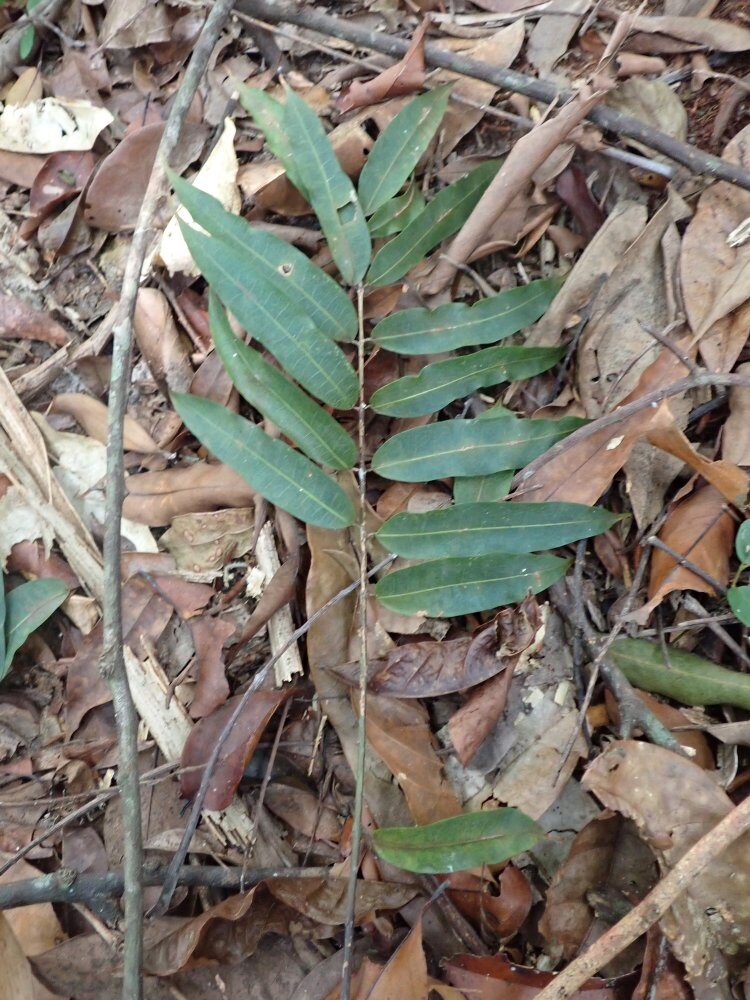
Commiphora africana
(A. Rich.) Engl.
African myrrh
iNaturalist· cc-by-nc
(c) Linda Loffler, some rights reserved (CC BY-NC), uploaded by Linda Loffler
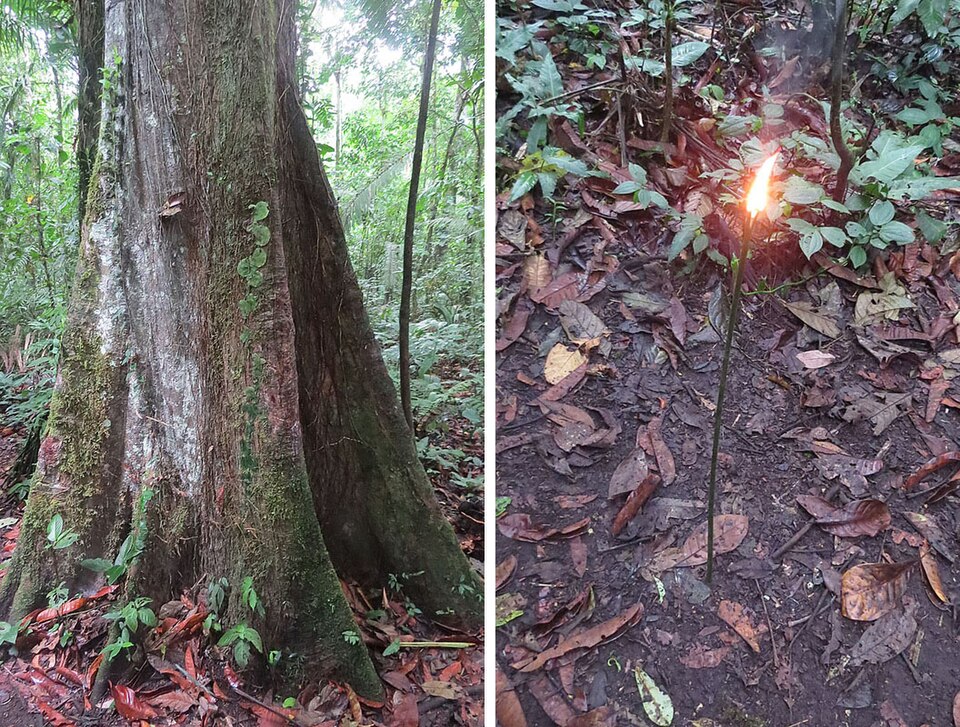
iNaturalist· cc-by-nc
(c) Duncan McKenzie, some rights reserved (CC BY-NC)
Summary
Source: WikipediaCommiphora africana, commonly called African myrrh, is a small deciduous tree belonging to the Burseraceae, a family akin to the Anacardiaceae, occurring widely over sub-Saharan Africa in Angola, Botswana, Burkina Faso, Chad, Eswatini, Eritrea, Ethiopia, Kenya, Mali, Mauritania, Mozambique, Namibia, Niger, Senegal, Somalia, South Africa, Sudan, Tanzania, Uganda, Zambia and Zimbabwe. On sandy soils this species sometimes forms pure stands, deserving consideration as a plant community or association. Closely related to C. glandulosa, C. africana is usually some 5m tall, its branchlets often ending in spines. Its bark is grey-green, peeling to reveal a shiny surface, red when damaged, and then exuding bdellion, a clear, edible, aromatic gum ('Commiphora'='gum-bearing'). The leaves are trifoliate with a large terminal leaflet and two small side leaflets, bluntly toothed, and, as with most Commiphoras, pleasantly aromatic when crushed. Fruits are reddish, and about 6–8 mm across, splitting when ripe to reveal a hard, black seed held by a pseudo-aril or mericarp with four red fingers, resembling the clasps holding a jewel in a brooch or ring setting. The tree's fruits are edible while the succulent, sweet roots are often chewed by humans, and the new leaves are sought after by camels and goats, particularly at the beginning of the dry season. This tree is extremely sensitive to atmospheric humidity and will expand its leaf buds at the first hint of moisture-laden winds. Consequently it is the first tree to come into leaf with the arrival of the wet season, and remains remarkably green throughout the rainy period. In the Sahel this striking fresh appearance is shared only by Salvadora persica. The leaves, though, survive only as long as the moist air lasts, and dry out as soon as the rainy season is over, at which time the colour of the foliage changes to a remarkable, golden hue. C. africana takes advantage of any wet spells to complete a leafing, flowering and fruiting cycle, and retreats into dormancy over unfavourable periods. Even so its foliage displays none of the features usually associated with drought-adapted plants. Herdsmen of the northern Sahel follow the rainfall patterns and the C. africana trees as they come into leaf, continually finding new areas for their animals to browse. This species is the preferred food plant of the beetle Diamphidia, the larva of which is used as a potent arrow poison. C. africana is particularly suitable as a live fence. Tree parts are used to treat a wide range of ailments - fruits for typhoid fever and stomach problems, bark for malaria, resin for convulsions and for covering and disinfecting wounds, and burnt resin as an insecticide and aphrodisiac. The soft, termite-resistant wood is used for carving domestic utensils, music instruments and general purpose items. An edible oil is also extracted and parts of the tree exhibit strong fungicidal properties.
Description
A shrub or small tree. It grows 2-5 m high. It has many branches and is spiny. The trunk is grey and the bark does not peel. The young branches are densely hairy and with spines at the tip. The leaves are on long hairy stalks. The leaves are made up of 3-5 leaflets. These are usually hairy and have rounded teeth along the edge. The leaflet at the end has a narrow base and blunt point. It is the largest leaflet. The flowers are red and in short clusters in the axils of leaves. The flowers are produced before the leaves appear. The fruit are small and round. In fresh fruit the layer around the seed is red.
Edible Uses
The sweet centre of the roots is eaten raw, especially by children, particularly when food is scarce. Young fruit is eaten raw. Bark is used to make tea.
Traditional Uses
The centre of the roots is eaten when food is scarce. It is eaten raw. It is sweet. Bark is used to make a tea. The young fruit is eaten raw. Caution: The leaves are eaten but may contain poisons. They are cooked with potash and groundnuts.
Medicinal Uses
Bark is used to make a tea.
Known Hazards
The leaves may contain poisons and should be cooked with potash and groundnuts before consumption.
Distribution
A tropical plant. It favours low dry woodland. It grows on sandy flats or rocky ridges. In East Africa it grows between 50 and 1,800 m altitude. In Kenya it grows in regions with a rainfall between 400-1,000 m altitude. It can grow in arid places. It grows in the Sahel. It grows in Miombo woodland. In Brisbane Botanical Gardens.
Where It Grows
Africa, Angola, Benin, Botswana, Burkina Faso, Cameroon, Central Africa, Chad, Congo, Côte d'Ivoire, East Africa, Eswatini, Ethiopia, Gambia, Ghana, Ivory Coast, Kenya, Malawi, Mali, Mauritania, Mozambique, Namibia, Niger, Nigeria, Rwanda, Sahel, Senegal, Somalia, South Africa, Southern Africa, South Sudan, Sudan, Swaziland, Tanzania, Togo, Uganda, West Africa, Zambia, Zimbabwe,
Cultivation
It can be grown from seeds or cuttings. It can be grown from stakes. It can be planted as a live hedge.
Propagation
Seed - the seed has a hard coat which impedes the uptake of water, thus delaying germination. Various methods to accelerate imbibition by surface treatment, such as abrading the seed coat, or using sulphuric acid, may work, but this is not reported in literature. The seeds are orthodox and can presumably be stored for several years at room temperature. Cold storage prolongs longevity. The plant is easy to propagate with cuttings. Large cuttings can be used when making a living fence.
Other Uses
The stem is a source of bdellium, a resin resembling myrrh. It can be used as an adhesive. The fragrant resin is burnt in rooms as an incense, insect repellent etc; it is used as a perfume in potions; stored in clothing to repel moths etc. The stems are used as toothbrushes to clean the teeth and maintain dental hygiene. The bark is the source of a reddish-brown dye used for dyeing cloth. The seeds are used as beads for making fragrant necklaces. The wood is soft but termite resistant. It has all-round use as utility construction timber and for beehives, stools, domestic utensils and wheels for carts. The wood is sometimes used for fuel and to make charcoal. The plant is easily propagated by cuttings, even quite large ones, and so is particularly suitable for use as live fences and hedges. The plant is very sensitive to increasing humidity in the wind. It is the first plant to detect the coming of the rains and shows this by coming into leaf before any other deciduous plant. It is thus seen as an indicator of forthcoming rain - it also shows when the wet season is ending by its leaves turning a golden-yellow colour and falling from the plant.
Production
It flowers and fruit throughout much of the year in Ethiopia. The rootstock is collected during the rainy season.
Other Information
The roots are especially eaten by children.
Notes
There are about 165-190 Commiphora species. They are common in Africa.
Synonyms
Also Known As
Agarat, Anqua, Dashi, Dedeck, Ekadeli, Ekadili, Etopojo, Gafal, Hairy corkwood, Horgoog, Iminyela, Inchone, Itula, Kabi, Katagh, Khobo, Khozyo, Kidirigheta, Kitungu, Liminyela, Mbambara, Mogorokoko, Morophaphiri, Msilale, Mtono, Mturituri, Mubvuka, Muchabobo, Mugugudo, Mugugudu, Mukwendekwende, Munyera, Mutungu, Naamo, Orido, Osilalei, Poison-grub commiphora, Qahitta, Siponda, Tchindjove, Togoria, Za, Zanzachenana
References (60)
- Asfaw, Z. and Tadesse, M., 2001, Prospects for Sustainable Use and Development of Wild Food Plants in Ethiopia. Economic Botany, Vol. 55, No. 1, pp. 47-62
- Ballal, M. E., et al, 2014, Ethno-botany of Natural Forests of Nuba Mountains, South Kordofan State, Sudan. Journal of Forest Poducts & Industries. 3(1):13-19
- Bekele-Tesemma A., Birnie, A., & Tengnas, B., 1993, Useful Trees and Shrubs for Ethiopia. Regional Soil Conservation Unit. Technical Handbook No 5. p 164
- Burkill, H. M., 1985, The useful plants of west tropical Africa, Vol. 1. Kew.
- A. L. P. P. de Candolle & A. C. de Candolle, Monogr. phan. 4:14. 1883
Show all 60 references Hide references
- Dalziel, J. M., 1937, The Useful plants of west tropical Africa. Crown Agents for the Colonies London.
- Dansi, A., et al, 2008, Traditional leafy vegetables and their use in the Benin Republic. Genet Resour Crop Evol (2008) 55:1239–1256
- Dansi, A., et al, 2009, Traditional leafy vegetables in Benin: folk nomenclature, species under threat and domestication. Acta Bot. Gallica 156(2), 183-199
- Dharani, N., 2002, Field Guide to common Trees & Shrubs of East Africa. Struik. p 215
- Diarra, N. et al, 2016, Etude ethnobotanique des plantes alimentaires utilisées en période de soudure dans les régions Sud du Mali. Int. J. Biol. Chem. Sci. 10(1): 184-197
- Exell, A.W. et al, (Ed), 1963, Flora Zambesiaca Vol 2 Part 1 Crown Agents, London. p 276
- Feyssa, D. H., et al, 2011, Seasonal availability an consumption of wild edible plants in semiarid Ethiopia; Implications to food security and climate change adaptation. Journal of Horticulture and Forestry 3(5): 138-149
- Fowler, D. G., 2007, Zambian Plants: Their Vernacular Names and Uses. Kew. p 15
- Fox, F. W. & Young, M. E. N., 1982, Food from the Veld. Delta Books. p 140
- Gallagher, D. E., 2010, Farming beyond the escarpment: Society, Environment, and Mobility in Precolonial Southeastern Burkina Faso. PhD University of Michigan.
- Glover, et al, 1966b,
- Goode, P., 1989, Edible Plants of Uganda. FAO p 30 (As Commiphora pilosa)
- Grivetti, L. E., 1980, Agricultural development: present and potential role of edible wild plants. Part 2: Sub-Saharan Africa, Report to the Department of State Agency for International Development. p 41, 44
- Hahn, K., et al, 2018, The Use of Wild Plants for Food: a National Scale Analysis for Burkina Faso (West Africa) Flora et Vegetatio Sudano-Sambesica 21, 25-33
- Hanawa, Y., 2013, Wild edible plants used by Guiziga people of far north region of Cameroon. Int. J. Med. Arom. Plants. Vol 3 (2) : 136-143
- Harris, F. M. A. and Mohammed, S., 2003, Relying on Nature: Wild Foods in Northern Nigeria. Ambio Vol. 32 No. 1. p 25-30
- http://aflora.africa.kyoto-u.ac.jp
- Ichikawa, M., 1980, The Utilization of Wild Food Plants by the Suiei Dorobo in Northern Kenya. J. Anthrop. Soc. Nippon. 88(1): 25-48
- Jardin, C., 1970, List of Foods Used In Africa, FAO Nutrition Information Document Series No 2.p 69, 130
- Johns, T., Mhoro, E. B. and Sanaya, P., 1996, Food Plants and Masticants of the Batemi of Ngorongoro District, Tanzania. Economic Botany, Vol. 50, No. 1, pp. 115-121
- Johns, T., Mhoro, E. B. and Sanaya, P., 1996, Food Plants and Masticants of the Batemi of Ngorongoro District, Tanzania. Economic Botany, Vol. 50, No. 1, pp. 115-121 (Also as Commiphora abyssinica)
- Katende, A.B., Birnie, A & Tengnas B., 1995, Useful Trees and Shrubs for Uganda. Identification, Propagation and Management for Agricultural and Pastoral Communities. Technical handbook No 10. Regional Soil Conservation Unit, Nairobi, Kenya. p 200
- Larson, T. J., 1970, Hambukushu Ethno-botany. Botswana Notes and Records. Vol 13.
- Le Houerou, H. N., (Ed.), 1980, Browse in Africa. The current state of knowledge. International Livestock Centre for Africa, Ethiopia. p 161
- Long, C., 2005, Swaziland's Flora - siSwati names and Uses http://www.sntc.org.sz/flora/
- Lulekal, E., et al, 2011, Wild edible plants in Ethiopia: a review on their potential to combat food insecurity. Afrika Focus - Vol. 24, No 2. pp 71-121
- Malaisse, F., 1997, Se nourrir en floret claire africaine. Approche ecologique et nutritionnelle. CTA., p 91.
- Mannheimer, C. A. & Curtis. B.A. (eds), 2009, Le Roux and Muller's Field Guide to the Trees and Shrubs of Namibia. Windhoek: Macmillan Education Namibia. p 200
- Maundu, P. et al, 1999, Traditional Food Plants of Kenya. National Museum of Kenya. 288p
- Maydell, H. von, 1990, Trees and shrubs of the Sahel: their characteristics and uses. Margraf. p 243
- Mbuvi, M. T. E., et al, 2019, Annonated checklist of plant species of Loita Forest Narok County, Kenya. Int. J. Adv. Res. Biol. Sci. (2019). 6(3): 54-110
- Mbuya, L.P., Msanga, H.P., Ruffo, C.K., Birnie, A & Tengnas, B., 1994, Useful Trees and Shrubs for Tanzania. Regional Soil Conservation Unit. Technical Handbook No 6. p 194
- MORTIMORE,
- Mutie, F. G., 2020, Conservation of Wild Food Plants and Their Potential for Combatting Food Insecurity in Kenya as Exemplified by the Drylands of Kitui County. Plants 2020, 9, 1017
- Mutie, F. M., et al, 2023, Important Medicinal and Food Taxa (Orders and Families) in Kenya, Based on Three Quantitative Approaches. Plants 2023, 12, 1145
- Njana, M. A., et al, 2013, Are miombo woodlands vital to livelihoods of rural households? Evidence from Urumwa and surrounding communities, Tabora, Tanzania. Forests, Trees and Livelihoods, 22:2, 124-140
- Palgrave, K.C., 1996, Trees of Southern Africa. Struik Publishers. p 357
- Palmer, E and Pitman, N., 1972, Trees of Southern Africa. Vol. 2. A.A. Balkema, Cape Town p 1031
- Peters, C. R., O'Brien, E. M., and Drummond, R.B., 1992, Edible Wild plants of Sub-saharan Africa. Kew. p 72
- Plowes, N. J. & Taylor, F. W., 1997, The Processing of Indigenous Fruits and other Wildfoods of Southern Africa. in Smartt, L. & Haq. (Eds) Domestication, Production and Utilization of New Crops. ICUC p 189
- Roodt, V., 1998, Trees & Shrubs of the Okavango Delta. Medicinal Uses and Nutritional value. The Shell Field Guide Series: Part 1. Shell Botswana. p 193
- Royal Botanic Gardens, Kew (1999). Survey of Economic Plants for Arid and Semi-Arid Lands (SEPASAL) database. Published on the Internet; http://www.rbgkew.org.uk/ceb/sepasal/internet [Accessed 4th April 2011]
- Ruffo, C. K., Birnie, A. & Tengnas, B., 2002, Edible Wild Plants of Tanzania. RELMA p 222
- Ruiters-Welcome, A. K., 2019, Food plants of southern Africa. Ph.D. thesis. Univ. of Johannesburg p 40
- Schmidt, E., Lotter, M., & McCleland, W., 2007, Trees and shrubs of Mpumalanga and Kruger National Park. Jacana Media p 244
- Some Kasigau Woody Plants and their Uses. 2013, National Geographic and Miami University
- Swaziland's Flora Database http://www.sntc.org.sz/flora
- Termote, C., et al, 2014, Assessing the potential of wild foods to reduce the cost of a nutritionally adequate diet: An example from eastern Baringo District, Kenya. Food and Nutrition Bulletin, vol. 35, no. 4
- van Wyk, Be., & Gericke, N., 2007, People's plants. A Guide to Useful Plants of Southern Africa. Briza. p 84
- Welcome, A. K. & Van Wyk, B.-E., 2019, An inventory and analysis of the food plants of southern Africa. South African Journal of Botany 122 (2019) 136–179
- White, F., Dowsett-Lemaire, F. and Chapman, J. D., 2001, Evergreen Forest Flora of Malawi. Kew. p 176
- Williamson, J., 2005, Useful Plants of Malawi. 3rd. Edition. Mdadzi Book Trust. p 77
- World Checklist of Useful Plant Species 2020. Royal Botanic Gardens, Kew
- www.worldagroforestrycentre.org/treedb/
- www.zimbabweflora.co.zw 2011