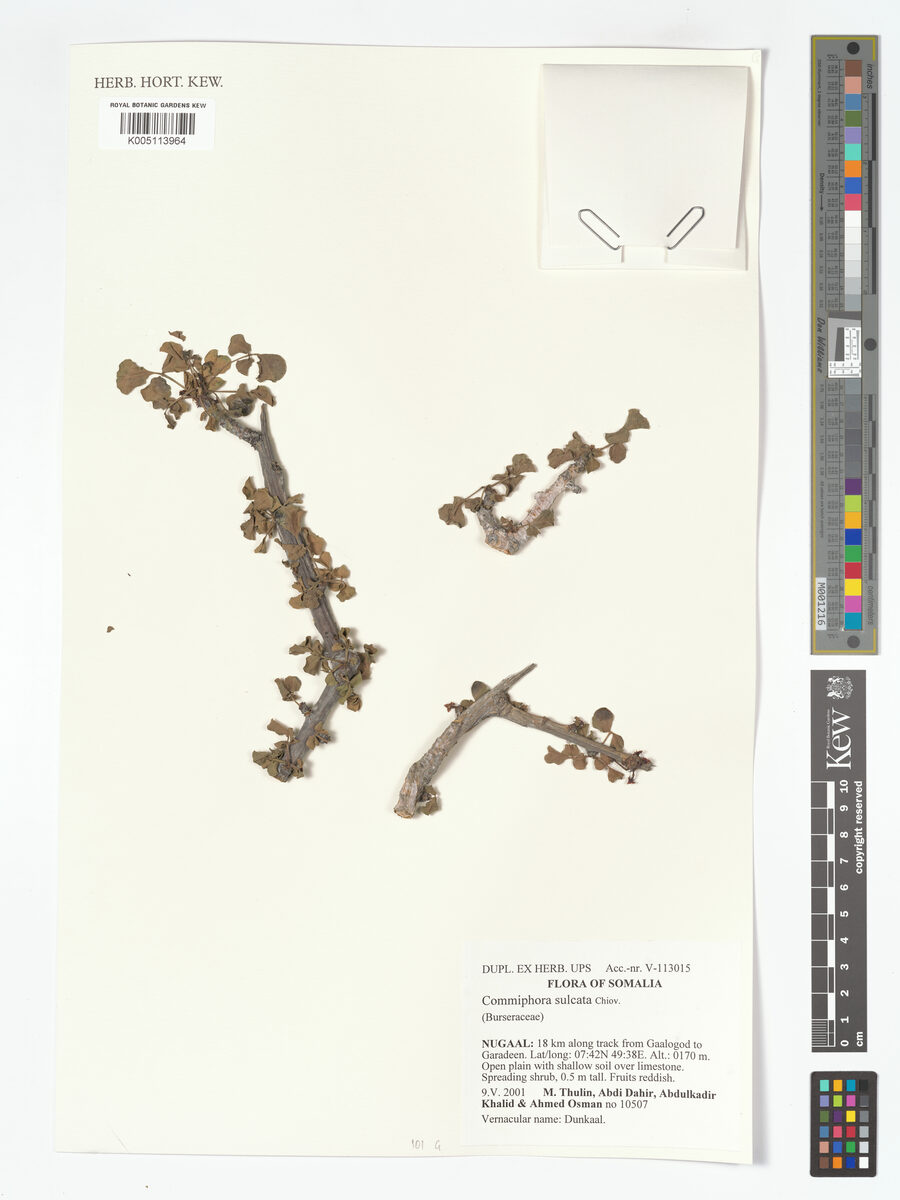
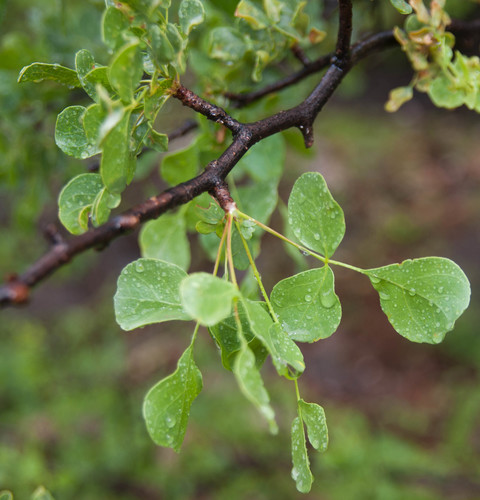
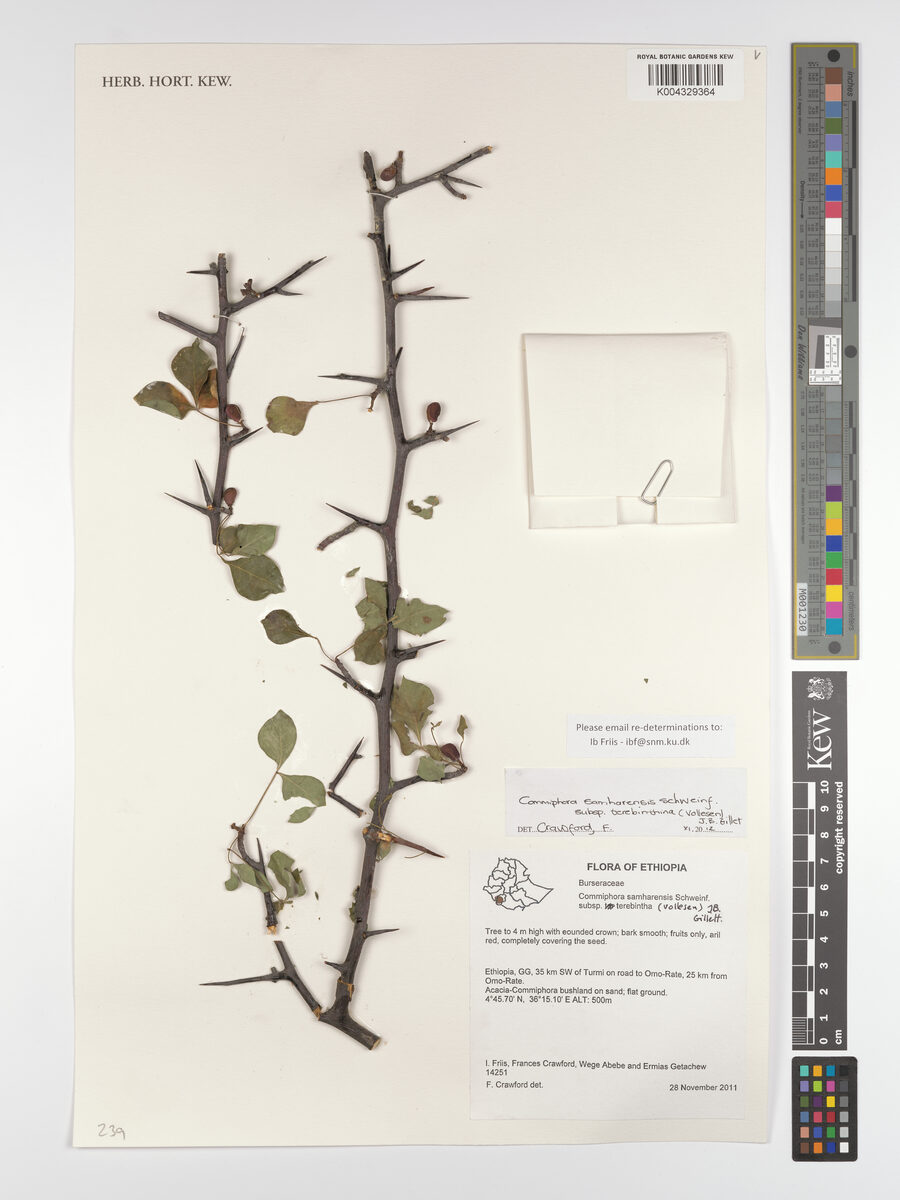
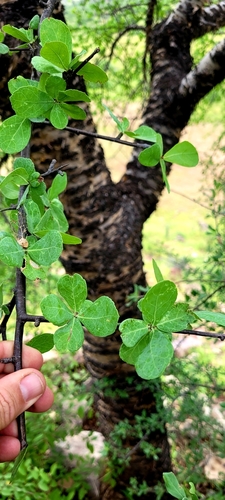
Commiphora angolensis
Engl.
Sand commiphora, Sand corkwood
iNaturalist· cc-by-nc
(c) Lisa Schwarz, some rights reserved (CC BY-NC), uploaded by Lisa Schwarz
iNaturalist· cc-by-nc
(c) keanumrc, some rights reserved (CC BY-NC)
iNaturalist· cc-by-nc
(c) Francois du Randt, some rights reserved (CC BY-NC), uploaded by Francois du Randt
Summary
Source: WikipediaCommiphora angolensis, also known as sand commiphora or sand corkwood, is a shrub species in the genus Commiphora growing mainly in Angola and Namibia. The adults and larvae of Diamphidia nigroornata feed on C. angolensis. The bark of C. angolensis contains condensed tannins and the anthocyanin petunidin-3-rhamnoglucoside.
Description
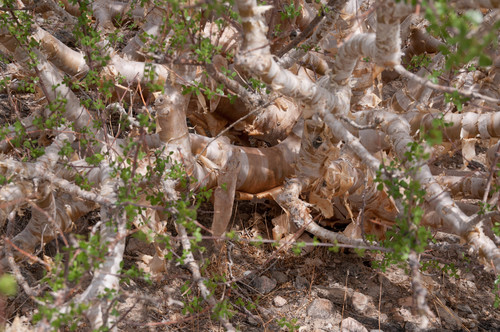
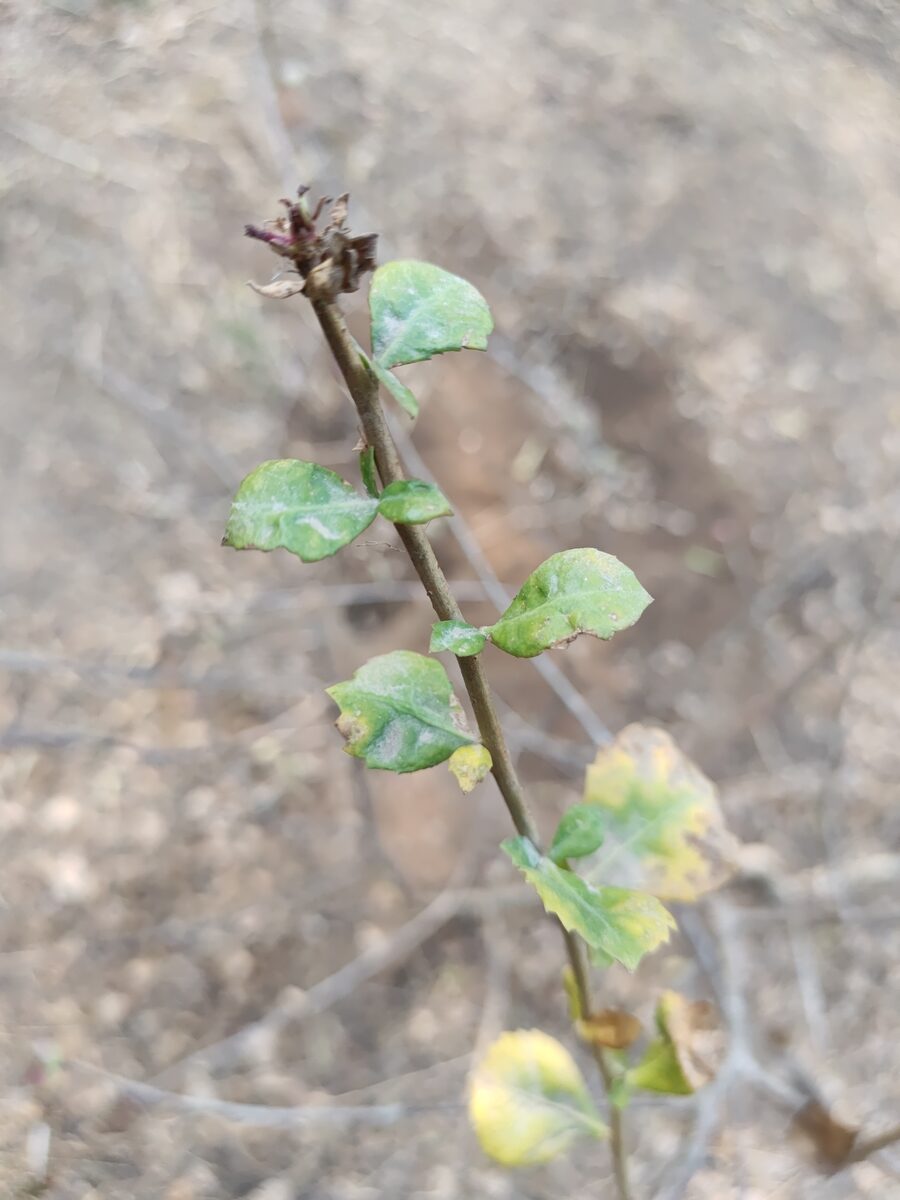
A shrub or small tree. It grows 5 m tall. The bark becomes brown and flakes off. Young branches are densely hairy. The leaves have leaflets along the stalk. These can be divided. The leaflets are 6 cm long by 2 cm wide. The are narrowly oblong. There are rounded teeth along the edge. The flowers appear with the young leaves. They are in groups 8 cm long in the axils of leaves. The fruit are about 1 cm across.
Edible Uses
The root is chewed and sucked for its juice, traditionally accessed by removing the red bark.
Traditional Uses
The red bark is removed then the root is chewed and sucked for the juice.
This uses section is brief — help expand it
Medicinal Uses
The root is used traditionally for oral consumption.
Distribution
It is a tropical plant. It grows in Kalahari sands. It grows in semi-desert.
Where It Grows
Africa, Angola, Botswana, Central Africa, East Africa, Namibia, South Africa, Southern Africa, Zambia, Zimbabwe,
Cultivation
The plant can form quite large thickets. A dioecious species, both male and female forms need to be grown if fruit and seed are required.
Other Uses
The wood is used for carving household utensils.
Nutrition
| Part | Moisture | kJ | kcal | Protein | Vit A | Vit C | Iron | Zinc |
|---|---|---|---|---|---|---|---|---|
| Roots | 75.5 | — | — | — | — | 5.5 | — | — |
Synonyms
Also Known As
Mumwatikatiki
References (13)
- Flora Zambesiaca. http://apps.kew.org/efloras
- Fowler, D. G., 2007, Zambian Plants: Their Vernacular Names and Uses. Kew. p 15
- Fox, F. W. & Young, M. E. N., 1982, Food from the Veld. Delta Books. p 140
- http://aflora.africa.kyoto-u.ac.jp
- Peters, C. R., O'Brien, E. M., and Drummond, R.B., 1992, Edible Wild plants of Sub-saharan Africa. Kew. p 72
Show all 13 references Hide references
- Roodt, V., 1998, Trees & Shrubs of the Okavango Delta. Medicinal Uses and Nutritional value. The Shell Field Guide Series: Part 1. Shell Botswana. p 193
- Ruiters-Welcome, A. K., 2019, Food plants of southern Africa. Ph.D. thesis. Univ. of Johannesburg p 40
- Tanaka, 1980,
- van Wyk, Be., & Gericke, N., 2007, People's plants. A Guide to Useful Plants of Southern Africa. Briza. p 84
- Wehmeyer, A. S, 1986, Edible Wild Plants of Southern Africa. Data on the Nutrient Contents of over 300 species
- Welcome, A. K. & Van Wyk, B.-E., 2019, An inventory and analysis of the food plants of southern Africa. South African Journal of Botany 122 (2019) 136–179
- World Checklist of Useful Plant Species 2020. Royal Botanic Gardens, Kew
- www.zimbabweflora.co.zw 2011