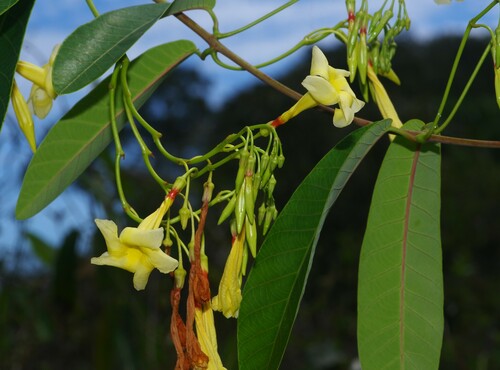
Stenostelma capense
Schltr.
Bush carrot
iNaturalist· cc-by-nc
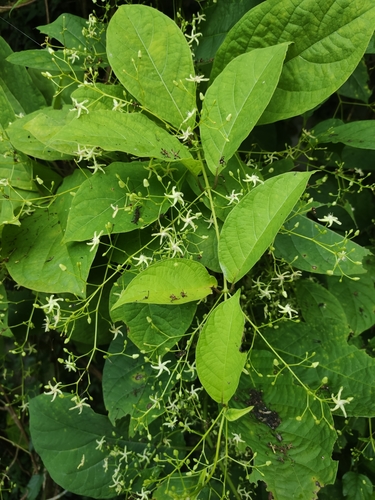
(c) Tony Benn, some rights reserved (CC BY-NC), uploaded by Tony Benn
iNaturalist· cc-by-sa
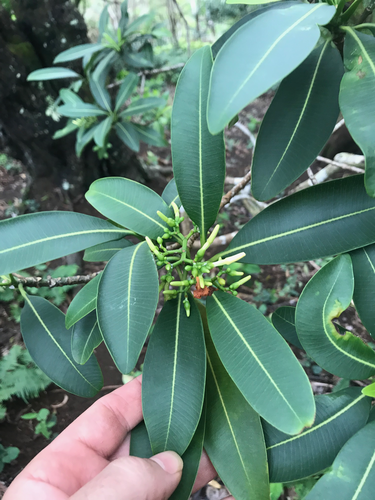
(c) Nicola van Berkel, some rights reserved (CC BY-SA), uploaded by Nicola van Berkel
Description
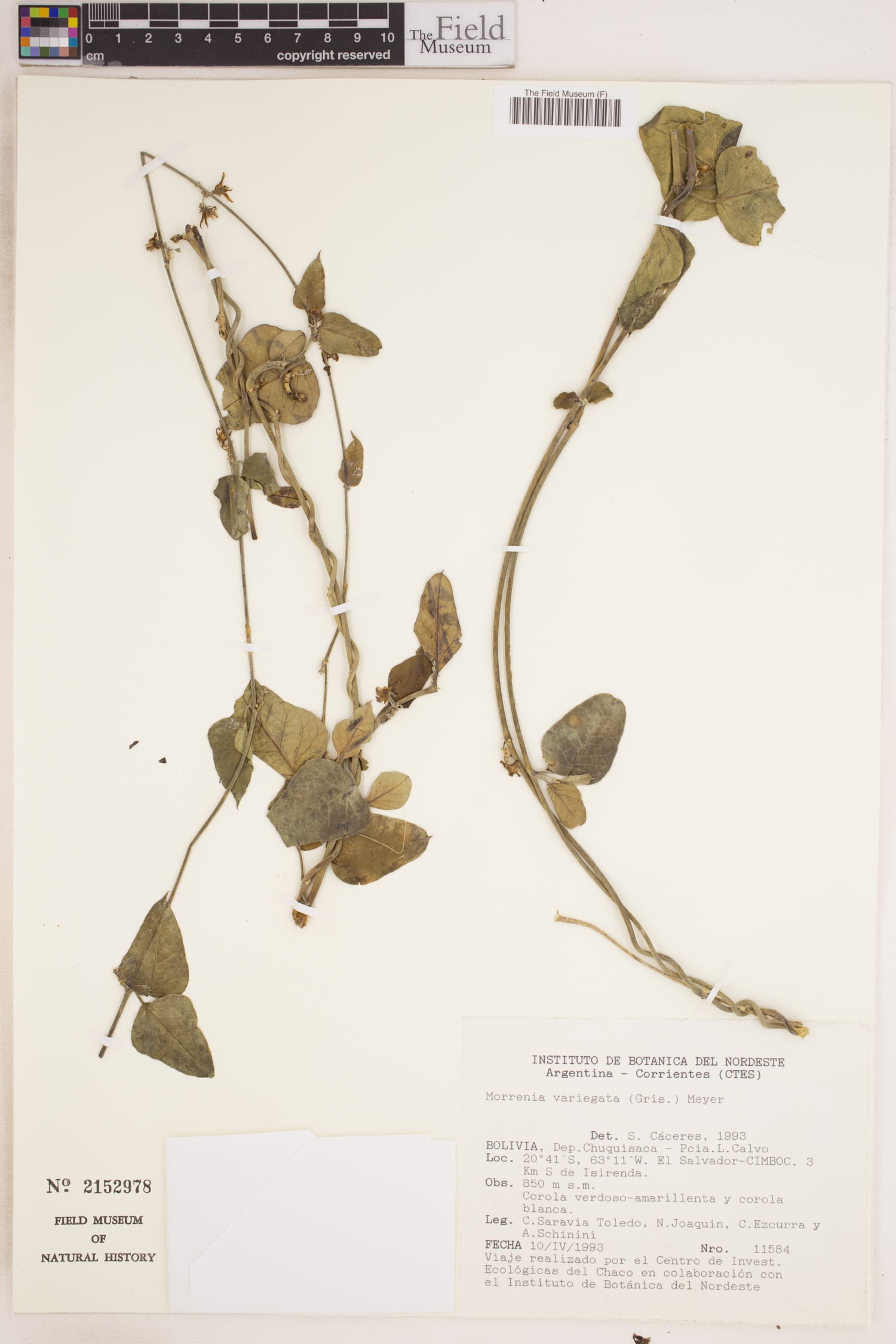
A herb with a taproot. It grows 30 cm high. It can keep growing from year to year. The roots are long and spindle shaped. They are 30 cm long by 5 cm wide. The stems are usually branched. The leaves are narrow. They are 7 cm long by 5 mm wide. They are slightly hairy on the upper surface. The flowers are small and brownish-green. They are in groups on long flowering stalks.
Edible Uses
The root tubers are roasted and eaten, traditionally baked in hot ashes.
Traditional Uses
The root tubers are roasted and eaten. They are baked in hot ashes.
This uses section is brief — help expand it
Distribution
It is a subtropical plant. It grows in hot arid areas with a marked dry season. It can grow in places with a dry season of 6-11 months. In southern Africa it grows between 900-1,500 m altitude. It can grow in arid places.
Where It Grows
Africa, Botswana, East Africa, Namibia, South Africa, Southern Africa, Zimbabwe,
Production
It grows in the Kalahari and is eaten during the rainy season.
Synonyms
Also Known As
Mpungu, Ombaruru
References (5)
- Fox, F. W. & Young, M. E. N., 1982, Food from the Veld. Delta Books. p 116
- Royal Botanic Gardens, Kew (1999). Survey of Economic Plants for Arid and Semi-Arid Lands (SEPASAL) database. Published on the Internet; http://www.rbgkew.org.uk/ceb/sepasal/internet [Accessed 4th April 2011]
- Ruiters-Welcome, A. K., 2019, Food plants of southern Africa. Ph.D. thesis. Univ. of Johannesburg p 27
- Welcome, A. K. & Van Wyk, B.-E., 2019, An inventory and analysis of the food plants of southern Africa. South African Journal of Botany 122 (2019) 136–179
- World Checklist of Useful Plant Species 2020. Royal Botanic Gardens, Kew