Ceropegia purpurascens
K. Schum.
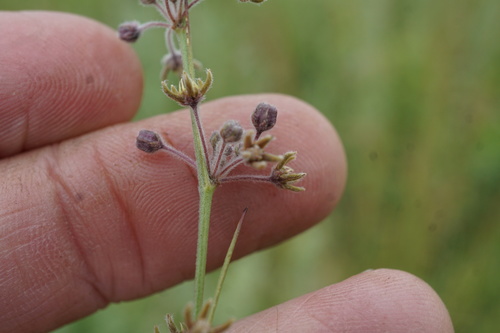
iNaturalist· cc-by-nc
(c) Duncan McKenzie, some rights reserved (CC BY-NC), uploaded by Duncan McKenzie
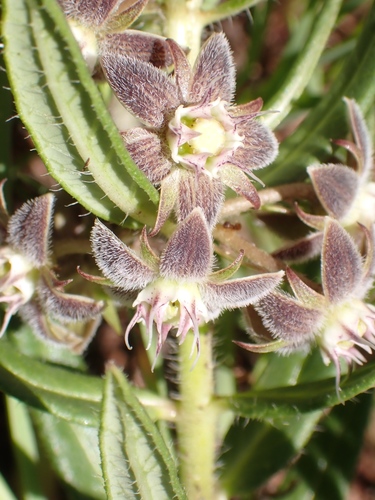
iNaturalist· cc-by-nc
(c) Troos van der Merwe, some rights reserved (CC BY-NC)
Description
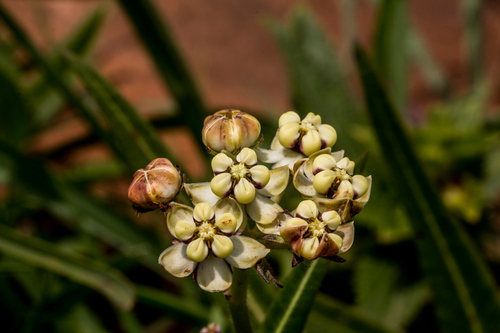
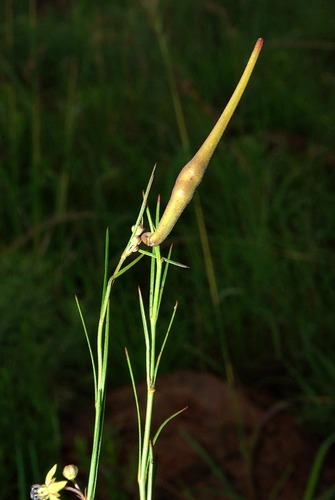
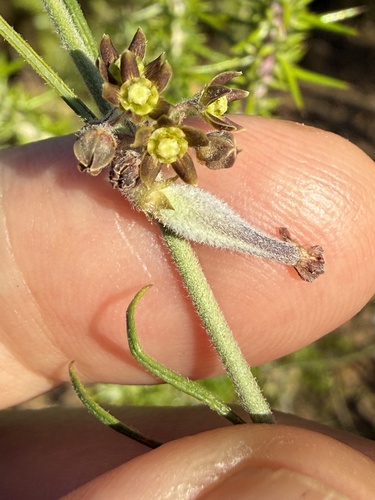
A herb with a corm or bulb. It is succulent and can be a climber. It can grow 3 m high. It grows from a flattened tuberous rootstock. The leaves are large. They are 7 cm long and 2-3 cm wide on leaf stalks 1 cm long. The flowers occur as many together. The fruit are in pairs and growing opposite each other.
Edible Uses
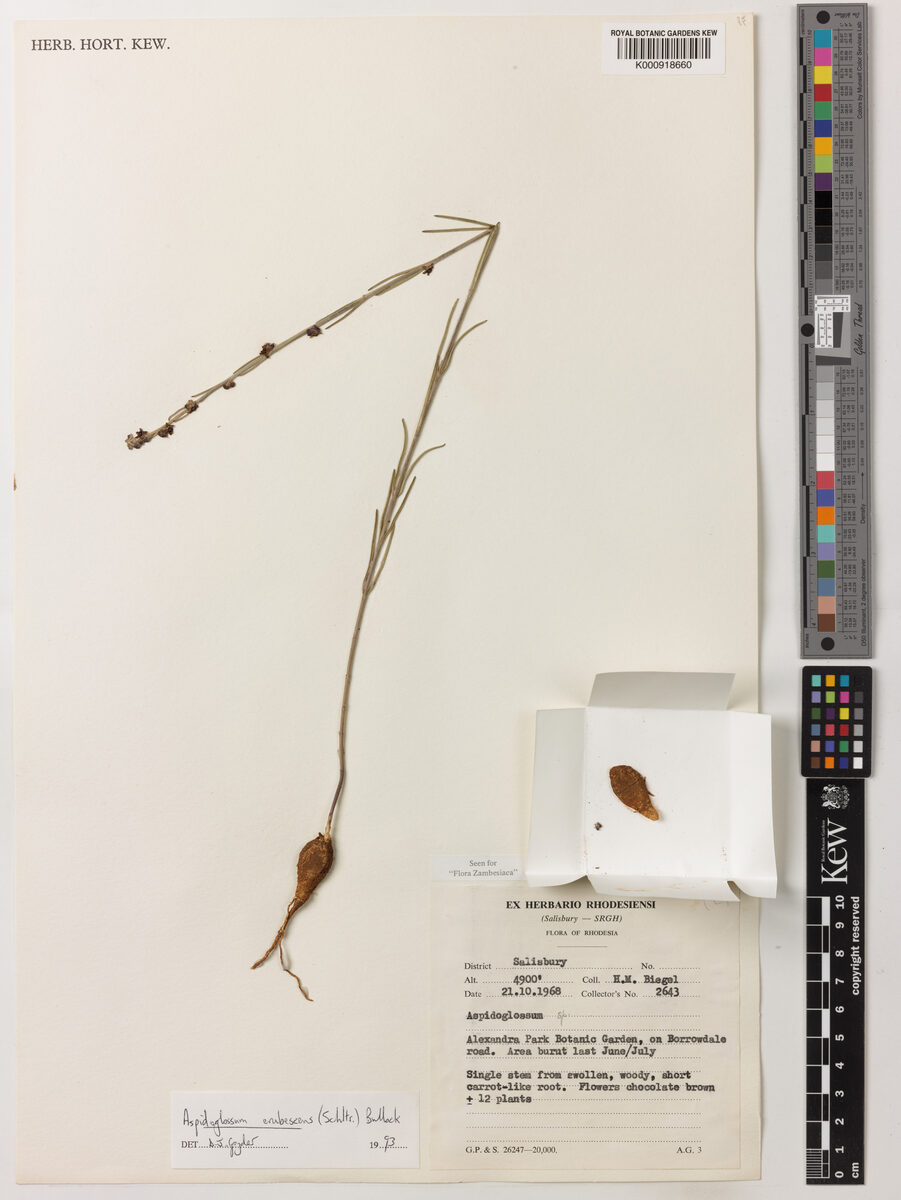
Root - raw or, more commonly, cooked. A cluster of pencil-shaped, succulent roots according to one report, or small tubers according to another.
Traditional Uses
The tubers are baked in the ashes and eaten.
This uses section is brief — help expand it
Distribution
It is a tropical plant. It can tolerate shade. In southern Africa it grows between 900-1,200 m above sea level. It can grow in arid places.
Where It Grows
Africa, Angola, Botswana, Central Africa, East Africa, Namibia, Southern Africa, Tanzania, Zambia, Zimbabwe,
Cultivation
A plant of semi-arid areas in the tropics and subtropics, where it can be found at elevations from 900 - 1,200 metres. Grows best in a shady position.
Notes
Also put in the family Asclepiadaceae.
Synonyms
References (4)
- Royal Botanic Gardens, Kew (1999). Survey of Economic Plants for Arid and Semi-Arid Lands (SEPASAL) database. Published on the Internet; http://www.rbgkew.org.uk/ceb/sepasal/internet [Accessed 30th March 2011]
- Ruiters-Welcome, A. K., 2019, Food plants of southern Africa. Ph.D. thesis. Univ. of Johannesburg p 23
- Welcome, A. K. & Van Wyk, B.-E., 2019, An inventory and analysis of the food plants of southern Africa. South African Journal of Botany 122 (2019) 136–179
- World Checklist of Useful Plant Species 2020. Royal Botanic Gardens, Kew