Carissa ovata
R. Br.
Currant bush, Carissa, Kunkerberry
iNaturalist· cc-by
(c) Martin Rady, some rights reserved (CC BY)
iNaturalist· cc-by
(c) Martin Rady, some rights reserved (CC BY)
iNaturalist· cc-by
(c) Martin Rady, some rights reserved (CC BY)
Description
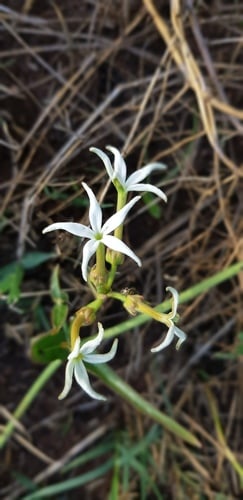
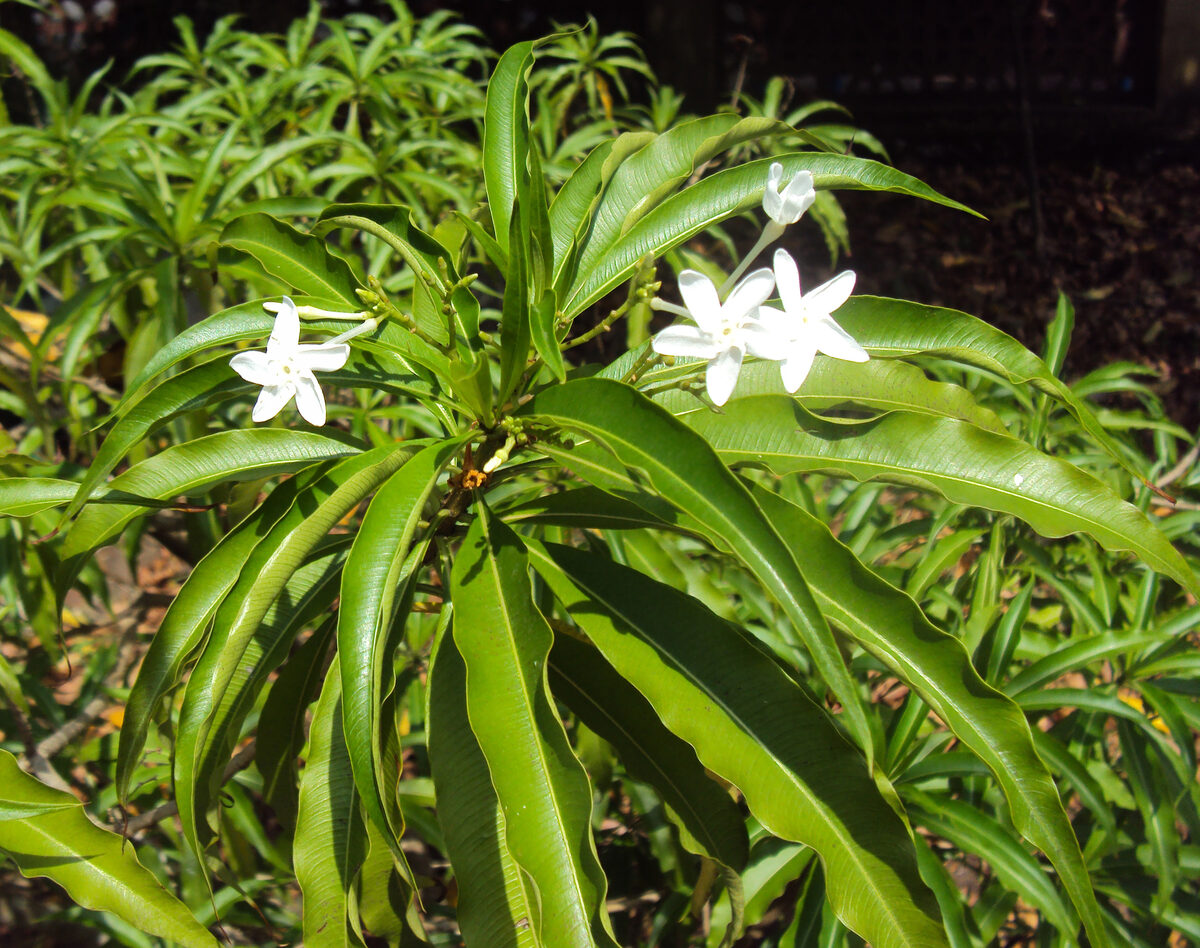
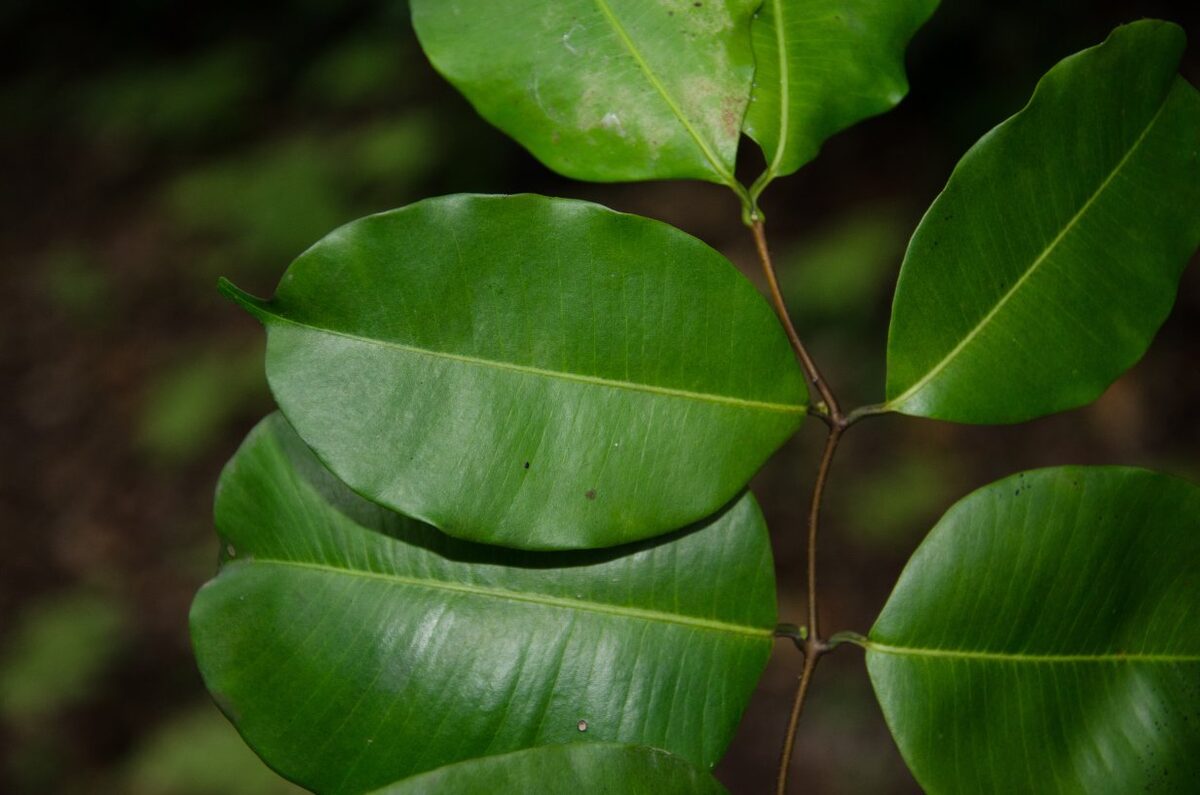
A small shrub. It grows 1-2 m high. The stems have spines along them. The leaves are opposite and oval. They can be blunt or pointed. The leaves are leathery and held stiffly. The leaves are shiny green and 1-3 cm long by 0.5-1.5 cm across. The flowers are white and have a sweet smell. They have 5 petals and are 0.6 cm across. They occur in upright clusters in the axils of upper leaves. The fruit is a berry which is oval and black. It is 1-1.5 cm long.
Edible Uses
The fruit are eaten raw or cooked.
Traditional Uses
The fruit are eaten raw or cooked.
This uses section is brief — help expand it
Distribution
A tropical plant. It can grow in coastal or inland areas. It does best in a shady position. In tropical Queensland it grows from sea level to 900 m altitude. It will grow in most soils. It is resistant to drought but sensitive to frost.
Where It Grows
Australia*,
Cultivation
Plants can be grown from seed or cuttings. The flesh is removed from the seeds before planting.
Production
It is slow growing but lives a long time.
Notes
There about 20-37 Carissa species. All Carissa species bear edible fruit. They grow in the tropics and subtropics.
Synonyms
Also Known As
Karey, Ulorin
References (26)
- Bircher, A. G. & Bircher, W. H., 2000, Encyclopedia of Fruit Trees and Edible Flowering Plants in Egypt and the Subtropics. AUC Press. p 84
- Bodkin, F., 1991, Encyclopedia Botanica. Cornstalk publishing, p 215
- Cooper, W. and Cooper, W., 2004, Fruits of the Australian Tropical Rainforest. Nokomis Editions, Victoria, Australia. p 34
- Cribb, A.B. & J.W., 1976, Wild Food in Australia, Fontana. p 25
- Eddie, C., 2007, Field Guide to Trees and Shrubs of Eastern Queensland Oil and Gas Fields. Santos p 250
Show all 26 references Hide references
- Elliot, W.R., & Jones, D.L., 1982, Encyclopedia of Australian Plants suitable for cultivation. Vol 2. Lothian. p 464
- Flora of Australia, Volume 28, Gentiales, Melbourne:CSIRO Australia, 1996. p 109 Map 142 p 294
- Hall, N. et al, 1972, The Use of Trees and Shrubs in the Dry Country of Australia, AGPS, Canberra. p 358
- Hardwick, G., 2001, Economically Useful Plants for Northern Australia: Master Species List. Crusader eBooks.
- Haslam, S., 2004, Noosa's Native Plants. Noosa Integrated Catchment Assn. Inc. p 285
- Hibbert, M., 2002, The Aussie Plant Finder 2002, Florilegium. p 60
- Jones D, L, 1986, Ornamental Rainforest Plants in Australia, Reed Books, p 204
- Lazarides, M. & Hince, B., 1993, Handbook of Economic Plants of Australia, CSIRO. p 49
- Low, T., 1991, Wild Food Plants of Australia. Australian Nature FieldGuide, Angus & Robertson. p 168
- Melzer, R., & Plumb, J., 2011, Plants of Capricornia. Belgamba, Rockhampton. p 72
- Paczkowska, G. & Chapman, A.R., 2000, The Western Australian Flora. A Descriptive Catalogue. Western Australian Herbarium. p 149
- Prodr. 468. 1810
- Ryan, M. (Ed.), 2003, Wild Plants of Greater Brisbane. Queensland Museum. p 251
- Stanley, T. D. & Ross, E. M., 1986, Flora of south-eastern Queensland Volume 2. Queensland Government p 304
- Steenbeeke, Greg as part of the Plants Directory project. List of plant species from northern NSW that may be used as food plants p 15
- Townsend, K., 1994, Across the Top. Gardening with Australian Plants in the tropics. Society for Growing Australian Plants, Townsville Branch Inc. p 123
- Vigilante, T., et al, 2013, Island country: Aboriginal connections, values and knowledge of the Western Kimberley islands in the context of an island biological survey. Records of the Western Australian Museum Supplement 81: 145-182
- Wheeler, J.R.(ed.), 1992, Flora of the Kimberley Region. CALM, Western Australian Herbarium, p 702
- Williams, J.B., Harden, G.J., and McDonald, W.J.F., 1984, Trees and shrubs in rainforests of New South Wales and Southern Queensland. Univ. of New England, Armidale. p 59
- Williams, K.A.W., 1999, Native Plants of Queensland Volume 4. Keith A.W. Williams North Ipswich, Australia. p 98
- Yallakool Reserve Plant List July 1, 2009 Off internet