Cephalotaxus fortunei
W. J. Hooker
Fortune plum yew, Chinese plum yew
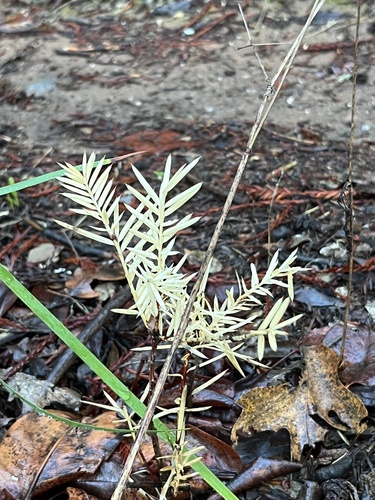
iNaturalist· cc-by-nc
(c) Du-Sa-Ni-Ma, some rights reserved (CC BY-NC)
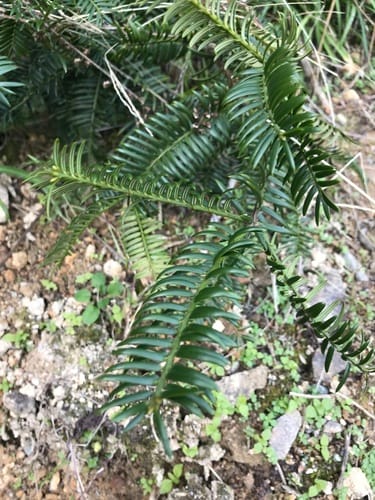
iNaturalist· cc-by-nc
(c) MP Zhou, some rights reserved (CC BY-NC)
Summary
Source: WikipediaCephalotaxus fortunei, commonly called the Chinese plum-yew, Fortune's yew plum, simply plum yew, Chinese cowtail pine or in Chinese as san jian shan (Chinese: 三尖杉; pinyin: sǎnjiānshān), is a coniferous shrub or small tree in the family Taxaceae. It is native to northern Burma and China, but is sometimes grown in western gardens where it has been in cultivation since 1848.
Description
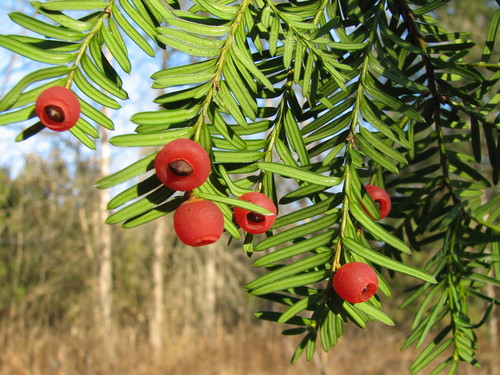
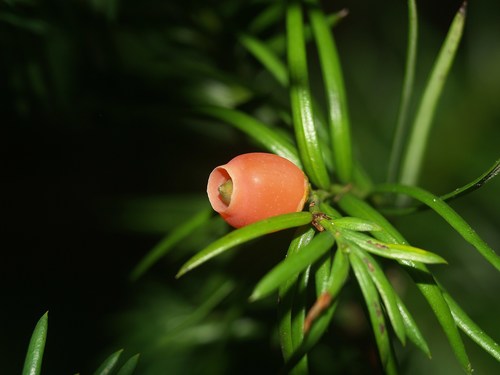
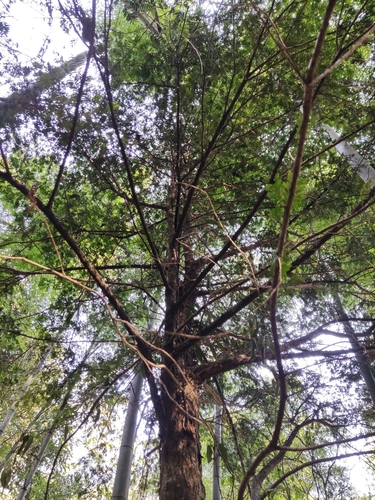
A small tree. It grows 9 m high. The bark is red brown. It flakes off. The leaves are narrow and 10 cm long. They are 3 mm across. They are glossy and green with two white bands underneath. They are pointed. The male and female flowers are in clusters on separate plants. They are creamy yellow. The male flowers are in the axils of leaves while the female flowers are at the tips. The fruit is oval and fleshy. They are purple brown and 2.5 cm long. The fruit contain one seed.
Edible Uses
The fruit is fairly large, approximately 30mm x 15mm. No further details are available, though the plant is closely related to C. harringtonia, whose fruit is edible raw when fully ripe. The fruit does not always ripen in Britain; before full ripeness it has a strongly unpleasant resinous flavour that coats the mouth and can persist for hours. The seed of this species may also be edible.
Medicinal Uses
Substances extracted from the plant have shown anticancer activity.
Distribution
It is a temperate and subtropical plant. It grows naturally in mountain forests. It needs well-drained soil. It grows well in an open sunny position. It is resistant to drought and frost. Hobart Botanical Gardens. It suits hardiness zones 7-10. Arboretum Tasmania.
Where It Grows
Asia, Australia, Britain, China*, Europe, Myanmar, SE Asia, Tasmania, Vietnam,
Cultivation
Prefers a moist well-drained sandy soil but succeeds in most soils though it dislikes dry gravelly or chalky soils. Prefers a position in semi-shade but tolerates full shade and it also succeeds but does not usually thrive in full sun. It grows very well in the mild wet coastal region of W. Scotland where it succeeds even in full sun. Requires a humid sheltered site, strongly disliking very exposed positions. Although the dormant plant is very cold-hardy, the young growth in spring, even on mature plants, is frost-tender and so it is best to grow the plants in a position sheltered from the early morning sun. The Chinese plum yew is a very slow growing shrub or small tree that has excellent potential as a nut crop in Britain. It usually fruits regularly and well in most parts of the country and does well in Cornwall. Trees growing in the shade of other conifers fruit regularly and heavily at Kew Botanical gardens and, unlike most nut trees there, the seeds do not get eaten by the squirrels. Although we have seen no records of edibility for the seed of this species, the closely related C. harringtonia does have edible seed. There are some named forms selected for their ornamental value. 'Grandis' is a long leafed female form. 'Longifolia' is male but otherwise similar to 'Grandis'. 'Prostrata' (syn 'Prostrate Spreader') is a procumbent ground-covering plant that arose as cuttings from a side-shoot of a normal plant, a plant of this cultivar was seen with a very heavy crop of immature fruit in mid September 1994 at Hillier Arboretum. Plants are dioecious, but female plants sometimes produce fruits and infertile seeds in the absence of any male plants. However, at least one male plant for every five females should be grown if you are growing the plants for fruit and seed. Plants have also been known to change sex. Male cones are produced in the axils of the previous year's leaves, whilst female cones are borne at the base of branchlets.
Propagation
Seed is best sown as soon as it is ripe in a cold frame, where it should germinate the following spring. A hard seedcoat can delay germination, particularly if seed is not sown fresh. Stored seed should be cold-stratified before sowing in a cold frame in spring; germination can take 18 months or more. Prick out seedlings as soon as they are large enough to handle and grow on under cover for at least their first winter. Plant out in late spring after the last expected frosts. Greenwood cuttings of terminal shoots can be taken in August or September in a humid cold frame, though this method is difficult.
Other Uses
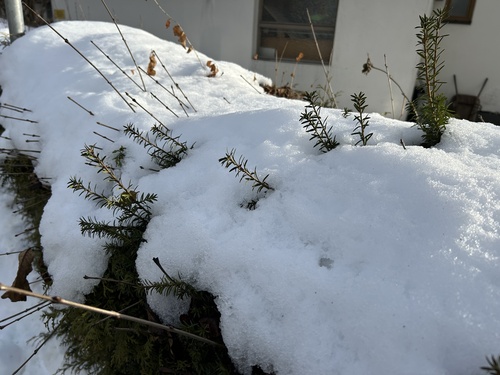
Some procumbent forms of this species can be used as ground cover in shady positions. The plant is very tolerant of pruning and makes an excellent hedge in shade.
Notes
There are about 6-10 Cephalotaxus species. It is used in medicine. Also put in the family Cephalotaxaceae.
Synonyms
References (7)
- Bot. Mag. 76: t. 4499. 1850 "fortuni"
- Coombes, A.J., 2000, Trees. Dorling Kindersley Handbooks. p 34
- Cundall, P., (ed.), 2004, Gardening Australia: flora: the gardener's bible. ABC Books. p 357
- Etherington, K., & Imwold, D., (Eds), 2001, Botanica's Trees & Shrubs. The illustrated A-Z of over 8500 trees and shrubs. Random House, Australia. p 198
- Marinelli, J. (Ed), 2004, Plant. DK. p 138
Show all 7 references Hide references
- Plants for a Future database, The Field, Penpol, Lostwithiel, Cornwall, PL22 0NG, UK. http://www.scs.leeds.ac.uk/pfaf/
- www.eFloras.org Flora of China