Canarium luzonicum
(Blume) A. Gray
Java almond, Pili nut, Manila elemi
wikimedia· cc0
Wikimedia Commons - Itineranttrader
wikimedia· cc0
Wikimedia Commons - Franz Eugen Köhler, Köhler's Medizinal-Pflanzen
gbif· cc0
President and Fellows of Harvard College
Summary
Source: WikipediaCanarium luzonicum, commonly known as elemi, is a tree native to the Philippines. The oleoresin harvested from it is also known as elemi resin.
Description
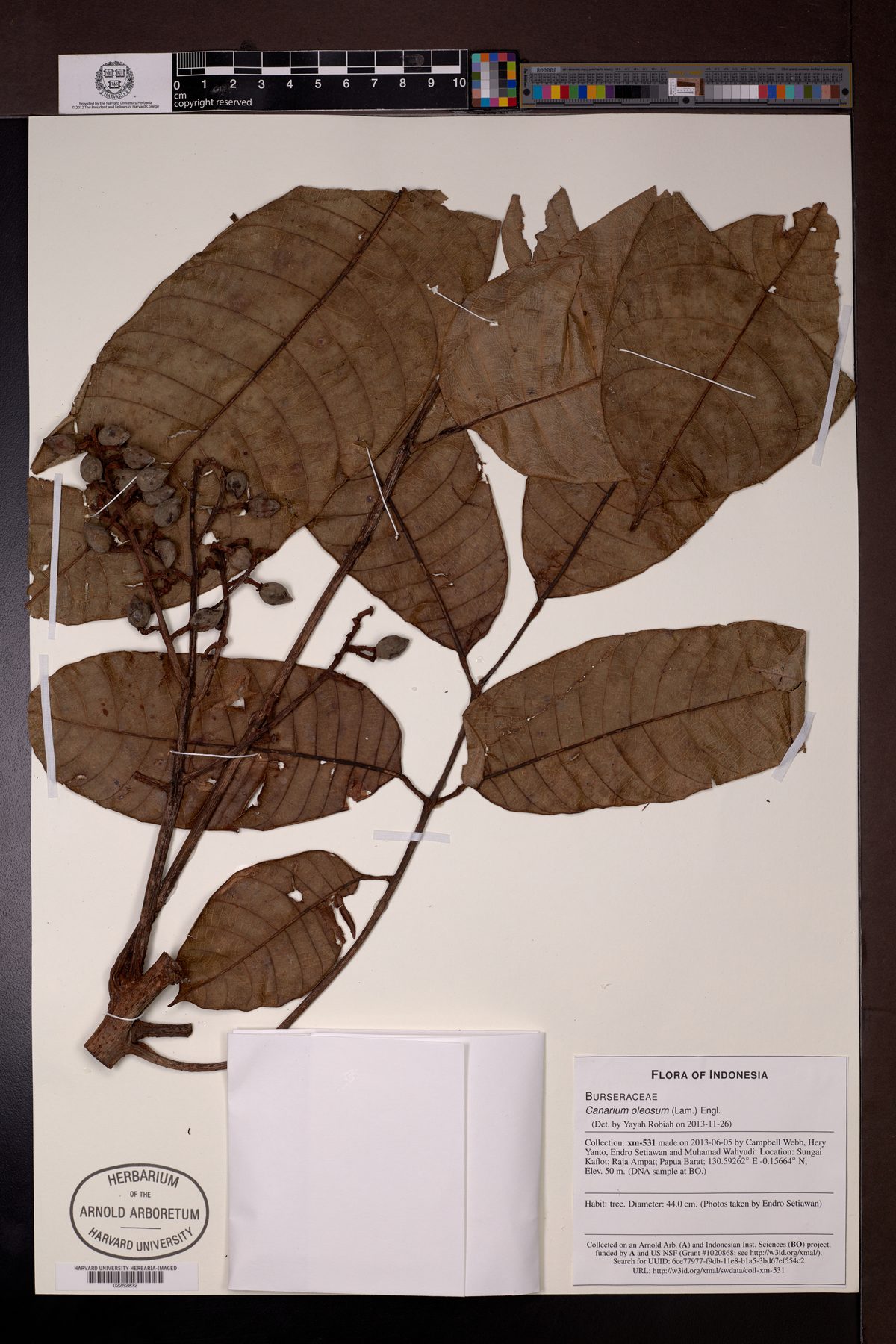
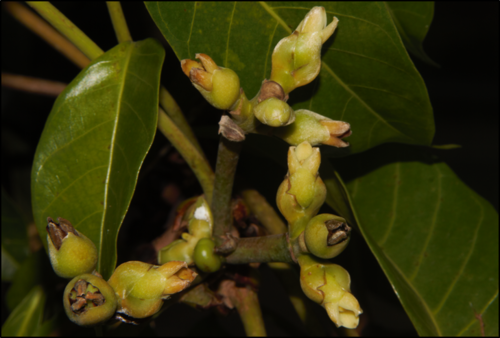
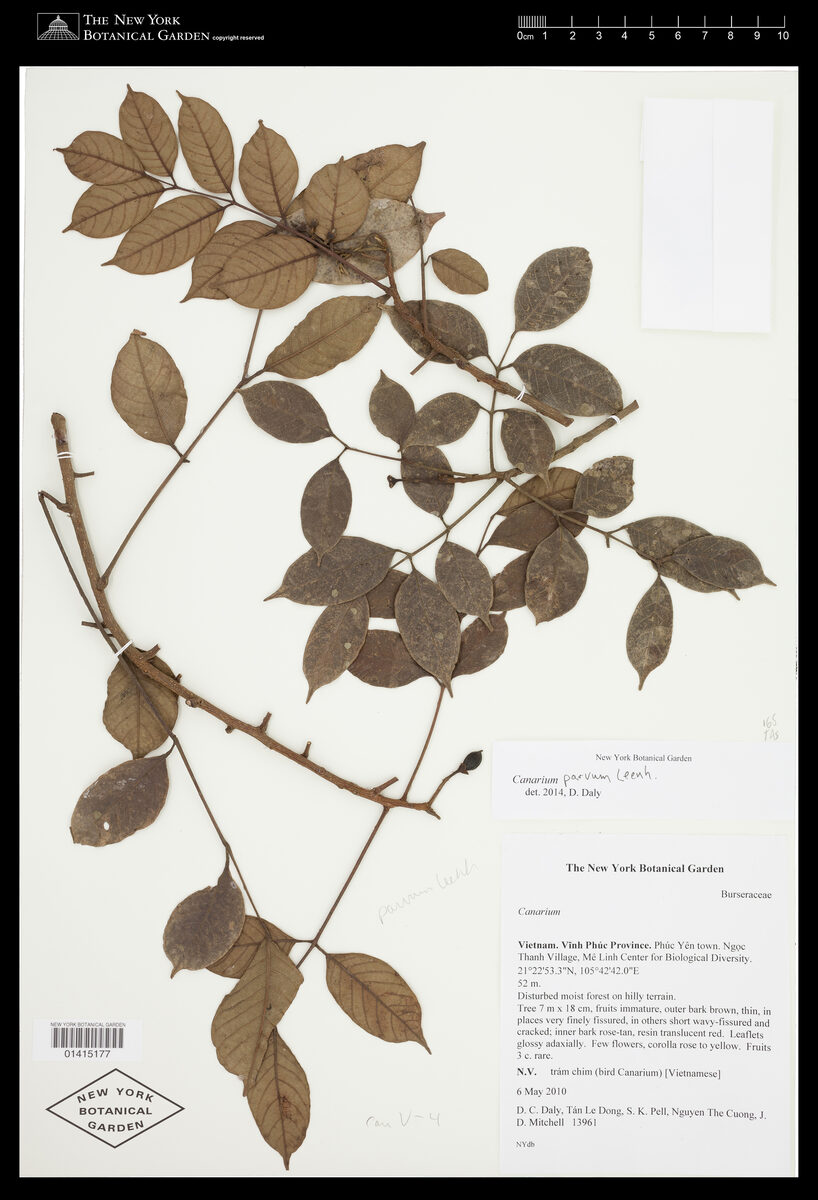
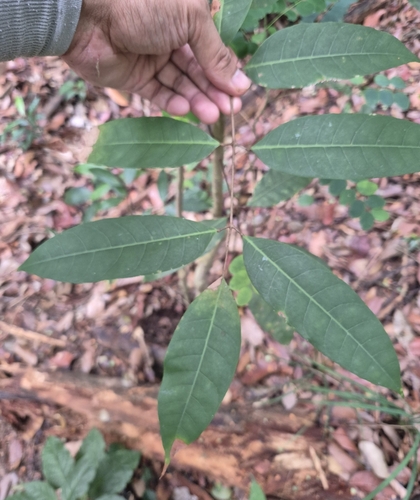
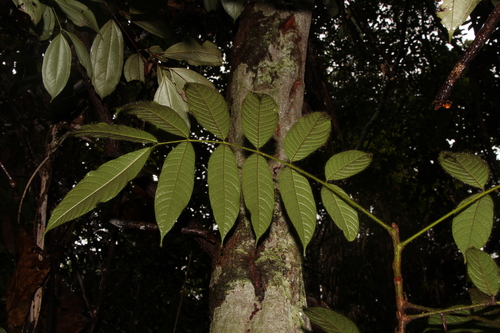
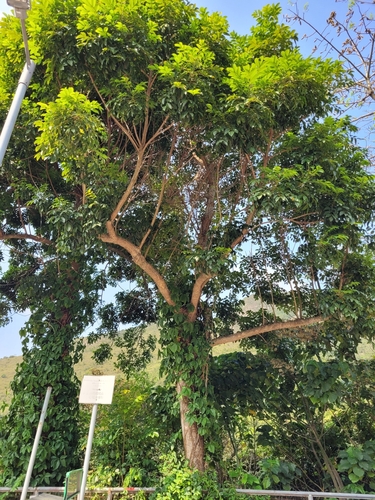
A large tree. It can grow up to 35 m high and be 1 m through in the trunk. The leaves have 3-5 pairs of opposite leaflets and a leaflet at the end. The leaflets are long or oval and 7-25 cm long by 4-8 cm wide. The leaflets are pointed at the tip and wedge shaped at the base. At the base of the leaf stalk there is a round leafy structure called a stipule. It can be 8 mm across and softly hairy. The small branches are 4-6 mm thick. The flowers are fairly small and borne in large compound flower clusters. The flower clusters occur in the axils of leaves. The male clusters are 10-25 cm long while the female clusters are 5-18 cm long. There are many male flowers in the cluster but 3-5 female flowers in the female clusters. The fruiting stalk can be 4-10 cm long. The fruit is oval and slightly triangular in cross section. Fruit are 2-4 cm long by 1-2 cm wide.
Edible Uses
The sweet nuts have a delicious flavour when roasted and can be served like almonds. They are also used in confections, ice cream, nut milks, and as an adulterant to chocolate. The coat surrounding the kernel should be removed as it can cause diarrhoea. The shell is very thick and difficult to crack, though some thinner-shelled forms exist. A sweet oil obtained from the seed is used for cooking. The fruit pulp is boiled and eaten, though it is rather tasteless, and an oil extracted from the pulp has a tangy, resin-like flavour. Young shoots are eaten raw in salads.
Traditional Uses
The kernels of the nuts are eaten raw or roasted. The fruit pulp can be cooked. Young shoots can be eaten raw.
This uses section is brief — help expand it
Medicinal Uses
Manila elemi — the oleoresin tapped from the tree — and the essential oil distilled from it have a long history of medicinal use, and are considered antibacterial, antifungal, antirheumatic, antiseptic, antispasmodic, and rubefacient. Analysis of Manila elemi oil from distilled elemi resin identified 39 compounds, with limonene the most abundant at 56%. A corn-sized drop of the resin taken with water is used to treat fevers and chills. Applied externally, the oleoresin is used on arthritic and rheumatic joints, boils, abscesses, furuncles, burns, and sores. Heated and applied to the chest as a poultice, it is used to stop severe coughing. The tree bark is commonly used in postpartum baths. The essential oil is an ingredient in a commercial anti-lice preparation called 'Lysout', a natural foaming gel that also contains Echinacea purpurea.
Distribution
A tropical plant. Common in the primary forest of Luzon and also found in Marinduque, Tacao, Mindoro and Masbate in Philippines. They grow at low to medium altitudes.
Where It Grows
Africa, Asia, Ghana, Malaysia, Pacific, Philippines, SE Asia, West Africa,
Cultivation
Plants are grown from seeds.
Propagation
No specific propagation information is recorded for this species, but seeds of this genus generally have a hard seed coat and germinate erratically. Filing away a portion of the seed coat to allow moisture to penetrate more readily — without damaging the seed itself — will encourage faster and more even germination.
Other Uses
An oily resin called Manila elemi is obtained from incisions in the bark. It is soft and fragrant, oily, pale yellow to greenish, of honey-like consistency, balsamic in odour, and bitter tasting. It is used in varnishes and inks, for caulking boats, making torches, perfumery, and various medicinal applications, and can be used in place of turpentine. A tannin of reasonable quality is also obtained from the bark. The wood is not very hard and is used for light construction. This species is one of several sources of kedondong timber from the family Burseraceae, though the tree is more highly valued for its resin and edible seed and so is little harvested for timber. Kedondong heartwood is generally light brown and not sharply differentiated from the 3–5cm band of lighter sapwood. The texture is moderately fine and even; the grain interlocked to wavy; the surface lustrous. The wood is light in weight, moderately hard, and not very durable, being susceptible to fungi, dry wood borers, and termites. It seasons somewhat slowly with slight risk of checking and distortion, and once dry is moderately stable to stable in service. It has a fairly high blunting effect on tools, with stellite-tipped and tungsten carbide tools recommended; it is moderately easy to slightly difficult to plane, finishes smooth to rough, ranges from easy to very difficult to bore, and is slightly to moderately difficult to turn; nailing, screwing, and gluing properties are good. The wood is suitable for internal use as a general utility timber for planking, cladding, plywood, flooring, furniture, packing cases, pallets, and general carpentry.
Production
Flowering occurs mainly in August and September and fruiting in January and February.
Other Information
It is cultivated.
Notes
There are 80-95 Canarium species.
Synonyms
Also Known As
Antong, Bikolano, Elemi, Pining-liitan, Sahing
References (20)
- Abbiw, D.K., 1990, Useful Plants of Ghana. West African uses of wild and cultivated plants. Intermediate Technology Publications and the Royal Botanic Gardens, Kew. p 46
- Bircher, A. G. & Bircher, W. H., 2000, Encyclopedia of Fruit Trees and Edible Flowering Plants in Egypt and the Subtropics. AUC Press. p 79
- Brouk, B., 1975, Plants Consumed by Man. Academic Press, London. p 222
- Brown, W.H., 1920, Wild Food Plants of the Philippines. Bureau of Forestry Bulletin No. 21 Manila. p 78
- Burkill, I.H., 1966, A Dictionary of the Economic Products of the Malay Peninsula. Ministry of Agriculture and Cooperatives, Kuala Lumpur, Malaysia. Vol 1 (A-H) p 435
Show all 20 references Hide references
- Carig, Elizabeth T., 2020, Guidebook on Native Trees within the Quirino Forest Landscape. Plaridel, Bulacan, St. Andrew Publishing House. p 97
- FAO, 1995, Edible Nuts. Non Wood Forest Products 5.
- Leenhouts, P.W., 1955, Burseraceae in Flora Malesiana 5(1) p 270
- Leenhouts, P.W., 1959, Blumea 9(2):363-364
- Macmillan, H.F. (Revised Barlow, H.S., et al) 1991, Tropical Planting and Gardening. Sixth edition. Malayan Nature Society. Kuala Lumpur. p 296
- Menninger, E.A., 1977, Edible Nuts of the World. Horticultural Books. Florida p 25, 26
- Monsalud, M.R., Tongacan, A.L., Lopez, F.R., & Lagrimas, M.Q., 1966, Edible Wild Plants in Philippine Forests. Philippine Journal of Science. p 450
- Oldfield, S., et al, 1998, The World List of Threatened Trees. World Conservation Press. p 104
- Terrell et al., 1986. Agric. Handb. no. 505
- Uphof, 1968,
- Walter, A. & Sam C., 2002, Fruits of Oceania. ACIAR Monograph No. 85. Canberra. p 131
- Wickens, G.E., 1995, Edible Nuts. FAO Non-wood forest products. FAO, Rome. p 111
- Wiersema, J. H. & Leon, B., 2013, World Economic Plants. A Standard Reference CRC Press. 2nd Ed. p 138
- C. Wilkes, U. S. Expl. Exp., Phan. 1:374. 1854
- World Checklist of Useful Plant Species 2020. Royal Botanic Gardens, Kew