Canarium patentinervium
Miq.
Woodland kedongdong
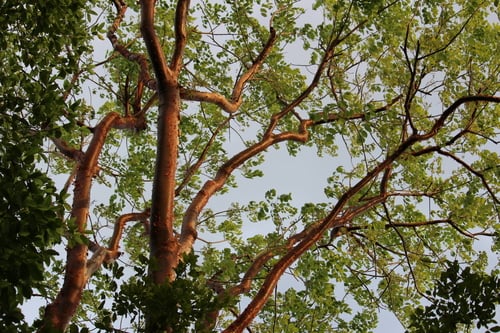
iNaturalist· cc-by-nc
(c) kaigrr, some rights reserved (CC BY-NC), uploaded by kaigrr
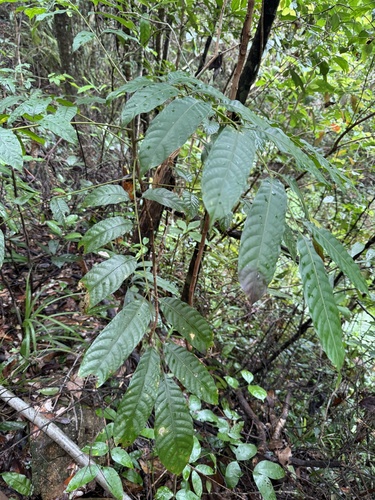
iNaturalist· cc-by-nc
(c) kaigrr, some rights reserved (CC BY-NC)
Summary
Source: WikipediaCanarium patentinervium is a tree of tropical Asia in the incense tree family Burseraceae. The specific epithet patentinervium is from the Latin meaning "spreading nerves", referring to the leaf veins.
Description
A tree. It grows up to 40 m tall. The trunk can be 50 cm across. It can have buttresses. The leaves have 2-5 pairs of leaflets. The flowering stalks are 6-8 cm long. They can have 4 fruit. The flowers are in groups that are spreading and hairy. The fruit is fleshy and oval with a stone inside. It is 3-6 cm long by 2-3 cm wide. The fruit are green and oval. It contains 1-3 seeds.
Edible Uses
The fruit flesh is eaten fresh or pickled, and the kernel of the nut is also eaten.
Traditional Uses
The flesh of the fruit is eaten. It is also sometimes pickled. The kernel of the nut is eaten.
This uses section is brief — help expand it
Distribution
A tropical plant. It grows in primary forest and up to 1150 m altitude above sea level.
Where It Grows
Asia, Indochina, Indonesia, Malaysia, SE Asia, Singapore, Thailand,
Cultivation
Plants are grown from seeds.
Propagation
Seed - we have no specific information for this species but seeds of this genus generally have a hard seed coat and germinate erratically. Filing away some of the seed coat to allow moisture to enter more readily, without damaging the seed, will encourage a faster and more even germination.
Other Uses
The wood is soft and light in weight. It is only used as a fuel. The wood of most species in the genus Canarium is usually soft to moderately hard and probably not very durable in exposed positions. It is not, therefore of any great commercial value and is only used locally or not at all.
Production
Flowering is mainly November to May.
Notes
There are 80-95 Canarium species.
Synonyms
Also Known As
Belasah, Kaju kana, Kaju kedapak, Kaju pandan, Kedondong bahu, Kedondong bulan, Kedondong hutan, Kedondong kerut, Kedongdong tulang, Keramoh, Kerani hutan, Phuam phraao, Teta toondjoo
References (12)
- Bircher, A. G. & Bircher, W. H., 2000, Encyclopedia of Fruit Trees and Edible Flowering Plants in Egypt and the Subtropics. AUC Press. p 79 (Also as Canarium nitidum)
- Burkill, I.H., 1966, A Dictionary of the Economic Products of the Malay Peninsula. Ministry of Agriculture and Cooperatives, Kuala Lumpur, Malaysia. Vol 1 (A-H) p 430, 436 (As Canarium nitidum)
- FAO, 1995, Edible Nuts. Non Wood Forest Products 5.
- Milow, P., et al, 2013, Malaysian species of plants with edible fruits or seeds and their evaluation. International Journal of Fruit Science. 14:1, 1-27
- Ridley, 1922, Flora Mal Peninsula 1 p 373 (As Canarium nitidum)
Show all 12 references Hide references
- Soepadmo, E. & Wong, K. M., (Eds.), 1995, Tree Flora of Sabah and Sarawak. Volume One. ITTO, Govt. Malaysia. p 61
- Tanaka, p 126
- Uphof, 1968,
- Verheij, E. W. M. and Coronel, R.E., (Eds.), 1991, Plant Resources of South-East Asia. PROSEA No 2. Edible fruits and nuts. Pudoc Wageningen. p 322
- Walter, A. & Sam C., 2002, Fruits of Oceania. ACIAR Monograph No. 85. Canberra. p 131
- Wickens, G.E., 1995, Edible Nuts. FAO Non-wood forest products. FAO, Rome. p 111
- World Checklist of Useful Plant Species 2020. Royal Botanic Gardens, Kew