Canarium ovatum
Engl.
Pili nut, Philippine nut
iNaturalist· cc-by-nc
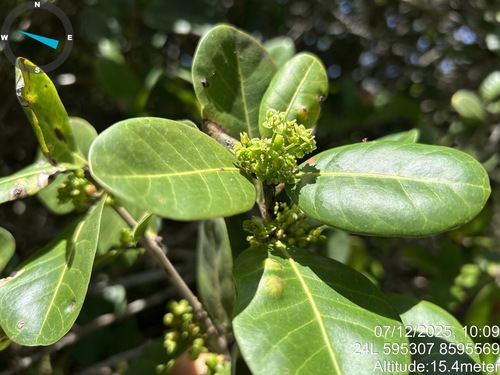
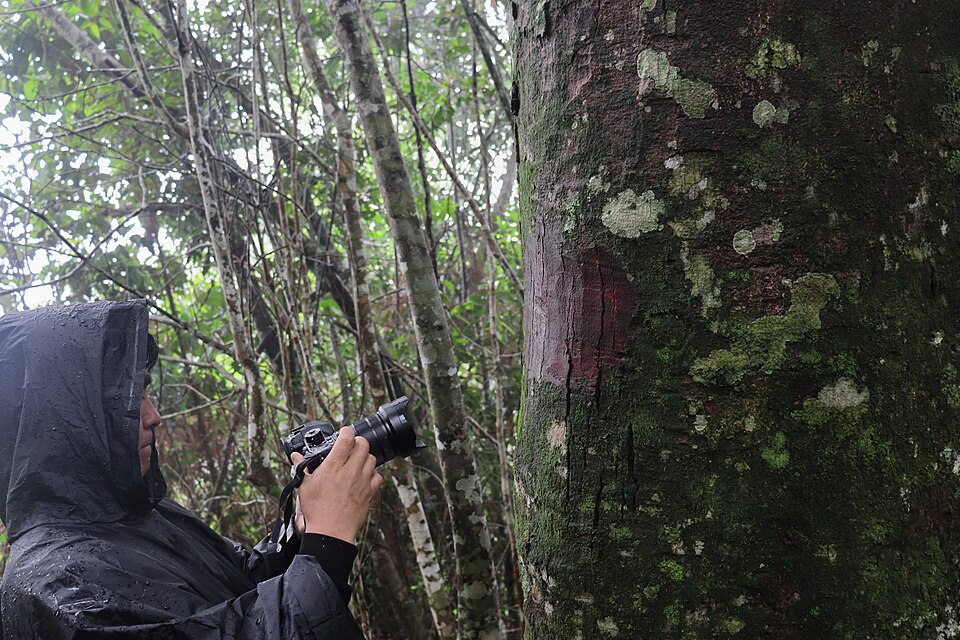
(c) Mark David, some rights reserved (CC BY-NC), uploaded by Mark David
iNaturalist· cc-by-nc
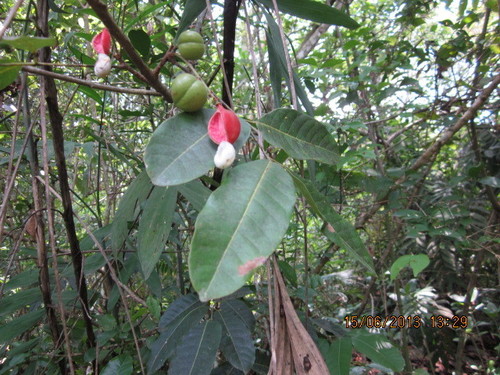
(c) wenj, some rights reserved (CC BY-NC)
iNaturalist· cc-by-nc
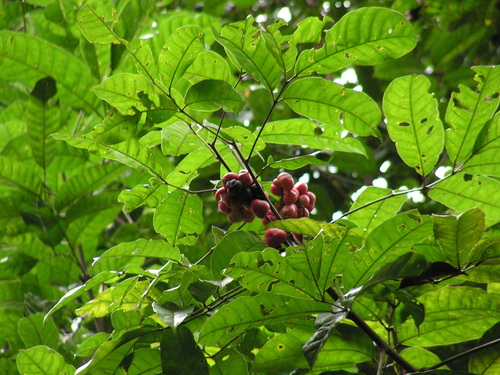
(c) wenj, some rights reserved (CC BY-NC)
Summary
Source: WikipediaCanarium ovatum, the pili (Central Bikol and Filipino: pili, PEE-lee;), is a species of tropical tree belonging to the genus Canarium. It is one of approximately 600 species in the family Burseraceae. C. ovatum are native to the Philippines. They are commercially cultivated in the Philippines for their edible nuts and are believed to be indigenous to that country. The fruit and tree are often vulgarized with the umbrella term of "Java almond" which mixes multiple species of the same genus, Canarium.
Description
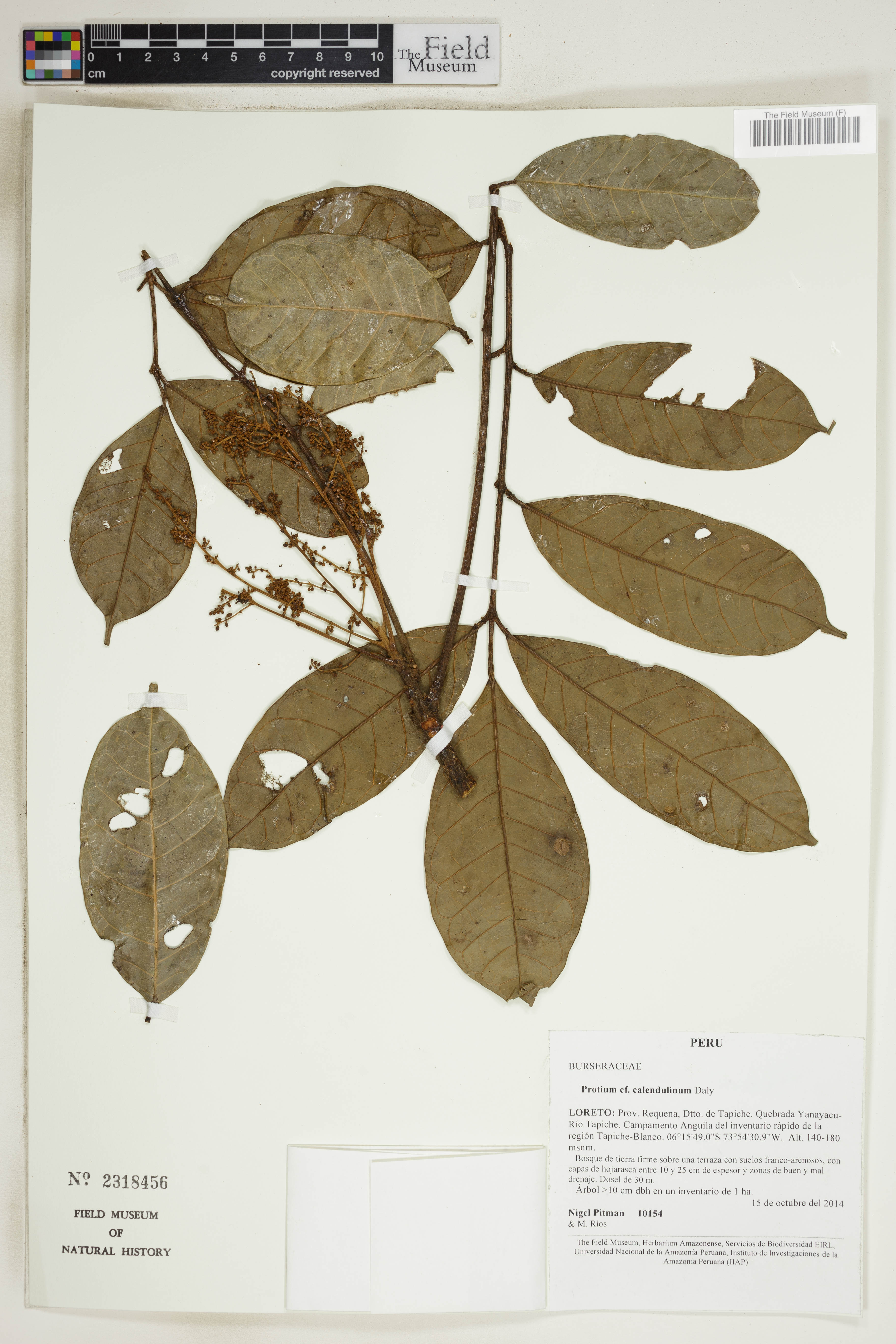
A medium sized evergreen tree. It grows up to 20 m high. The trunk can be 50 cm across. The small branches are 6-12 mm thick. The vascular bands in the branches are as separate rings like in roots. The leafy structures (stipules) are about 6 mm from the base of the leaf stalk. They are 5-20 mm long by 3-10 mm wide and triangular in shape. The leaves are alternate and with 2-4 pairs of leaflets borne oppositely. The leaflets are smooth and rounded at the base with a pointed tip. They are 4-24 cm long by 2-12 cm wide and stiff and leathery. There are 8-12 pairs of veins which are fairly straight until they curve near the leaf edge. The flower clusters occur in the axils of leaves near the ends of branches. They are 3-12 cm long and with few flowers. The flowers are greenish and with an aroma. The fruit clusters are 3-9 cm long with one or two fruit. The fruit are oval but triangular in cross section. They are 4-6 cm long by 2-3 cm across. There is one seed inside the triangular shell.
Edible Uses
The seed kernel can be eaten raw or cooked and is a popular nut. Raw, it tastes similar to roasted pumpkin seed; roasted, it develops a mild, nutty flavour with a tender, crispy texture considered superior to the almond. Kernels are also used in confections, ice cream, nut milks, and as a chocolate adulterant. The coat surrounding the kernel should be removed as it can cause diarrhoea. The shell is very thick and difficult to crack, though thinner-shelled forms exist. Nutritionally, the kernel contains 71.1% fat, 11.4% protein, and 8.4% carbohydrates, and is high in calcium, phosphorus, and potassium. It is a key ingredient in the Chinese 'moon cake'. Note that kernels from some trees may be bitter, fibrous, or have a turpentine odour. The seed stores very well. A sweet, light-yellow oil extracted from the seed is used for cooking; it is comparable to olive oil in quality, containing up to 59% oleic glycerides and 32–59% palmitic glycerides. An oil can also be extracted from the fruit pulp — it has a tangy, resin-like flavour and is suitable for cooking. The fruit pulp itself is boiled, seasoned, and eaten, though it is rather tasteless; it resembles sweet potato in texture, is about 12% oil, and is considered nutritionally similar to avocado. Young shoots are eaten raw in salads.
Traditional Uses
The kernels of the nuts are eaten raw or roasted. They can upset the stomach when raw. They can also be used to produce an oil that is used in cooking. The pulp of the fruit is boiled and eaten. They are also pickled. The young shoots are eaten in salads.
Medicinal Uses
The resin is soft, odorous, and honey-like in texture. It was formerly exported to Europe as Manila or Philippine gum elemi, used as a wound-healing ointment and as a plaster. The bark is used to treat malaria, and the leaves are used for vertigo. Raw nuts act as a purgative.
Known Hazards
Some nuts may be bitter, fibrous, or have a turpentine odor. Kernel coats can cause diarrhea.
Distribution
A tropical plant. It suits the hot humid lowland tropics. Common in southern Luzon, Bicol regions and in primary forest at low and medium altitudes and also in Polillo, Samar, Leyte and Surigao in the Philippines. They occur from sea level up to 500 m in the Philippines. It suits hardiness zones 11-12.
Where It Grows
Asia, Australia, Brazil, Hawaii, Indonesia, Malaysia, Micronesia, Pacific, Palau, Philippines*, Pohnpei, Puerto Rico, SE Asia, South America, Timor-Leste, West Indies,
Cultivation
It grows best in areas where annual daytime temperatures are within the range 22 - 34°c, but can tolerate 12 - 40°c. It cannot withstand low temperatures or even the slightest frost. It prefers a rainfall that is distributed throughout the year with a mean annual rainfall in the range 2,000 - 3,000mm, but tolerates 1,000 - 4,000mm. Succeeds in both light and heavy soils. Prefers a well-drained soil. Prefers a pH in the range 5 - 6, tolerating 4.5 - 6.5. Mature trees can resist strong winds. Trees flower all year round. Young seedling trees can grow to a height of 2 metres or more in about 3 - 4 years, and do not usually produce side branches until this stage. Seedling trees can produce their first flowers when about 4 years old. On average, seedling trees start producing fruit 5 - 6 years after planting. Clonal trees bear fruit 3 - 4 years after planting. Full production commences at around the age of 12 - 15 years Yields of 140 kilos or more per tree have been obtained. Wild forms usually have three, sometimes two kernels present in the nut, each in its own compartment. In the case of cultivated trees, however, only one kernel is sometimes found in each nut. When this is so, the kernel is proportionately larger and the nut easier to crack. The tree is cultivated more or less by accident, having appeared as self-sown seedlings in hemp and coconut plantations. Trees are dioecious - both male and female forms would normally need to be grown in order to produce fruit and seed. Functional hermaphrodites, however, exist within the species.
Propagation
Most kernels stick to their shell when fresh but detach easily after drying to 3–5% moisture content, which takes 27–28 hours at 30°C. The pericarp is removed before sowing by dipping fruits in hot water. Sow seeds in light shade in individual containers or a nursery seedbed; seedlings emerge in 40–50 days and should be potted individually once large enough to handle. Initial growth is slow but soon accelerates, with rapid increases in stem height and girth. Plant out when 25–30cm tall. One-year-old seedlings can serve as rootstock. Asexual propagation is best done by patch budding, with a claimed success rate of 85–90% in the Philippines. Cleft grafting is also successful.
Other Uses
The tree makes an excellent windbreak, resisting strong winds and typhoons. The hard, thick shell is a good cooking fuel, and there is potential for producing charcoal and activated carbon from it. Polished and varnished, the shell becomes a decorative ornament, and the stony shells also serve as a porous, inert growing medium for orchids and anthuriums. A resin known as Manila elemi or 'brea bianca' is used in manufacturing plastics, printing inks, and perfumes, and was used by the Spanish for ship repairs. The seed yields an oil comparable to olive oil, while oil from the fruit pulp can substitute for cottonseed oil in soap manufacture and edible products, and is used in suntan lotions and cosmetics. The reddish wood is hard and similar to mahogany; the resin-rich wood also makes good firewood. This species is a source of kedondong timber (family Burseraceae). Kedondong heartwood is generally light brown, not sharply demarcated from the 3–5cm wide lighter sapwood band. The texture is moderately fine and even; grain is interlocked to wavy; the surface is lustrous. The wood is light in weight, moderately hard, and not very durable — susceptible to fungi, dry wood borers, and termites. It seasons slowly with slight risk of checking and distortion; once dry it is moderately stable to stable. It has a fairly high blunting effect; stellite-tipped and tungsten carbide tools are recommended. It is moderately easy to slightly difficult to plane, finishes smooth to rough, can be easy to very difficult to bore, slightly difficult to difficult to turn; nailing and screwing are good; gluing is correct. Suitable for planking, cladding, plywood, flooring, furniture, packing cases, pallets, and general carpentry.
Production
Flowering occurs from May to July and fruit from October to December. A tree can produce 32 kg of nuts per year. This is about 10,000 nuts each year.
Other Information
It is a popular nut. It is a cultivated food plant.
Notes
There are 80-95 Canarium species.
Nutrition
| Part | Moisture | kJ | kcal | Protein | Vit A | Vit C | Iron | Zinc |
|---|---|---|---|---|---|---|---|---|
| Nuts | 14.2 | 2510 | 600 | 10.6 | 15 | 21 | 4.1 | 3 |
| Fruit | — | — | — | — | — | — | — | — |
| Leaves | — | — | — | — | — | — | — | — |
Synonyms
Also Known As
Noz-pili
References (39)
- Arora, R. K., 2014, Diversity in Underutilized Plant Species - An Asia-Pacific Perspective. Bioversity International. p 93
- Barwick, M., 2004, Tropical and Subtropical Trees. A Worldwide Encyclopedic Guide. Thames and Hudson p 89
- Bircher, A. G. & Bircher, W. H., 2000, Encyclopedia of Fruit Trees and Edible Flowering Plants in Egypt and the Subtropics. AUC Press. p 79 (Also as Canarium pachyphyllus)
- Blench, R., 2004, Fruits and Arboriculture in the Indo-Pacific Region. Indo-Pacific Prehistory Association Bulletin 24. (Taipei Papers Volume 2) p 36
- Brouk, B., 1975, Plants Consumed by Man. Academic Press, London. p 222
Show all 39 references Hide references
- Brown, W.H., 1920, Wild Food Plants of the Philippines. Bureau of Forestry Bulletin No. 21 Manila. p 78
- Burkill, I.H., 1966, A Dictionary of the Economic Products of the Malay Peninsula. Ministry of Agriculture and Cooperatives, Kuala Lumpur, Malaysia. Vol 1 (A-H) p 436
- Coronel, R.E., 1982, Fruit Collections in the Philippines. IBPGR Newsletter p 6
- Coronel, R.E., 1995, History and Current Status of Pili Nut (Canarium ovatum) Production in the Philippines. In South Pacific Indigenous Nuts. ACIAR Proceedings No 69. Canberra. p 134
- Coronel, Roberto E. 1996. Pili nut. Canarium ovatum Engl. Promoting the conservation and use of underutilized and neglected crops. 6. Institute of Plant Genetics and Crop Plant Research, Gatersleben/International Plant Genetic Resources Institute, Rome, Italy.
- Cundall, P., (ed.), 2004, Gardening Australia: flora: the gardener's bible. ABC Books. p 323
- Darley, J.J., 1993, Know and Enjoy Tropical Fruit. P & S Publishers. p 78
- A. L. P. P. de Candolle & A. C. de Candolle, Monogr. phan. 4:110. 1883
- Etherington, K., & Imwold, D., (Eds), 2001, Botanica's Trees & Shrubs. The illustrated A-Z of over 8500 trees and shrubs. Random House, Australia. p 179
- Facciola, S., 1998, Cornucopia 2: a Source Book of Edible Plants. Kampong Publications, p 62
- FAO, 1995, Edible Nuts. Non Wood Forest Products 5.
- Food Composition Tables for use in East Asia FAO http://www.fao.org/infoods/directory No. 333
- Kanihera, 1933, Flora Micronesica 434
- Kiple, K.F. & Ornelas, K.C., (eds), 2000, The Cambridge World History of Food. CUP p 1834
- Leenhouts, P.W., 1955, Burseraceae in Flora Malesiana 5(1) p 271
- Leenhouts, P.W., 1955, Canarium on the Pacific. Bernice P.Bishop Museum Bulletin 216. p 26
- Lorenzi, H., Bacher, L., Lacerda, M. & Sartori, S., 2006, Brazilian Fruits & Cultivated Exotics. Sao Paulo, Instituto Plantarum de Estuados da Flora Ltda. p 368
- Macmillan, H.F. (Revised Barlow, H.S., et al) 1991, Tropical Planting and Gardening. Sixth edition. Malayan Nature Society. Kuala Lumpur. p 296
- Martin, F. W., et al, 1987, Perennial Edible Fruits of the Tropics. USDA Handbook 642 p 19
- Menninger, E.A., 1977, Edible Nuts of the World. Horticultural Books. Florida p 25, 25
- Monsalud, M.R., Tongacan, A.L., Lopez, F.R., & Lagrimas, M.Q., 1966, Edible Wild Plants in Philippine Forests. Philippine Journal of Science. p 449
- PROSEA (Plant Resources of South East Asia) handbook, Volume 2, 1991, Edible fruits and nut. p 105
- Rivero, J. A., y Brunner, B. R., 2007, Arborels frutales exoticas y poco conocidos en Puerto Rico. Universidad de Puerto Rico. p 33
- Soepadmo, E. and Wong, K. M., 1995, Tree Flora of Sabah and Sarawak. Forestry Malaysia. Volume One. p 48
- Tanaka, p 126
- Uphof, 1968,
- USDA, ARS, National Genetic Resources Program. Germplasm Resources Information Network - (GRIN). [Online Database] National Germplasm Resources Laboratory, Beltsville, Maryland. Available: www.ars-grin.gov/cgi-bin/npgs/html/econ.pl (10 April 2000)
- Walter, A. & Sam C., 2002, Fruits of Oceania. ACIAR Monograph No. 85. Canberra. p 131
- Wickens, G.E., 1995, Edible Nuts. FAO Non-wood forest products. FAO, Rome. p 43, 111
- Wiersema, J. H. & Leon, B., 2013, World Economic Plants. A Standard Reference CRC Press. 2nd Ed. p 138
- World Checklist of Useful Plant Species 2020. Royal Botanic Gardens, Kew
- www.worldagroforestrycentre.org/sea/products/afdbases/af/asp/SpeciesInfo.asp?SpID=425
- Zawiah, N. & Othaman, H., 2012, 99 Spesies Buah di FRIM. Institut Penyelidikan Perhutanan Malaysia. p 74
- Zeven, A. C. & de West, J. M. J., 1982, Dictionary of cultivated plants and their regions of diversity. Wageningen. p 51