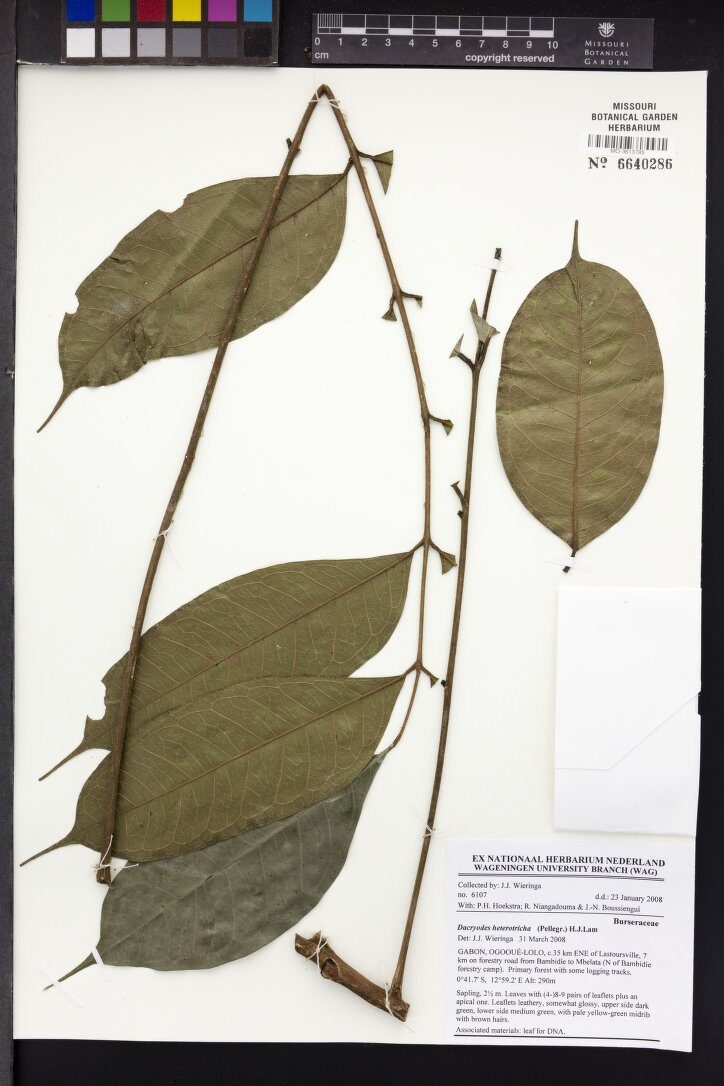
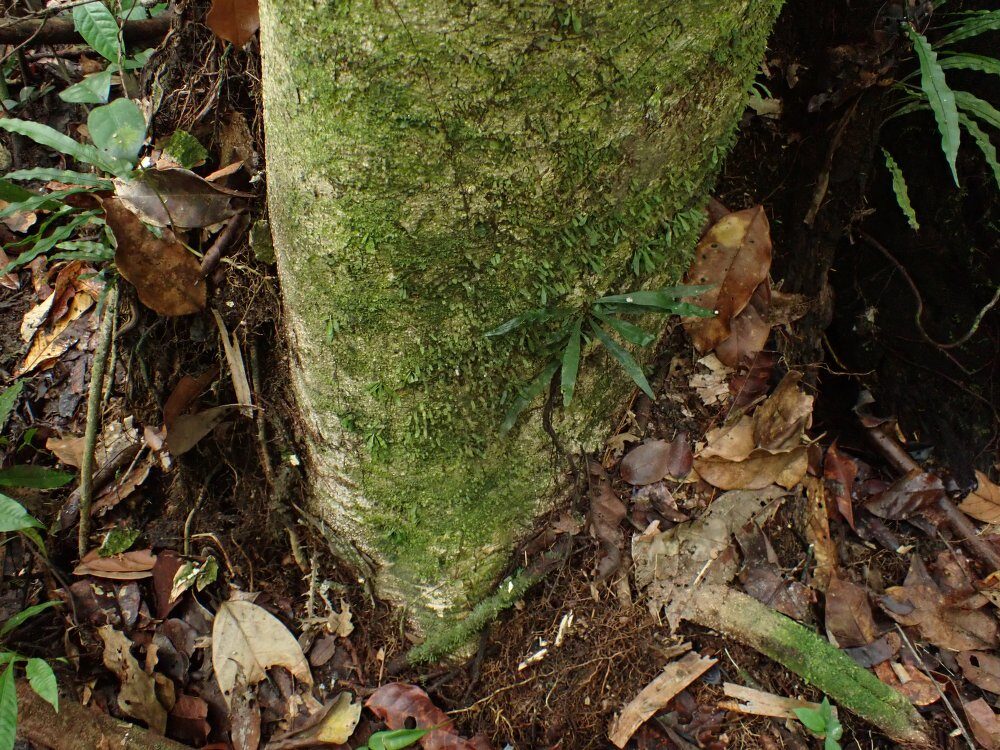
Canarium pilosum
Bennett
Kedondong kerut
iNaturalist· cc-by-nc-nd
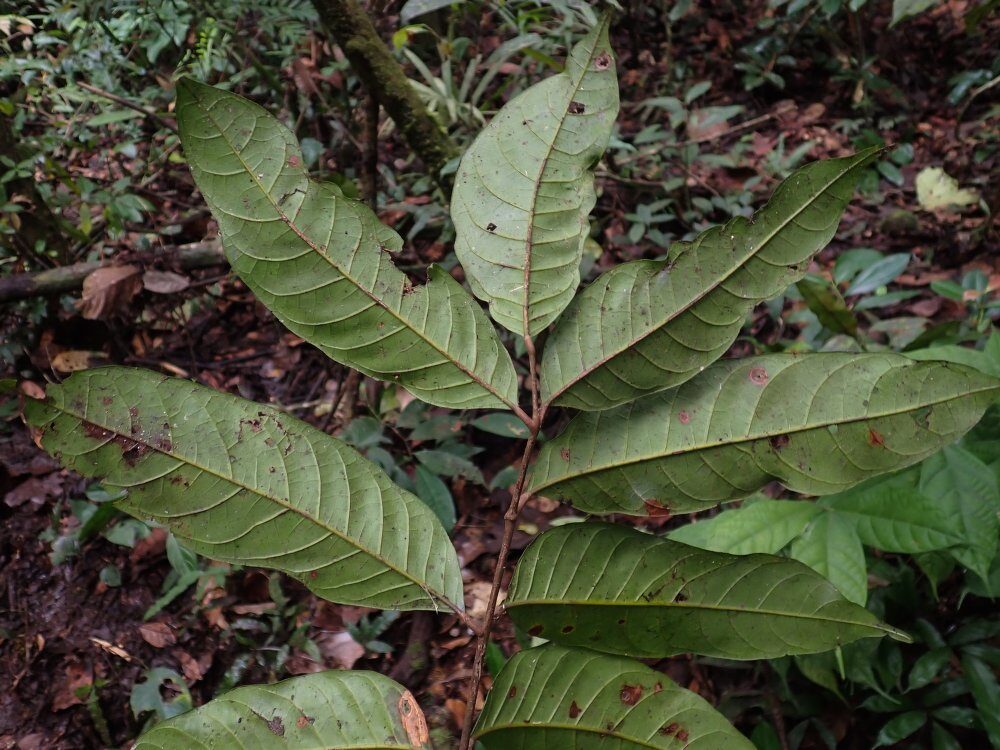
(c) loupok, some rights reserved (CC BY-NC-ND)
iNaturalist· cc-by-nc
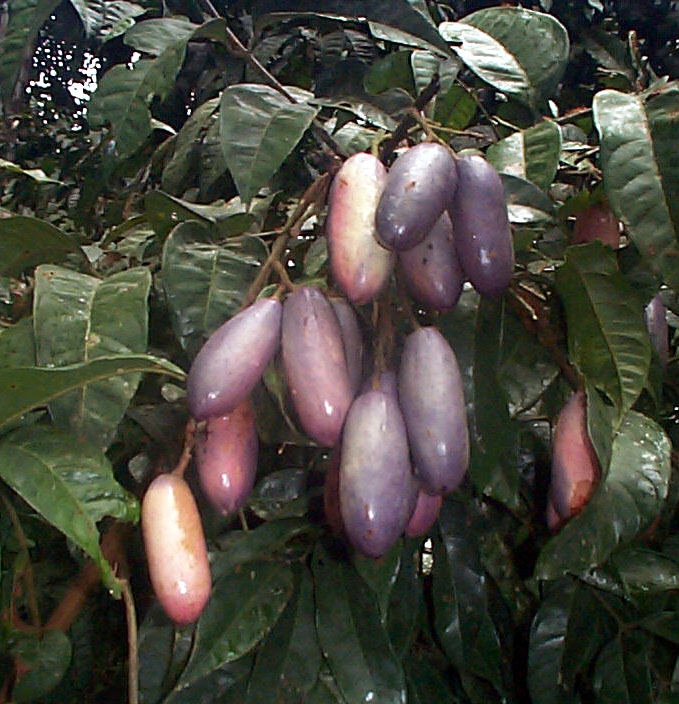
(c) mercury9nine, some rights reserved (CC BY-NC)
Summary
Source: WikipediaCanarium pilosum is a tree in the family Burseraceae. The specific epithet pilosum is from the Latin meaning 'hairy', referring to the soft hairs of the twigs and leaves.
Description
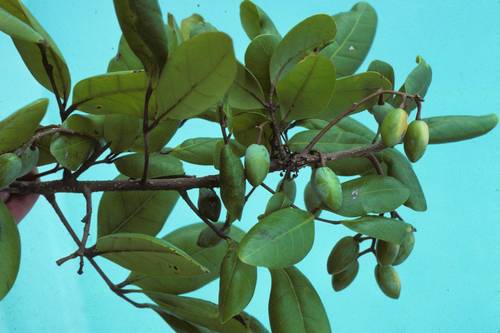
A moderately tall tree. It grows 37 m high. The trunk is 65 cm across. It can have buttresses. The leaves have 1-6 pairs of leaflets. The flowering stalks can be 10 cm long and have 1-4 fruit. The fruit are oval and fleshy. They are 2-3 cm long by 1-1.5 cm wide and have a rounded triangle shape in cross section. The kernels of the nuts are small. The shell is very thick.
Edible Uses
The seeds or kernels are sweet and edible. The fruit and nuts are eaten.
Traditional Uses
The seeds or kernels of the nut are sweet and edible.
This uses section is brief — help expand it
Medicinal Uses
The resin is used to close wounds.
Distribution
A tropical plant. It grows in the forest up to 1500 m altitude above sea level. It can be in swamps.
Where It Grows
Asia, Brunei, Fiji, Indonesia, Malaysia, Pacific, SE Asia, Singapore, Sri Lanka,
Cultivation
Plants are grown from seeds.
Propagation
Seed - we have no specific information for this species but seeds of this genus generally have a hard seed coat and germinate erratically. Filing away some of the seed coat to allow moisture to enter more readily, without damaging the seed, will encourage a faster and more even germination.
Other Uses
The wood is durable against insects and is used for building houses. This species is one of the sources of kedondong timber, which is obtained from several species in the family Burseraceae. We do not have a specific description of the wood for this species, but the general description of kedondong wood is as follows:- The heartwood is generally a light brown; it is not sharply demarcated from the 3 - 5cm wide band of lighter-coloured sapwood. The texture is moderately fine and even; the grain is interlocked to wavy; the surface is lustrous. The wood is light in weight; moderately hard; not very durable, being susceptible to fungi, dry wood borers and termites. It seasons somewhat slowly with only a slight risk of checking and distortion; once dry it is moderately stable to stable in service. The wood has a fairly high blunting effect, stellite-tipped and tungsten carbide tools are recommended; it is moderately easy to slightly difficult to plane; finishes smooth to rough; can be easy to very difficult to bore; slightly difficult to difficult to turn; nailing and screwing properties are good; gluing is correct. The wood is suitable for internal use as a general utility timber for planking, cladding, plywood, flooring, furniture, packing cases, pallets and general carpentry work.
Production
Flowering is September to October.
Notes
There are 80-95 Canarium species.
Synonyms
Also Known As
Alum pesa, Damar kunang, Damar lilin, Kedongdong batu, Kejam panggeli, Keramah batu, Medang serababa, Seladah
References (14)
- Bircher, A. G. & Bircher, W. H., 2000, Encyclopedia of Fruit Trees and Edible Flowering Plants in Egypt and the Subtropics. AUC Press. p 79
- Burkill, I.H., 1966, A Dictionary of the Economic Products of the Malay Peninsula. Ministry of Agriculture and Cooperatives, Kuala Lumpur, Malaysia. Vol 1 (A-H) p 436, p 434 (As Canarium grandiflorum)
- FAO, 1995, Edible Nuts. Non Wood Forest Products 5.
- Hanum, F. I., 1999, Plant Diversity and Conservation Value of Ayer Hitam Forest, Selangor, Peninsula Malaysia. Pertanika J. Trop. Agric. Sci. 22(2):73-83
- Kebler, P. J. A., & Kidiyasa, 1994, Trees of the Balikpapan-Samarinda area of East Kalimantan, Indonesia. The Tropenbos Foundation, Wageningen, The Netherlands. p 66
Show all 14 references Hide references
- Leenhouts, P.W., 1955, Canarium on the Pacific. Bernice P.Bishop Museum Bulletin 216. p 4
- Milow, P., et al, 2013, Malaysian species of plants with edible fruits or seeds and their evaluation. International Journal of Fruit Science. 14:1, 1-27
- Ridley, 1922, Flora Malay Peninsula. 1 p 370 (As Canarium grandiflorum)
- Soepadmo, E. & Wong, K. M., (Eds.), 1995, Tree Flora of Sabah and Sarawak. Volume One. ITTO, Govt. Malaysia. p 61
- Tanaka, p 125 (As Canarium grandiflorum)
- Verheij, E. W. M. and Coronel, R.E., (Eds.), 1991, Plant Resources of South-East Asia. PROSEA No 2. Edible fruits and nuts. Pudoc Wageningen. p 322
- Walter, A. & Sam C., 2002, Fruits of Oceania. ACIAR Monograph No. 85. Canberra. p 131
- Wickens, G.E., 1995, Edible Nuts. FAO Non-wood forest products. FAO, Rome. p 111
- World Checklist of Useful Plant Species 2020. Royal Botanic Gardens, Kew