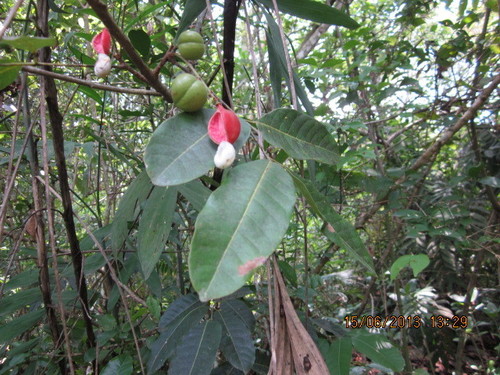
Canarium oleosum
(Lamk) Engl.
Kenari minyak
gbif· cc0
President and Fellows of Harvard College
gbif· cc0
President and Fellows of Harvard College
gbif· cc0
President and Fellows of Harvard College
Description
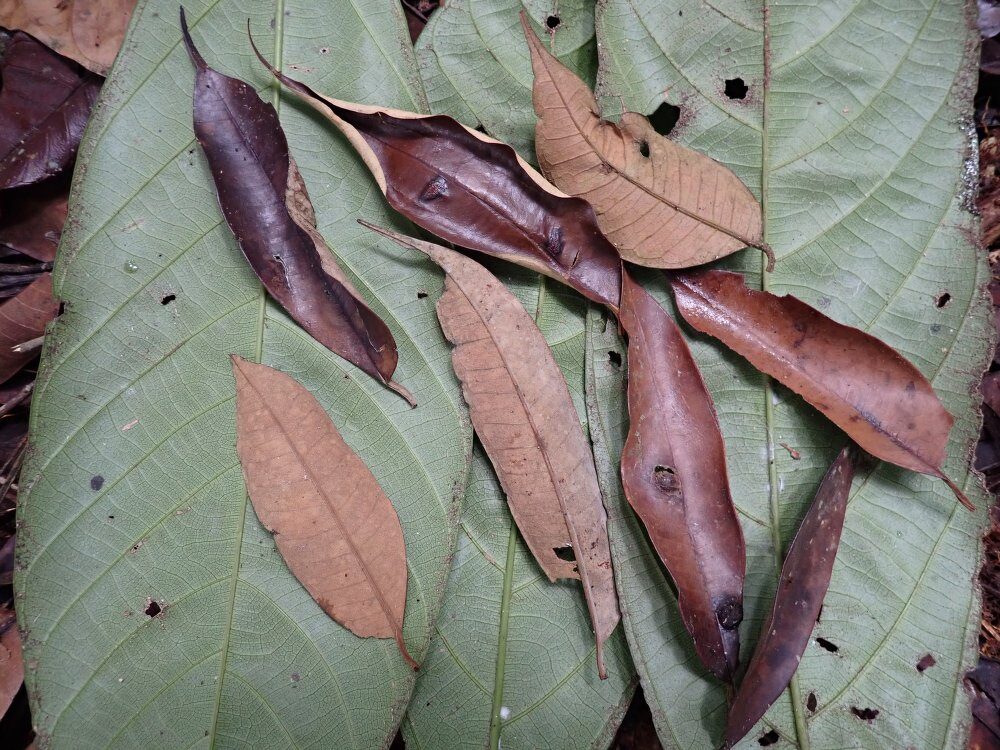
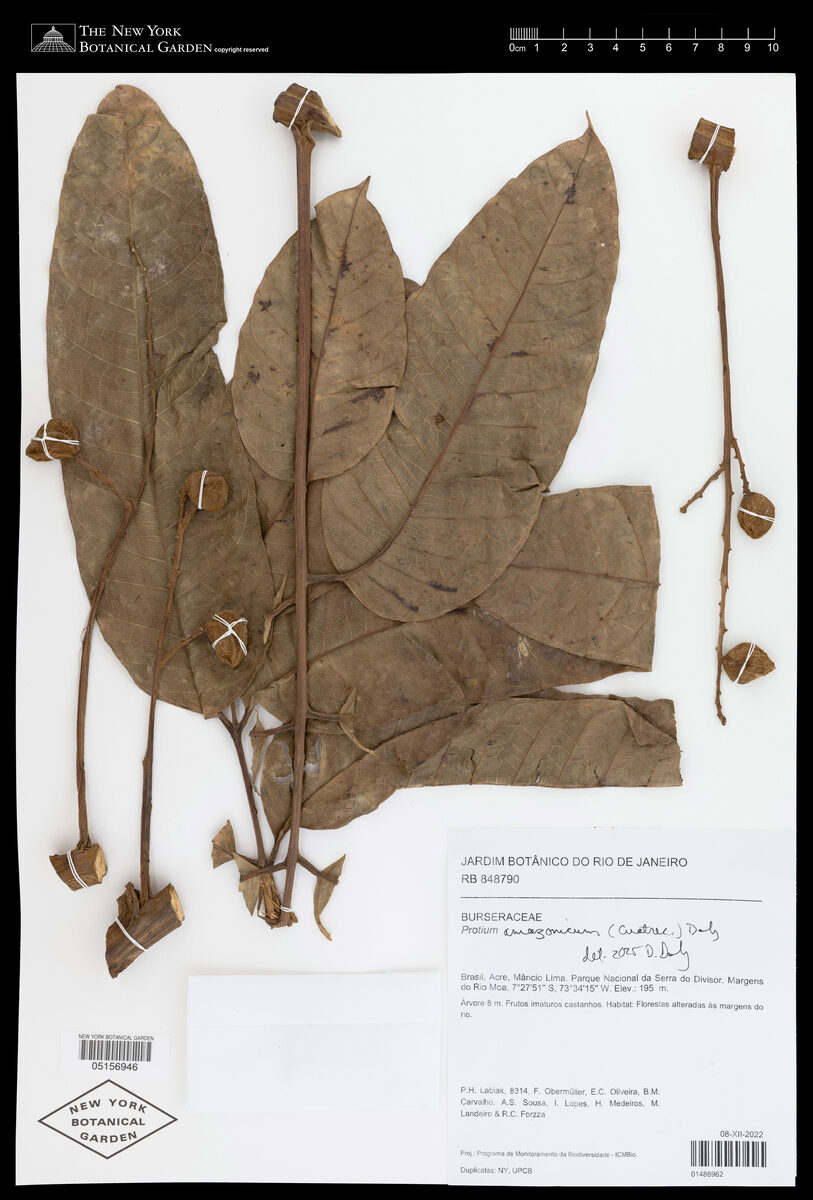
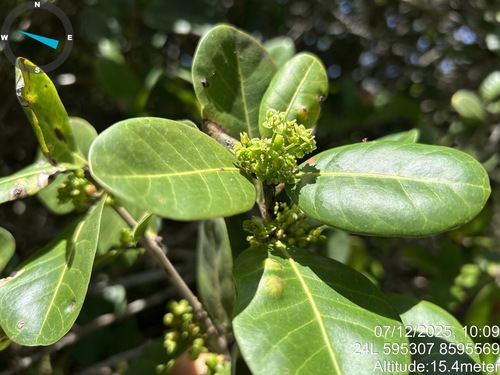
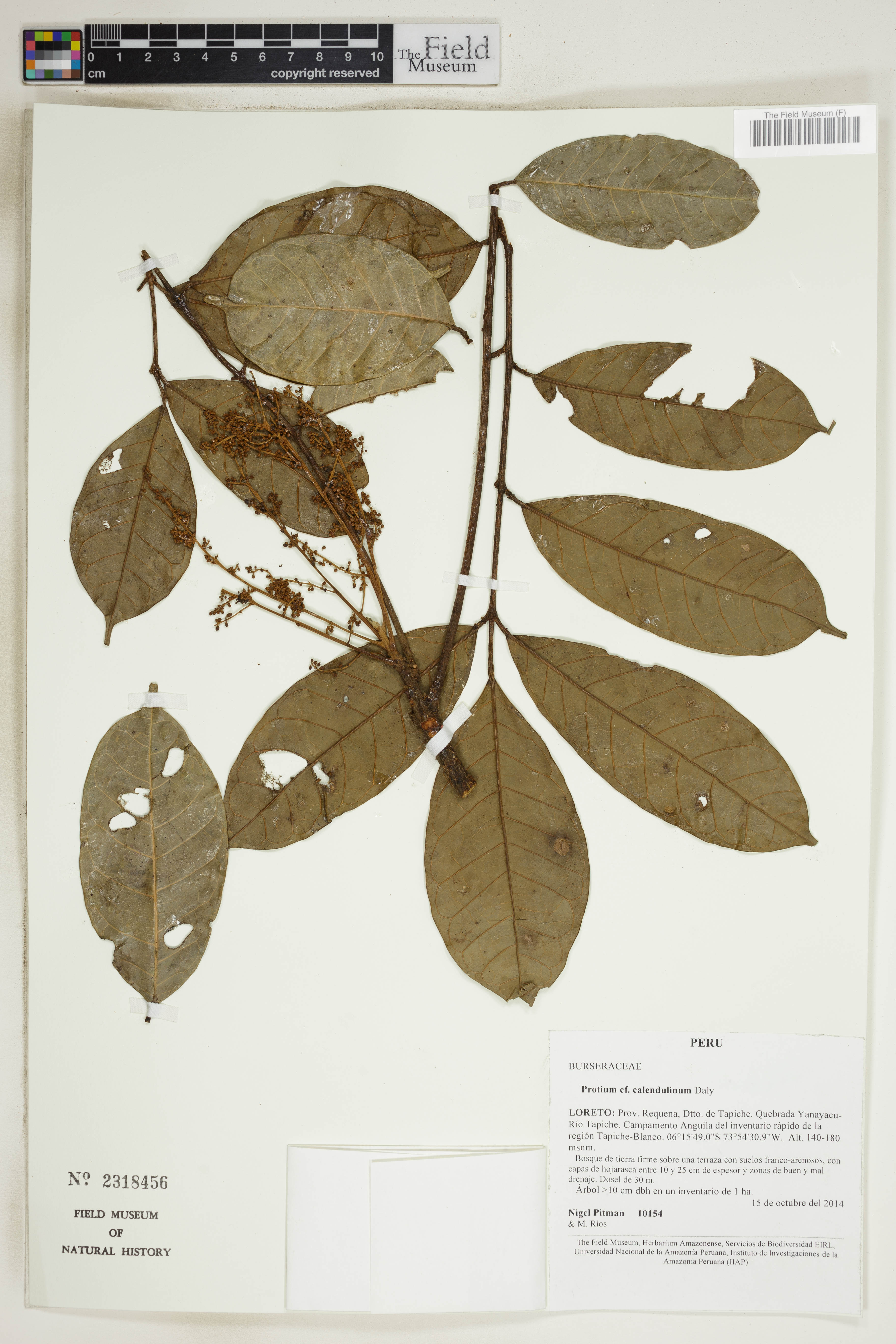
A large tree. It can be 20-30 m tall. The trunk is cylinder shaped and it can have buttresses. The bark is grey and can be rough of scaly and flaking. The leaves are spaced along the branches. They are compound and can be in spirals. The leaflets spread out like fingers on a hand. They are 6-7 cm long by 2-3 cm wide. They are dark green above and more pale underneath. The flowering shoots are in the axils of the leaves. Male and female flowers are separate on the same plant. The fruit are 12-20 mm long. They are purple. The seeds are about 1 cm long.
Edible Uses
The kernel of the nut is eaten.
Traditional Uses
The kernel of the nut is eaten.
This uses section is brief — help expand it
Medicinal Uses
The oily parts of the resin are used as a balm on wounds.
Distribution
A tropical plant. It grows in the Sepik and other coastal and island regions in Papua New Guinea.
Where It Grows
Asia, Indonesia (Maluku), Pacific, Papua New Guinea, PNG, Philippines, SE Asia, Singapore,
Cultivation
Plants grow from seeds.
Propagation
Seed - we have no specific information for this species but seeds of this genus generally have a hard seed coat and germinate erratically. Filing away some of the seed coat to allow moisture to enter more readily, without damaging the seed, will encourage a faster and more even germination.
Other Uses
The oily parts of the resin are used for hair lotions, usually mixed with coconut-oil. The wood of the buttresses is said to be one of the components of the scented wood kaju rasamala. The wood is a commercial hardwood. It can be used as a light constructional timber.
Notes
The resin is used for its fragrant oil. There are 80-95 Canarium species.
Synonyms
References (7)
- Borrell, O.W., 1989, An Annotated Checklist of the Flora of Kairiru Island, New Guinea. Marcellin College, Victoria Australia. p 60
- Burkill, p 431
- Coronel, R.E., 1982, Fruit Collections in the Philippines. IBPGR Newsletter p 9
- Leenhouts, P.W., 1955, Burseraceae in Flora Malesiana 5(1) p 250,
- Leenhouts, P.W., 1958,
Show all 7 references Hide references
- World Checklist of Useful Plant Species 2020. Royal Botanic Gardens, Kew
- www.pngplants.org