Canarium decumanum
(Rumph.) Gaertn.
Java almond tree
wikimedia· cc-by-sa
Wikimedia Commons - Unknown authorUnknown author
gbif· cc0
President and Fellows of Harvard College
gbif· cc0
President and Fellows of Harvard College
Summary
Source: WikipediaCanarium decumanum is a tree in the family Burseraceae. The specific epithet decumanum is from the Latin meaning 'greatest', referring to the size of the tree and the fruit.
Description
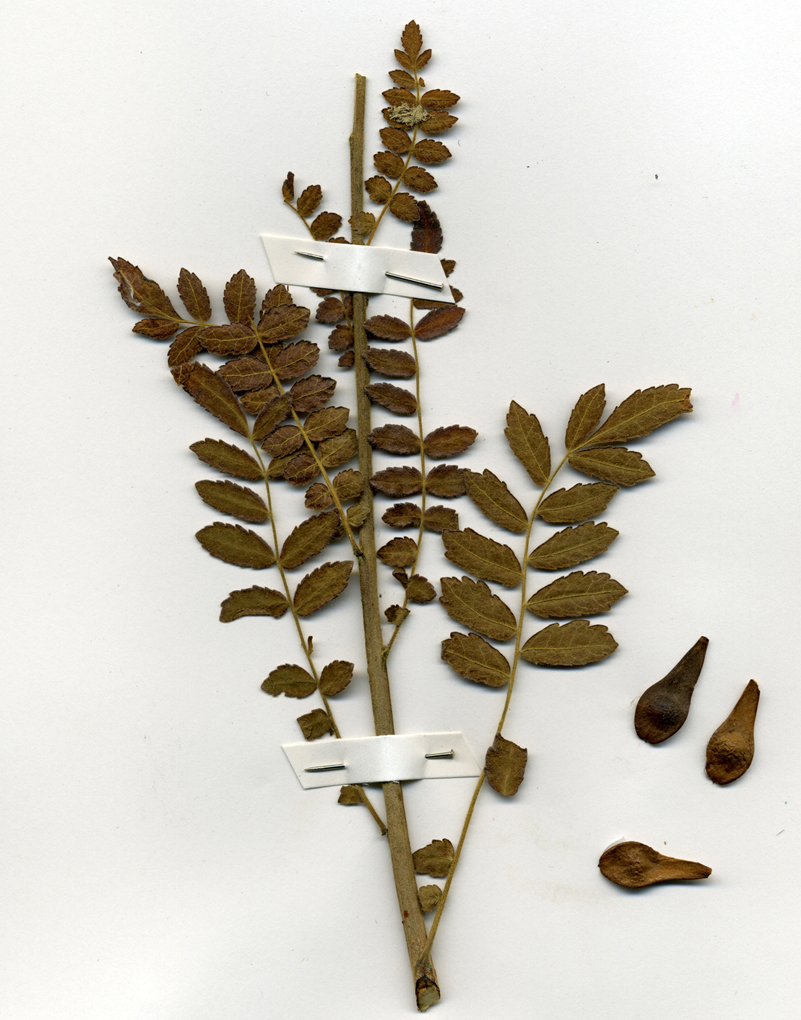
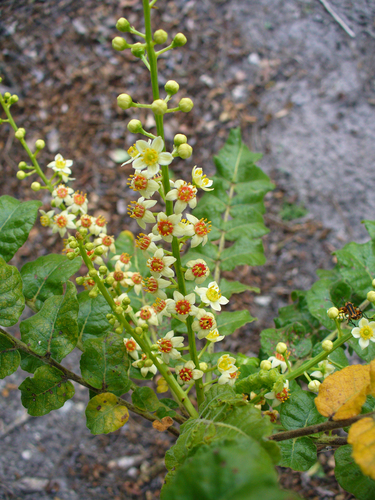
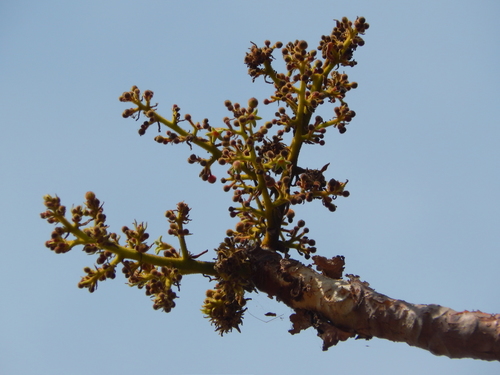
A large tree with very large buttresses. These can be 8 m high and 5 m across. The tree grows to 30-60 m high. The trunk can be 1-2 m across. The small branches are 1-1.5 cm across and angular. These leave large leaf scars. At the base of the leaf stalk there are small stipules that look like small simple leaves without teeth around the edge. The leaves are arranged in spirals. They are made up of 4-6 pairs of leaflets. The leaves are 35-45 cm long and the leaflets are oval and between 5-30 cm long by 3-10 cm wide. The leaflets are stiff and papery. The base of the leaflets is rounded. The tip of the leaf tapers to a point. The flower clusters occur in the axils of leaves. The male flower clusters are 4-19 cm long with many flowers, while the female flower clusters are 5-7 cm long and with few flowers. The fruiting cluster has few fruits and there is not one flower at the end of the cluster. The fruit are somewhat triangular in cross section and 7-8 cm long by 4-6 cm wide. There can be 1 to 3 seeds inside the fruit.
Edible Uses
The seeds or kernels are eaten as nuts, serving as a minor food crop.
Traditional Uses
The seeds or kernels are eaten.
This uses section is brief — help expand it
Distribution
A tropical plant. It grows in primary forests at low altitudes. It grows up to 100 m above sea level.
Where It Grows
Asia, Indonesia, Malaysia, Pacific, Papua New Guinea, PNG, Philippines, SE Asia,
Cultivation
Plants can be grown from seeds.
Propagation
Seed - we have no specific information for this species but seeds of this genus generally have a hard seed coat and germinate erratically. Filing away some of the seed coat to allow moisture to enter more readily, without damaging the seed, will encourage a faster and more even germination.
Other Uses
A resin is obtained from the plant. The wood is occasionally utilized. The wood of most species in the genus Canarium is usually soft to moderately hard and probably not very durable in exposed positions. It is not, therefore of any great commercial value and is only used locally or not at all.
Production
Plants flower from April to May and fruit June to November.
Other Information
It is a cultivated food plant. The nuts are a minor food.
Notes
There are 80-95 Canarium species.
Synonyms
Also Known As
Jelamu, Jilapat, Kedungdong, Kerari, Pamotodon, Pohon kenari babi
References (14)
- Akinnifesi, F. K., Leakey, R. R. B., et al, Indigenous fruit trees in the tropics: domestication, Utilization and Commercialization. CABI p 125
- Bourke, M., 1995, Edible Indigenous Nuts in Papua New Guinea. In South Pacific Indigenous Nuts. ACIAR Proceedings No 69, Canberra. p 46
- Conn, B. & Damas, K.. Guide to trees of Papua New Guinea. http:/www.pngplants.org/PNGtrees
- Coronel, R.E., 1982, Fruit Collections in the Philippines. IBPGR Newsletter p 9 (As Canarium documanum)
- Fruct. sem. pl. 2:99, t. 102. 1790
Show all 14 references Hide references
- Leenhouts, P.W., 1955, Burseraceae in Flora Malesiana 5(1) p 276
- Leenhouts, 1958,
- Slik, F., www.asianplant.net
- Soepadmo, E. & Wong, K. M., (Eds.), 1995, Tree Flora of Sabah and Sarawak. Volume One. ITTO, Govt. Malaysia. p 52
- Sukarya, D. G., (Ed.) 2013, 3,500 Plant Species of the Botanic Gardens of Indonesia. LIPI p 176
- Uphof, J.C.Th., 1968, Dictionary of Economic Plants 591pp Cramer
- Walter, A. & Sam C., 2002, Fruits of Oceania. ACIAR Monograph No. 85. Canberra. p 131, 278
- World Checklist of Useful Plant Species 2020. Royal Botanic Gardens, Kew
- www.pngplants.org