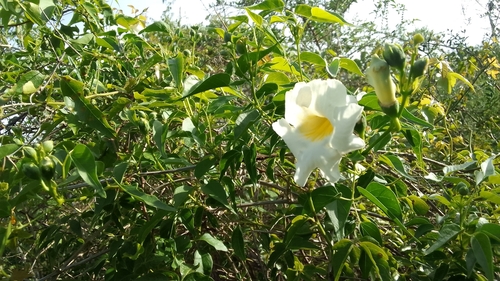
Stereospermum kunthianum
Cham.
Pink jacaranda, Pink padri tree
iNaturalist· cc-by-nc
(c) Graeme White, some rights reserved (CC BY-NC), uploaded by Graeme White
iNaturalist· cc-by-nc
(c) frasergear, some rights reserved (CC BY-NC)
iNaturalist· cc-by-nc
(c) AMADOU BAHLEMAN FARID, some rights reserved (CC BY-NC)
Summary
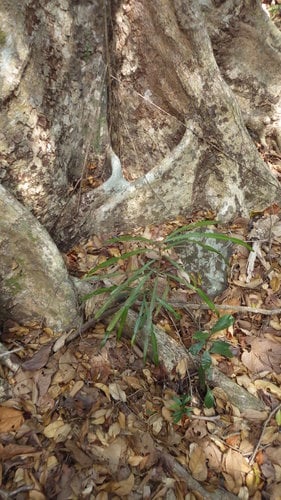
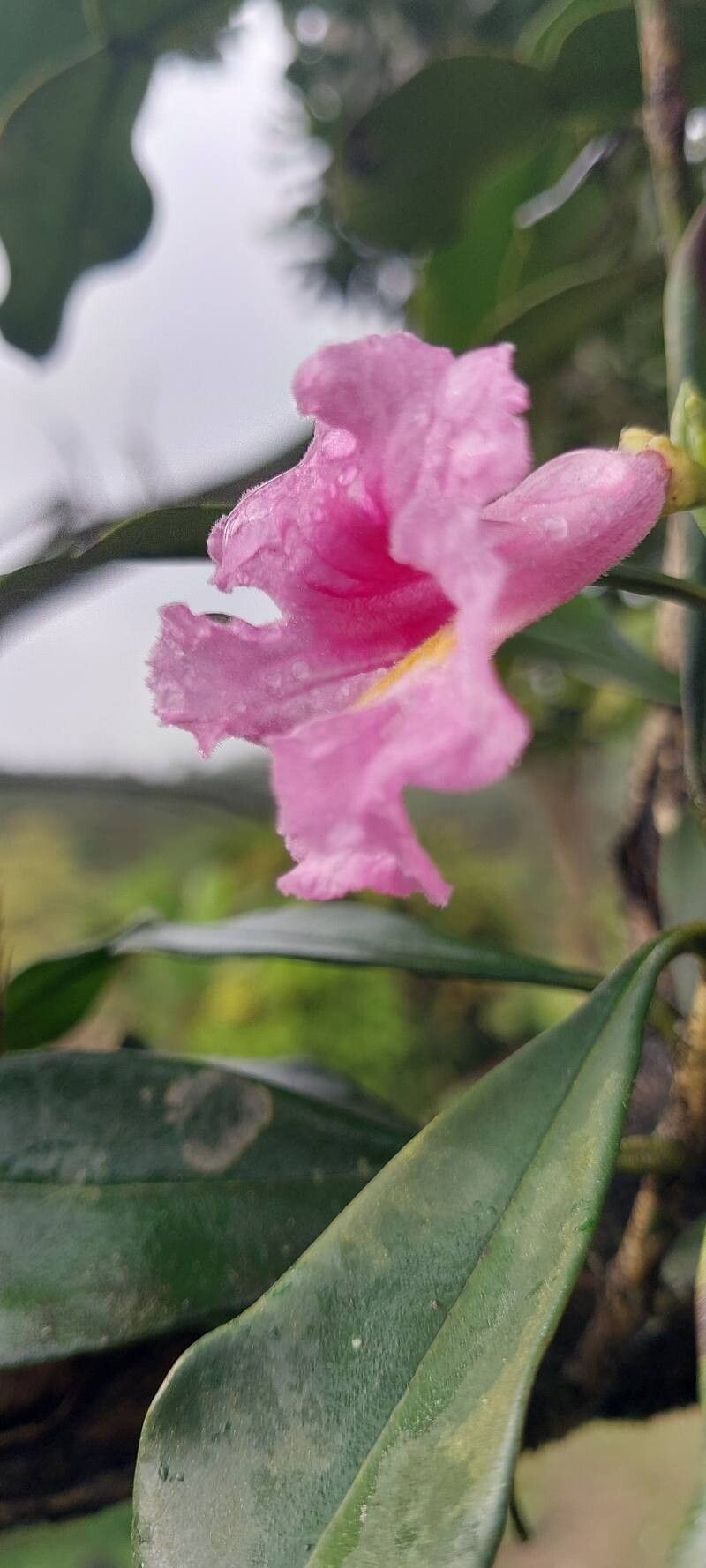
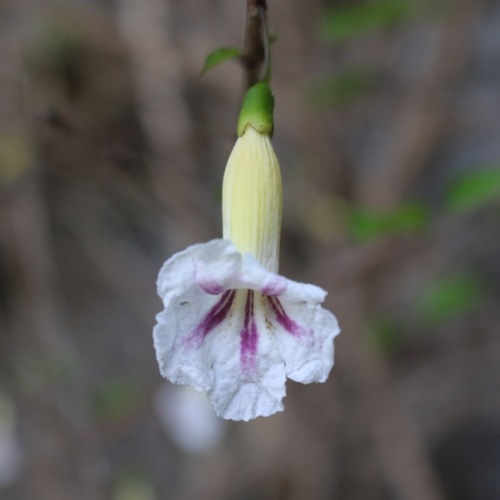
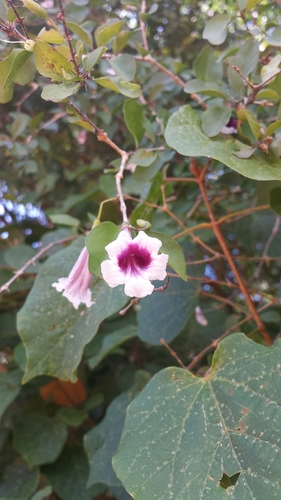
Source: WikipediaStereospermum kunthianum is an African deciduous shrub or small tree occurring in the Democratic Republic of Congo, Djibouti, Eritrea, Ethiopia, Kenya, Malawi, Senegal, Somalia, Sudan, Tanzania and Uganda. It is widespread across Africa to the Red Sea, and reaches as far south as Angola, Mozambique, Zambia and Zimbabwe. There are some 30 species with a Central African and Asian distribution. Growing to 25 cm diameter, it has thin, grey-black bark, smooth or flaking in patches resembling the London plane; the trunk is rarely straight, with twisted branches. Usually 5m tall, but occasionally up to 15m, with abundant, fragrant, precocious, pink or purplish flowers, making the tree a spectacular sight. The alternate leaves are imparipinnately compound and some 25 cm long; leaflets are nearly opposite with one terminal leaflet, and with short, soft hairs, oblong to oblong-elliptic in shape, green and hairless above, yellowish-green with prominent venation below, apex somewhat attenuate, and the base tapering. The leaf margin may be entire or sometimes toothed in coppice shoots, while petiolules are virtually absent. Petioles may be up to 7 cm long, and are caniculate. Immature leaves are occasionally toothed and hairy. The calyx is campanulate, 5-6mm long and almost glabrous; the corolla is some 5 cm long, with the tube softly pubescent; panicle large, usually softly pubescent. Fruits are slender, flat, paired pods up to 60 x 1 cm, cylindrical, pendulous, spirally twisted, smooth, splitting in two and releasing many flat, long, narrow seeds winged at each end, 2.5–3 cm long. The remains of the pods persist on the tree for several months. Preferring sandy and clay soils, it is often found in association with termite mounds. The timber is white with yellowish or pinkish stains, and is used for making mortars. The bark is used for treating bronchitis and other pulmonary complaints, while roots and leaves are also used in traditional medicine.
Description
A slender tree. It grows 15 m high. The trunk and branches are usually crooked. The bark is pale grey. The leaves are 18-45 cm long and divided 2 to 5 times. The leaflet blade is 5-13 cm long by 2-6 cm wide. They are oval and slightly unequal. There are hairs underneath. The flowers are in a loose panicle at the ends of branches. The flowers are pink and droop. The fruit are long pods. The seeds are 7 mm by 20-30 mm including the wing.
Edible Uses
The bark is chewed to stain the lips red, and slender stems are chewed as a chewing stick.
Traditional Uses
The bark is bitter but is chewed by girls to stain their lips red. The slender stem are chewed as a chewing stick.
This uses section is brief — help expand it
Medicinal Uses
The pods are chewed with salt as a treatment for coughs. They are also used in the treatment of ulcers, leprosy, skin eruptions and venereal diseases. A leaf infusion is used for washing wounds. The macerated leaves are used to treat asthenia and exhaustion. The bark is used as a haemostatic and for treating wounds. A stem-bark decoction is used to cure bronchitis, pneumonia and coughs. The roots and leaves are used in the treatment of venereal diseases, respiratory ailments and gastritis.
Distribution
It is a tropical plant. It grows in wooded Savannah and the drier Sahel. It can be on dry rocky sites and termite mounds. In southern Africa it grows from 60-1,500 m altitude. It can grow in arid places.
Where It Grows
Africa, Angola, Asia, Benin, Burkina Faso, Central Africa*, Congo DR, Djibouti, East Africa, Eritrea, Ethiopia, Gambia, Ghana, Guinea, Guinée, Guinea-Bissau, Indonesia, Kenya, Malawi, Mali, Mozambique, Nigeria, Sahel, SE Asia, Senegal, South Africa, Southern Africa, Sudan, Tanzania, Togo, Uganda, West Africa, Zambia, Zimbabwe,
Cultivation
Plants can be grown from seeds. Seeds germinate poorly. They need to be sown fresh. Plants can be grown from suckers and roots.
Propagation
Seed - difficult to germinate. The seed is difficult to obtain, but germinates quickly and without pretreatment. Plant out the seedlings after about 4 weeks. Root suckers.
Other Uses
The chewed bark stains the lips red-brown and is used as a cosmetic. The wood is whitish with yellow or pink coloration. It has a medium to coarse texture, is moderately hard, strong and moderately durable. It works well with hand and machine tools, saws cleanly to true edges, planes well to a fairly smooth finish, has good nail-holding capacity, takes a clear varnish finish, glues firmly and stains well. It is used for furniture, shelving, pattern making, tool and implement handles, poles, utensils, gunstocks, mortars and platters The wood is used for fuel, or to make a low-quality charcoal that disintegrates directly into ashes.. In some areas of Africa the wood is seen as a bad omen - the fumes are considered to be toxic by local people and the source of bad feelings in the household..
Other Information
It is a minor food.