Macroptilium lathyroides
(Linn.) Urb.
Phasemy bean
iNaturalist· cc-by-nc
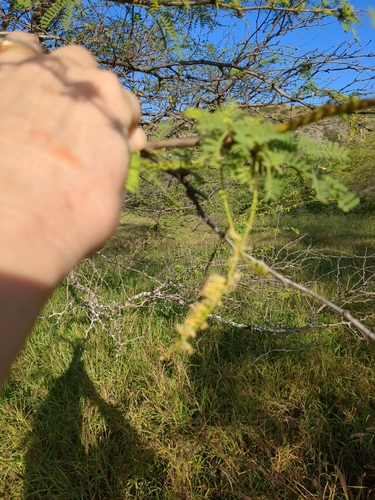
(c) Matt Reala, some rights reserved (CC BY-NC), uploaded by Matt Reala
iNaturalist· cc-by-sa
(c) Douglas Goldman, some rights reserved (CC BY-SA), uploaded by Douglas Goldman
iNaturalist· cc0
no rights reserved, uploaded by 葉子
Summary
Source: WikipediaMacroptilium lathyroides is a species of plant in the legume family (Fabaceae) commonly known as the phasey bean. It is the type species of genus Macroptilium. Herbaceous annual or short-lived perennial growing up to 1 m high, it is native to the tropical and subtropical areas of Central and South America, and naturalized throughout the tropics. It is cultivated for forage or as a green manure or cover crop in rotation. As it quickly spreads on disturbed soils, it is considered an environmental weed in some areas.
Description
An erect herb. It grows 1.5 m high. It can grow each year from seed or take 2 years to complete its life cycle. The leaflets are narrowly oval and 3-8 cm long by 1-4 cm wide. They can be hairy underneath. The flower stalk is 15-40 cm long with flowers in pairs in the upper part. The pods are 6-10 cm long by 2-3 mm wide. They are hairy. There are 18-30 seeds. They are 3 mm across.
Edible Uses
Seed - cooked. The seedpods are around 5 - 12cm long and 2 - 3mm wide, containing up to 20 oblong seeds (exceptionally 30) around 3mm long.
Distribution
It is a tropical plant. In Argentina it grows between sea level and 1,000 m above sea level.
Where It Grows
Africa, Antilles, Argentina, Asia, Bolivia, Brazil, Burkina Faso, Caribbean, China, Dominican Republic, Ghana, Guiana, Guianas, Guyana, Indochina, Marquesas, Mexico, North America, Pacific, Paraguay, Puerto Rico, SE Asia, South America*, Sri Lanka, Suriname, Taiwan, Tuvalu, Uruguay, USA, Venezuela, Vietnam, West Africa, West Indies,
Cultivation
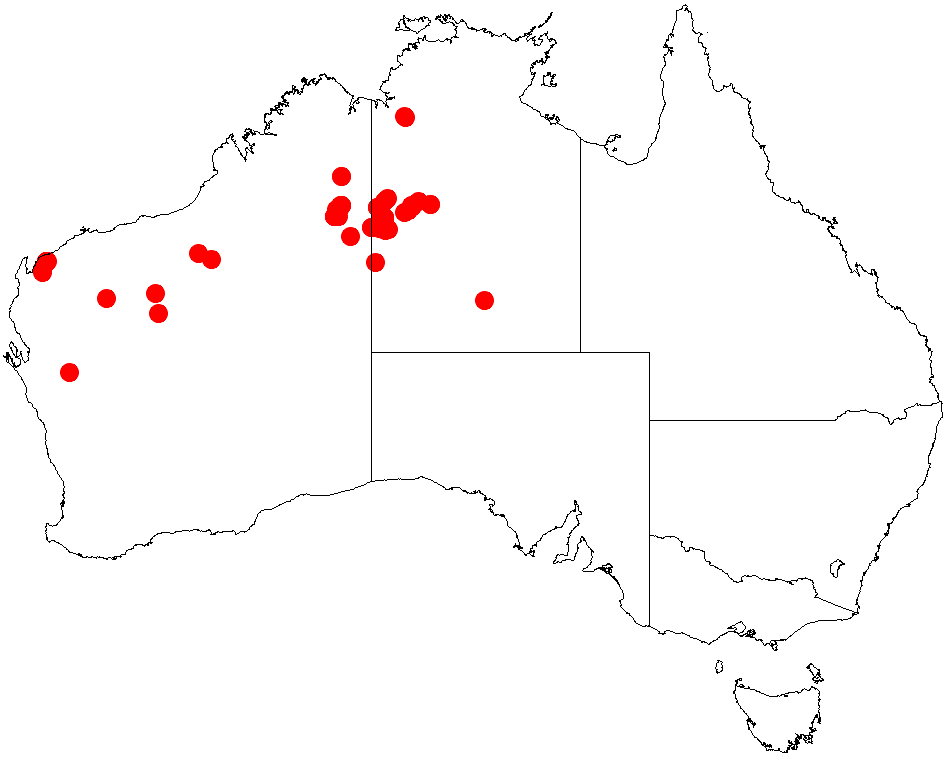
Macroptilium lathyroides is found from low elevations in the subtropics up to elevations of 2,000 metres in the tropics. It is adapted to a wide mean annual rainfall range from 500 - 3,000 mm. The optimum day/night temperature for growth is 35/20°c. Plants can survive light frosts but are killed by heavier frosts, though they have usually produced their seed before this. Prefers a sunny position but is tolerant of light to moderate shade. The plant is adapted to acid and alkaline soils, and a wide range of soil textures from sand (given reliable rainfall) to heavy clay. It can tolerate moderate salinity. It grows well in a freely draining soil, but is also tolerant of waterlogging and poor drainage and frequently grows in drains along the edges of roads. Prefers a pH in the range 6 - 7, but can tolerate 5 - 8. The seed is ejected forcibly by the seedpod shattering when it is fully ripe and can be thrown several metres. Although it has become widely naturalised, it is rarely considered a serious weed. The plant is considered to be invasive in several Pacific Islands and in northern Australia. The plant survives drought by shedding its seed, which can lie dormant in the soil until wet weather returns. This species has a symbiotic relationship with certain soil bacteria; these bacteria form nodules on the roots and fix atmospheric nitrogen. Some of this nitrogen is utilized by the growing plant but some can also be used by other plants growing nearby.
Propagation
Like many species within the family Fabaceae, once they have ripened and dried the seeds of this species may benefit from scarification before sowing in order to speed up and improve germination. This can usually be done by pouring a small amount of nearly boiling water on the seeds (being careful not to cook them!) and then soaking them for 12 - 24 hours in warm water. By this time they should have imbibed moisture and swollen - if they have not, then carefully make a nick in the seedcoat (being careful not to damage the embryo) and soak for a further 12 hours before sowing.
Other Uses
The plant fixes atmospheric nitrogen very effectively and can be used as a cover crop and green manure.
Production
It is fast growing.
Synonyms
Also Known As
Dau dieu
References (4)
- Burkill, H. M., 1985, The useful plants of west tropical Africa, Vol. 3. Kew.
- Kermath, B. M., et al, 2014, Food Plants in the Americas: A survey of the domesticated, cultivated and wild plants used for Human food in North, Central and South America and the Caribbean. On line draft. p 507
- Thaman, R. R, 2016, The flora of Tuvalu. Atoll Research Bulletin No. 611. Smithsonian Institute p 91
- World Checklist of Useful Plant Species 2020. Royal Botanic Gardens, Kew