Ulex europaeus
L.
Golden gorse
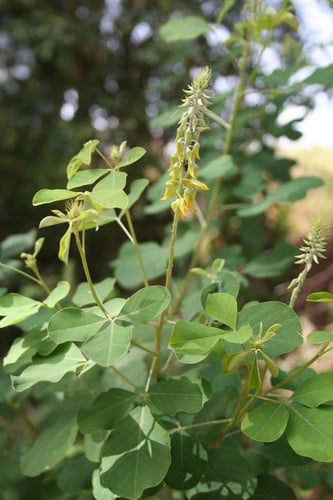
iNaturalist· cc-by
(c) Dave Richardson, some rights reserved (CC BY), uploaded by Dave Richardson
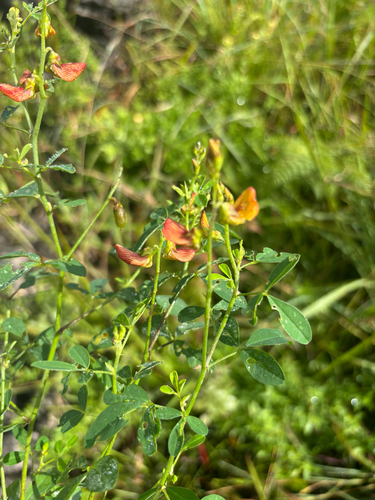
iNaturalist· cc-by-nc
(c) Andrew Nevin, some rights reserved (CC BY-NC)
Summary
Source: WikipediaUlex europaeus, commonly known as gorse, common gorse, furze or whin, is a species of flowering plant native to Western Europe.
Description
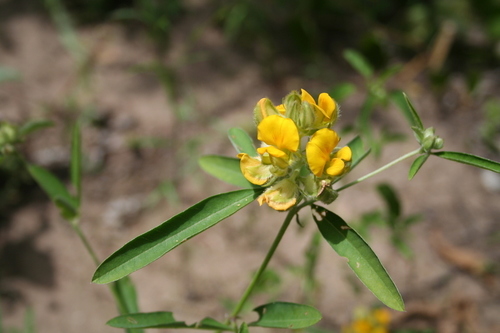
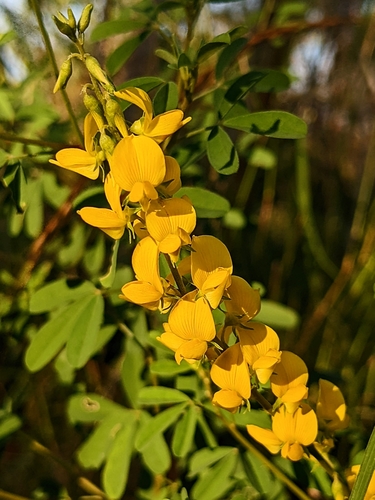
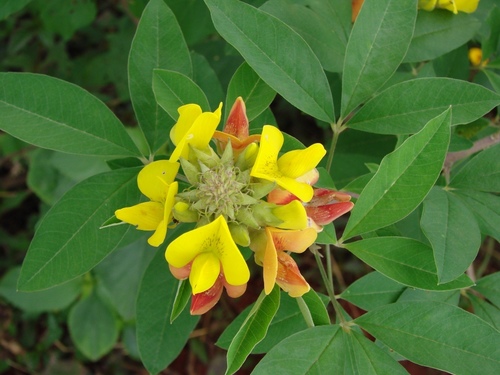
An evergreen shrub. It grows 2 m high and spreads 2 m wide. The stem is sturdy and hairy. It has many branches. Young plants have small compound leaves with 3 leaflets. Later the leaves are thread-like spines. The flowers are golden yellow. They are pea like. They are fragrant.
Edible Uses
Flower buds are pickled in vinegar and used like capers in salads. A tea is made from the shoot tips.
Traditional Uses
The flower buds are pickled in vinegar and eaten in salads. The young shoots are chewed. The leaf buds are used as a substitute for tea. The flowers are made into wine.
Medicinal Uses
Gorse has never played much of a role in herbal medicine, though the flowers have been used to treat jaundice and as a remedy for scarlet fever in children. The seed is said to be astringent and has been used in treating diarrhoea and stones. The plant is used in Bach flower remedies, where the keywords for prescribing it are 'Hopelessness' and 'Despair'.
Distribution
It is a temperate plant. It will grow in most soils and positions. It is resistant to drought and frost.
Where It Grows
Argentina, Asia, Australia, Bolivia, Brazil, Britain, Chile, Easter Island, Europe*, Falklands, Ireland, Luxembourg, Myanmar, New Zealand, North Africa, SE Asia, Slovenia, South Africa, South America, Spain, St Helena, Tasmania, Uruguay, Venezuela,
Cultivation
An easily grown plant, it requires a poor soil and a sunny position to be at its best. It does well on dry sunny banks or in poor gravelly soils. It is intolerant of shade, nor does it do well on rich soils. Prefers a neutral to slightly acid soil, disliking alkaline soils. Plants are very intolerant of root disturbance. Very tolerant of maritime exposure and, once established, drought. Although native to Britain and said to be hardy to about -20°c, gorse often suffers badly in severe winters, but the plants usually recover. They often accumulate dry dead spines at their centre, this can be a fire risk in dry summers. The plants often resprout from the base after a fire and, even if killed, numerous seedlings will soon spring up to replace the dead plants. Hybridizes freely with other members of this genus. The flowers are strongly scented of coconut. Another report says that the flowers have a smell of vanilla with undertones of orange or pineapple. It is one of the most refreshing of all flower scents. A food plant for the caterpillars of several lepidoptera species. Plants often form dense thickets and these are ideal nesting areas for many species of birds. Plants in this genus are notably resistant to honey fungus. This species has a symbiotic relationship with certain soil bacteria, these bacteria form nodules on the roots and fix atmospheric nitrogen. Some of this nitrogen is utilized by the growing plant but some can also be used by other plants growing nearby. In garden design, as well as the above-ground architecture of a plant, root structure considerations help in choosing plants that work together for their optimal soil requirements including nutrients and water.
Propagation
Pre-soak seed for 24 hours in hot water, then sow into individual pots in a greenhouse from late winter to early spring. Germination should occur within 2 weeks. Once large enough to handle, prick seedlings into individual pots and grow on in the greenhouse through their first winter. Plant out in late spring or early summer after the last expected frosts. Plants are very intolerant of root disturbance and should be moved into permanent positions as soon as possible, but not before the last expected frosts. Cuttings of half-ripe wood, 7cm with a heel, taken in July/August in a frame; pot up in spring as soon as rooting begins and move to permanent positions as soon as possible.
Other Uses
The flowers yield a yellow dye — described as orange in some sources. Gorse is highly tolerant of maritime exposure and makes an impenetrable thorny windbreak hedge in even the most exposed coastal positions. It is also planted to stabilise roadside banks and sandy substrates on poor soils. As a pioneer species, it grows quickly, fixes nitrogen to enrich the soil, and creates conditions that allow woodland trees to establish; these trees eventually outcompete the gorse, which gradually dies out as shade increases. Soaked seed has a historical reputation as a flea pesticide. The wood burns very well and was traditionally used as kindling and for heating bakers' ovens. The ashes are rich in potassium and can be used in soap making — either by mixing with a vegetable oil or combining with clay and shaping into balls. The ashes also serve as an excellent fertiliser.
Notes
There are 20 Ulex species.
Also Known As
Ajonc, Aliaga, Aliaga marina, Aulaga, Carrumba, Corena, Espinillo, Espino amarillo, hrgovec, Maticorena, Otea, Pica pica, Tejo, Tojo, Yaqui
References (9)
- Facciola, S., 1998, Cornucopia 2: a Source Book of Edible Plants. Kampong Publications, p 112
- http://www.botanic-gardens-ljubljana.com/en/plants
- Irving, M., 2009, The Forager Handbook, A Guide to the Edible Plants of Britain. Ebury Press p 241
- Kermath, B. M., et al, 2014, Food Plants in the Americas: A survey of the domesticated, cultivated and wild plants used for Human food in North, Central and South America and the Caribbean. On line draft. p 886
- Malezas Comestibles del Cono Sur, INTA, 2009, Buernos Aires
Show all 9 references Hide references
- Menendez-Baceta, G., et al, 2012, Wild edible plants traditionally gathered in Gorbeialdea (Biscay, Basque Country) Genetic Resources and Crop Evolution 59:1329-1347
- Michael, P., 2007, Edible Wild Plants and Herbs. Grub Street. London. p 104
- Sp. pl. 2:741. 1753
- World Checklist of Useful Plant Species 2020. Royal Botanic Gardens, Kew