Cayratia debilis
(Bak.) Suess
gbif· cc-by
Herbarium of the University of Coimbra (COI)
gbif· cc-by-nc-sa
MBG
gbif· cc-by-nc-sa
MBG
Description
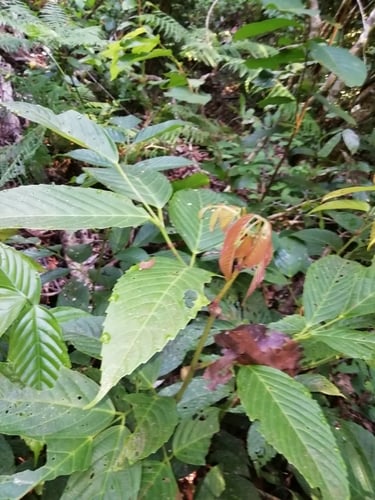
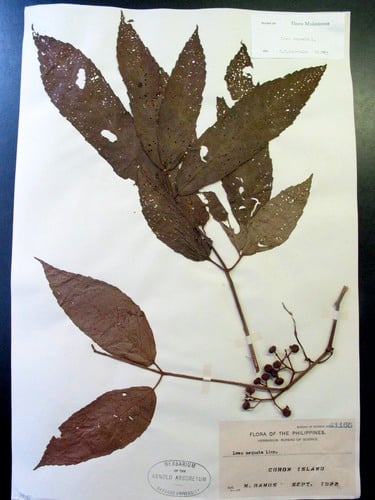
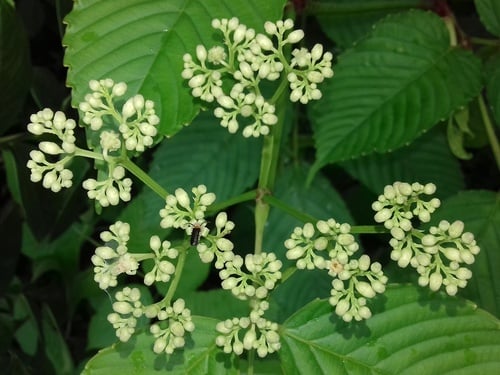
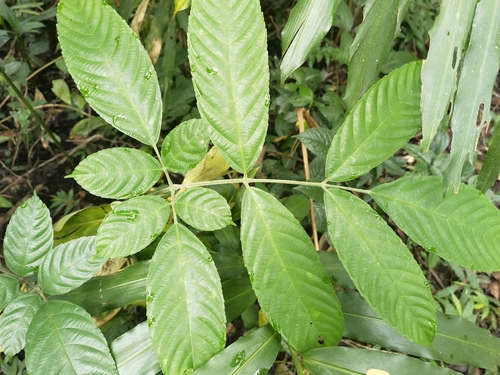
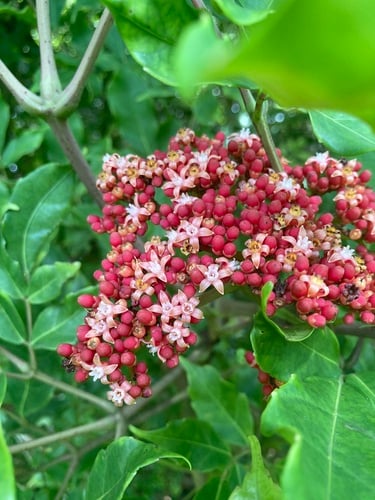
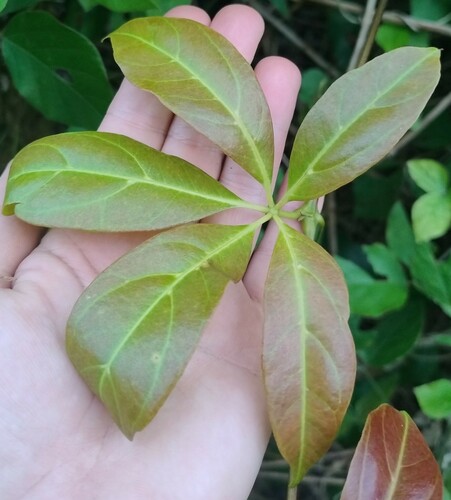
A slender climber. It is 5 m long. It is slightly woody and keeps growing from year to year. There are branched tendrils opposite the leaves. The leaves are alternate and and have 5 leaflets. The leaf stalks are 4-12 cm long. The leaflets are narrowly oval and 12 cm long by 5.5 cm wide. They are rounded at the base and taper to the tip. The flowers can have one or both sexes. The petals are triangle shaped and greenish-white or yellow. The fruit is a flattened fleshy berry. It is 3 mm long by 5 mm wide. They are white and turn blue-black. There are 2-4 seeds.
Edible Uses
The leaves are cooked and eaten as a vegetable, considered a minor vegetable in tropical regions.
Traditional Uses
The leaves are cooked and eaten as a vegetable.
This uses section is brief — help expand it
Medicinal Uses
The plant has medicinal uses.
Known Hazards
The stems are used in a mixture with the leaves of Tephrosia species to make a fish poison.
Distribution
It is a tropical plant. It grows in the forest.
Where It Grows
Africa, Angola, Burkina Faso, Cameroon, Central Africa, Central African Republic, CAR, Congo, Côte d'Ivoire, East Africa, Equatorial Guinea, Gabon, Ivory Coast, Liberia, Sao Tome and Principe, Sudan, Uganda, West Africa,
Other Information
It is a minor vegetable.
Notes
There are about 50 Cayratia species. It has some medicinal uses.
Synonyms
Also Known As
Kerenda, Liane a saucisses, Titanli
References (3)
- Burkill, H. M., 1985, The useful plants of west tropical Africa, Vol. 5. Kew.
- Grubben, G. J. H. and Denton, O. A. (eds), 2004, Plant Resources of Tropical Africa 2. Vegetables. PROTA, Wageningen, Netherlands. p 165
- World Checklist of Useful Plant Species 2020. Royal Botanic Gardens, Kew