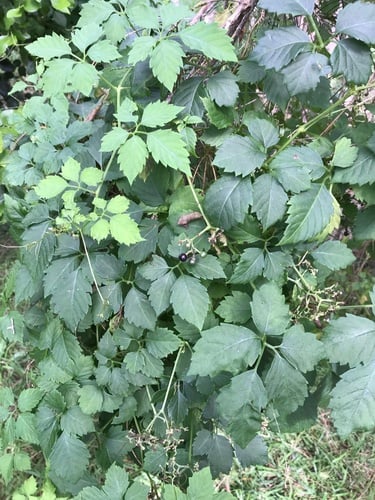
Ampelocissus acapulcensis
(Kunth) Planch.
Uva
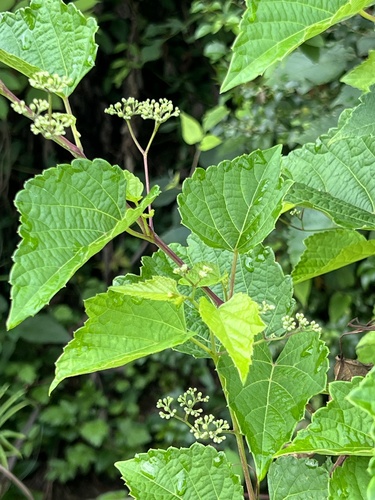
iNaturalist· cc-by
(c) Alexis López Hernández, some rights reserved (CC BY), uploaded by Alexis López Hernández
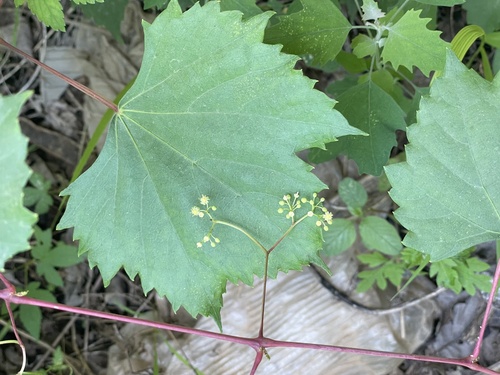
iNaturalist· cc-by
(c) Alexis López Hernández, some rights reserved (CC BY), uploaded by Alexis López Hernández
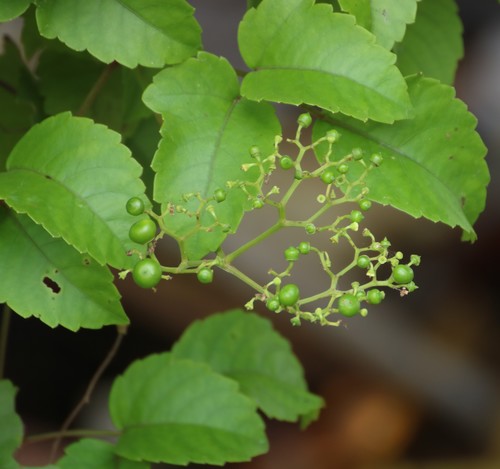
iNaturalist· cc-by-nc
(c) davidten, some rights reserved (CC BY-NC)
Description
A climbing shrub. It has a large rootstock. The young branches, flowers and tendrils have a grey hairy covering. The leaves are heart shaped or triangle shaped and can have 5 irregular lobes. The fruit are red.
Edible Uses
The sour fruit is used to make vinegar and jelly, and the leaves are also edible.
Traditional Uses
Fruit are sour and used for vinegar and jelly.
This uses section is brief — help expand it
Distribution
A tropical plant. It grows on dry rocky slopes.
Where It Grows
Central America, El Salvador, Mexico, North America,
Notes
There are about 95 Ampelocissus species.
Synonyms
Also Known As
Hurague, Parra, Uva comarrona, Uva silvestre
References (7)
- Altschul, S.V.R., 1973, Drugs and Foods from Little-known Plants. Notes in Harvard University Herbaria. Harvard Univ. Press. Massachusetts. no. 2658
- Bircher, A. G. & Bircher, W. H., 2000, Encyclopedia of Fruit Trees and Edible Flowering Plants in Egypt and the Subtropics. AUC Press. p 24
- A. L. P. P. de Candolle & A. C. de Candolle, Monogr. phan. 5:403. 1887
- Kermath, B. M., et al, 2014, Food Plants in the Americas: A survey of the domesticated, cultivated and wild plants used for Human food in North, Central and South America and the Caribbean. On line draft. p 58
- Reis, S. V. and Lipp, F. L., 1982, New Plant Sources for Drugs and Foods from the New York Botanical Garden herbarium. Harvard. p 173
Show all 7 references Hide references
- Segura, S., et al, 2018, The edible fruit species in Mexico. Genet Resour Crop Evol (2018) 65:1767–1793
- Smith, N., Mori, S.A., et al, 2004, Flowering Plants of the Neotropics. Princeton. p 395