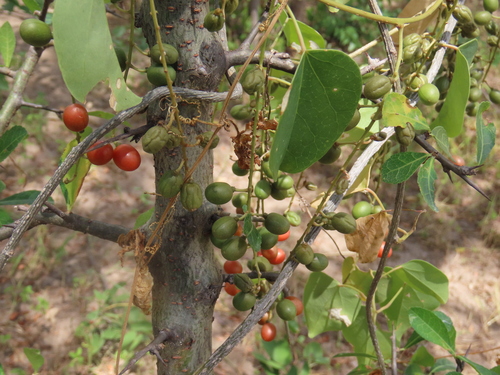
Ampelocissus acetosa
(F. Muell.) Planch
Native grape, Wild grape, Djabaru
iNaturalist· cc-by-nc
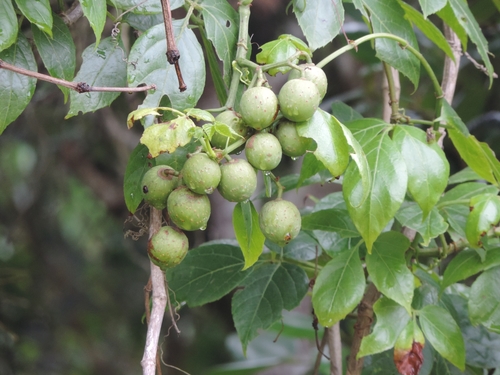
(c) kerrycoleman, some rights reserved (CC BY-NC), uploaded by kerrycoleman
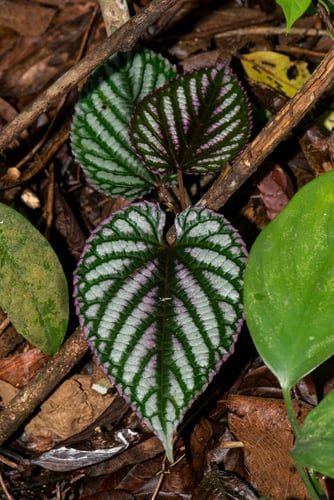
iNaturalist· cc-by
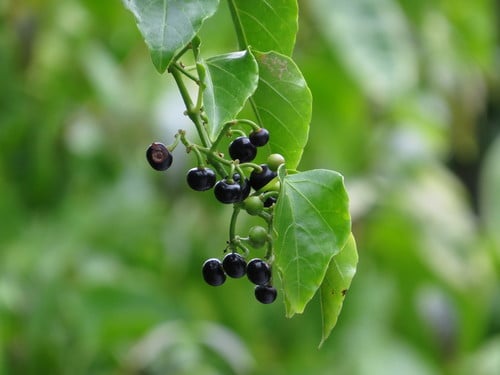
(c) Caleb Catto, some rights reserved (CC BY)
iNaturalist· cc-by
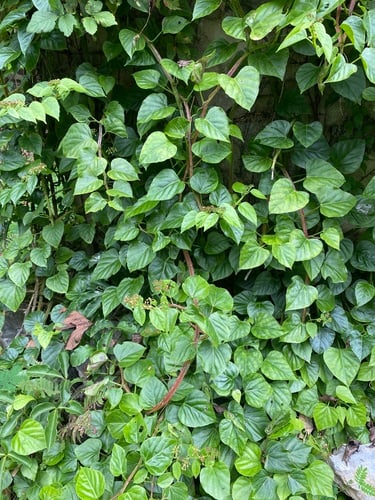
(c) Caleb Catto, some rights reserved (CC BY)
Summary
Source: WikipediaAmpelocissus acetosa is a species of vine. Common names include wild grape and djabaru. It is native to New Guinea as well as tropical parts of Western Australia, the Northern Territory and Queensland in Australia.
Description
A shrub or scrambling climber. It lies along the ground and can spread 2-4 m wide. It has short spines and tendrils along the stems. It grows from a perennial tuber. The leaves are compound, large and coarse. The leaves are generally divided into 5-9 leaflets which vary in size and shape. The blade of the main leaflets is 5-13 cm long by 1-8 cm wide. They are dark green on top and whitish underneath. There can be irregular teeth around the edge of the leaf. Flowers are small and dark red. The fruit are round fleshy berries. They can be 1 cm across. They occur in dense clusters like grapes. They are purple black when ripe.
Edible Uses
The ripe berries are eaten raw, and the roots are eaten after roasting.
Traditional Uses
The berries are eaten raw. The roots are eaten after roasting.
This uses section is brief — help expand it
Distribution
A tropical plant. They grow naturally in tropical open forests. It grows in a variety of soils.
Where It Grows
Australia*, Torres Strait,
Cultivation
Plants can be grown from seed or by stem cuttings.
Notes
There are about 95 Ampelocissus species.
Nutrition
| Part | Moisture | kJ | kcal | Protein | Vit A | Vit C | Iron | Zinc |
|---|---|---|---|---|---|---|---|---|
| Fruit | 73.1 | 534 | 128 | 2.4 | — | 5 | 1.3 | 0.3 |
| Root | — | — | — | — | — | — | — | — |
Synonyms
Also Known As
Andjakurrkkurrk, Andjalke, Annujek, Bertjerwungat, Djabaru, Kuman, Kurrabiya, Makurin, Turukwanga, Wuluymung
References (29)
- Bindon, P., 1996, Useful Bush Plants. Western Australian Museum. p 36.
- Bircher, A. G. & Bircher, W. H., 2000, Encyclopedia of Fruit Trees and Edible Flowering Plants in Egypt and the Subtropics. AUC Press. p 24
- Brock, J., 1993, Native Plants of Northern Australia, Reed. p 89
- Cherikoff V. & Isaacs, J., The Bush Food Handbook. How to gather, grow, process and cook Australian Wild Foods. Ti Tree Press, Australia p 154, 198
- Crawford, I. M., 1982, Traditional Aboriginal Plant Resources in the Kalumburu Area: Aspects in Ethno-economics. Records of the Western Australian Museum Supplement No. 15
Show all 29 references Hide references
- Elliot, W.R., & Jones, D.L., 1982, Encyclopedia of Australian Plants suitable for cultivation. Vol 2. Lothian. p 186
- Fell, D.G. & Stanton, D.J., 2015: The vegetation and flora of Mabuyag, Torres Strait, Queensland. Memoirs of the Queensland Museum – Culture 8(1):1-33. Brisbane. ISSN 1440-4788.
- Garde, M., et al, 2003, A Preliminary List of Kundedjnjenghmi Plant Names. Northern Land Council. (Arnhem Land, Australia)
- Hardwick, G., 2001, Economically Useful Plants for Northern Australia: Master Species List. Crusader eBooks.
- Hedrick, U.P., 1919, (Ed.), Sturtevant's edible plants of the world. p 680 (As Vitis acetosa)
- Hiddins, L., 1999, Explore Wild Australia with the Bush Tucker Man. Penguin Books/ABC Books. p 154
- Isaacs, J., 1987, Bush Food, Aboriginal Food and Herbal Medicine. Weldons. p 64
- Jackes, B.R., 2001, Plants of the Tropics. Rainforest to Heath. An Identification Guide. James Cook University. p 86
- Lazarides, M. & Hince, B., 1993, Handbook of Economic Plants of Australia, CSIRO. p 18
- Lim, T. K., 2015, Edible Medicinal and Non Medicinal Plants. Volume 9, Modified Stems, Roots, Bulbs. Springer p 9
- Low, T., 1991, Wild Food Plants of Australia. Australian Nature FieldGuide, Angus & Robertson. p 63
- Morley, B.D., & Toelken, H.R., (Eds), 1983, Flowering Plants in Australia. Rigby. p 227
- Mua Bioversity Profile, 2013, Profile for Management of the Habitats and Related Ecological and Cultural Resources of Mua Island. Torres Strait Regional Authority Land & Sea Management Unit. p 152
- Paczkowska, G . & Chapman, A.R., 2000, The Western Australian Flora. A Descriptive Catalogue. Western Australian Herbarium. p 568
- RIRDC, 2010, New Root Vegetables fo the Native Food Industry, Australian Government RIRDC Publication 9/161
- Smith, N and Wightman, G.M., 1990, Ethnobotanical Notes from Belyuen Northern Territory Australia. Northern Territory Botanical Bulletin No 10. Parks and Wildlife Commission of the Northern Territory. p
- Smith, N. M., 1991, Ethnobotanical Field Notes from the Northern Territory, Australia, J. Adelaide Bot. Gard. 14(1): 1-65
- Smith, Nicholas et al. 1993, Ngarinyman Ethnobotany: Aboriginal Plant Use from the Victoria River Area Northern Australia. Northern Territory Botanical Bulletin No 16. Parks and Wildlife Commission of the Northern Territory. p 10, 9.
- Tiwi Plants and Animals. 2001, Aboriginal flora and fauna knowledge from Bathurst and Melville Islands, northern Australia. Northern Territory Botanical Bulletin; No. 24 p 22
- Townsend, K., 1994, Across the Top. Gardening with Australian Plants in the tropics. Society for Growing Australian Plants, Townsville Branch Inc. p 81
- Vigilante, T., et al, 2013, Island country: Aboriginal connections, values and knowledge of the Western Kimberley islands in the context of an island biological survey. Records of the Western Australian Museum Supplement 81: 145-182
- Wheeler, J.R.(ed.), 1992, Flora of the Kimberley Region. CALM, Western Australian Herbarium, p 634
- Wightman, G. & Andrews, M., 1991, Bush Tucker Identikit. Common Native Food Plants of Australia’s top end. Conservation Commission Northern Territory. p 44
- Wightman, Glenn et al. 1992, Mangarrayi Ethnobotany: Aboriginal Plant Use from the Elsey Area Northern Australia. Northern Territory Botanical Bulletin No 15. Parks and Wildlife Commission of the Northern Territory. p 8, 9