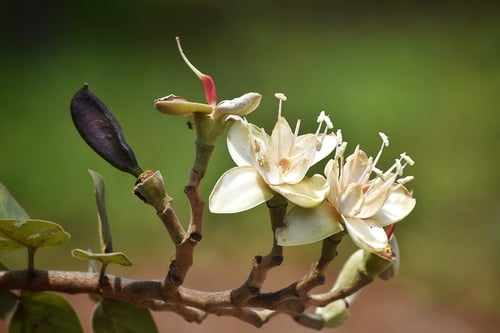
Mezoneuron benthamianum
Baill.
Tiger's claw
iNaturalist· cc-by-nc
(c) Carel Jongkind, some rights reserved (CC BY-NC), uploaded by Carel Jongkind
iNaturalist· cc-by-nc
(c) Maksymilian Wojtkiewicz, some rights reserved (CC BY-NC)
iNaturalist· cc-by-nc
(c) Jukka Jantunen, some rights reserved (CC BY-NC)
Description
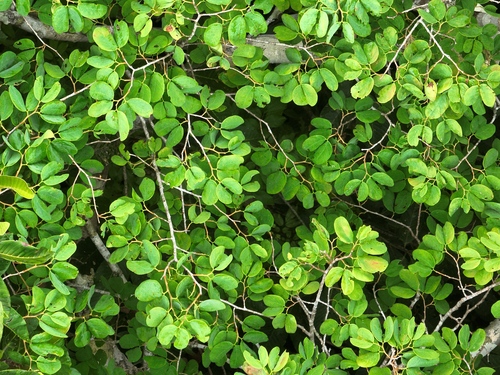
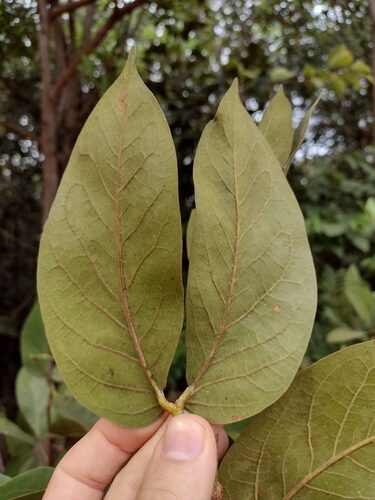
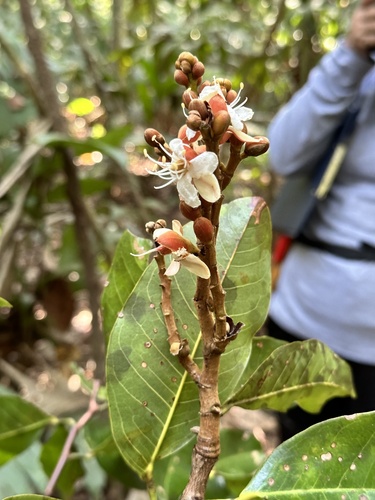
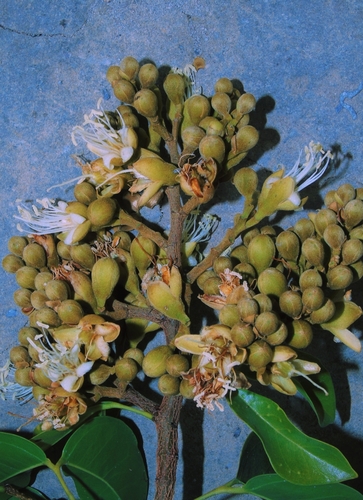
A woody climber or shrub growing up to 8 m high with sharp thorns. It is found in tropical dry deciduous forests, savannahs, palm groves, and waste places in West Africa.
Edible Uses
The leaves are used as a masticatory, the root is consumed as a drink, and the stems are used for juice.
Medicinal Uses
An infusion of the dried roots is drunk or used as a bath against general malaise. A root decoction is drunk to cure dysentery. The roots are added to palm wine to increase the strength or its aphrodisiac properties. The stems and roots are used for dental hygiene, to sooth toothache and as an aphrodisiac. A decoction of roots, bark and leaves is used to cure urethral discharge. The leaves are depurative and mildly laxative. They are used to cure colic. The young leaves are eaten as a treatment for hookworm or Guinea worm, and a macerate of leafy twigs is given to people suffering from impotence related to venereal diseases. The leaves are applied externally as a paste to treat snakebites. Wounds, skin infections, piles and ulcers are treated with a watery macerate of leafy twigs, mashed-up leaves or leaf ash299]. The stem liquid is dropped in the eye to cure inflammation and cataract. Gallic acid and gallate derivatives have been isolated from the leaves. Gallic acid and its methyl ester (methylgallate) inhibit the growth of both Gram-negative and Gram-positive bacteria, but the other gallate derivatives only suppress Gram-positive bacteria. Petroleum spirit, chloroform and ethanol extracts of the roots showed antimicrobial activity on a range of organisms[299[. The petroleum spirit and chloroform extracts display strong free radical scavenging activity.
Distribution
It is a tropical plant. It grows in waste places in dry deciduous forest or savannah in West Africa. It grows in palm groves and along the edges of mangroves.
Where It Grows
Africa, Burkina Faso, Gambia, Guinea, Guinée, Guinea-Bissau, Nigeria, Senegal, Sierra Leone, West Africa,
Other Uses
The plant has vicious, recurved thorns and so is grown in hedges in order to make them impenetrable.
Notes
Also as Caesalpinaceae.
Synonyms
Also Known As
Bu topot, Burle, Buropod, Ferida-preto, Fidida, Humohia, M'poti, Mougue-netompo, N'pinkind-ze, Nopote, Nuputa, Pinkitze, Solim-n'ganin-o, Tchifla, Tumebele, Unha-di-onca
References (3)
- Bongers, F. et al (Eds), Forest Climbing Plants of West Africa: Diversity, Ecology and Management. CABI
- Burkill, H. M., 1985, The useful plants of west tropical Africa, Vol. 3. Kew.
- World Checklist of Useful Plant Species 2020. Royal Botanic Gardens, Kew