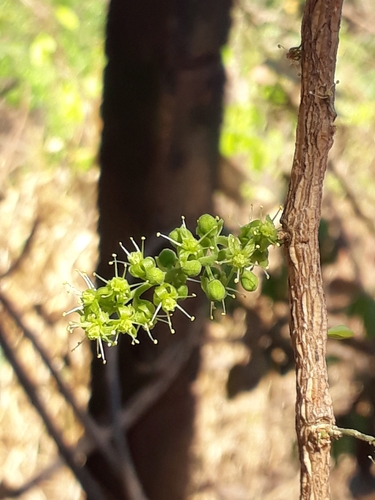
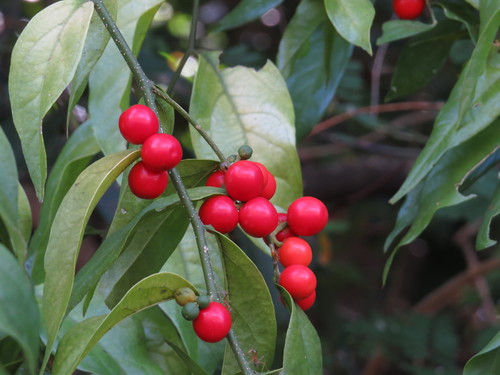
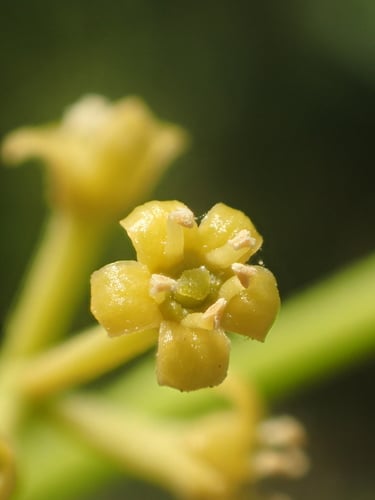
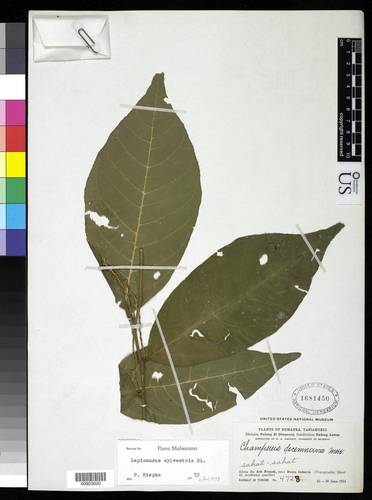
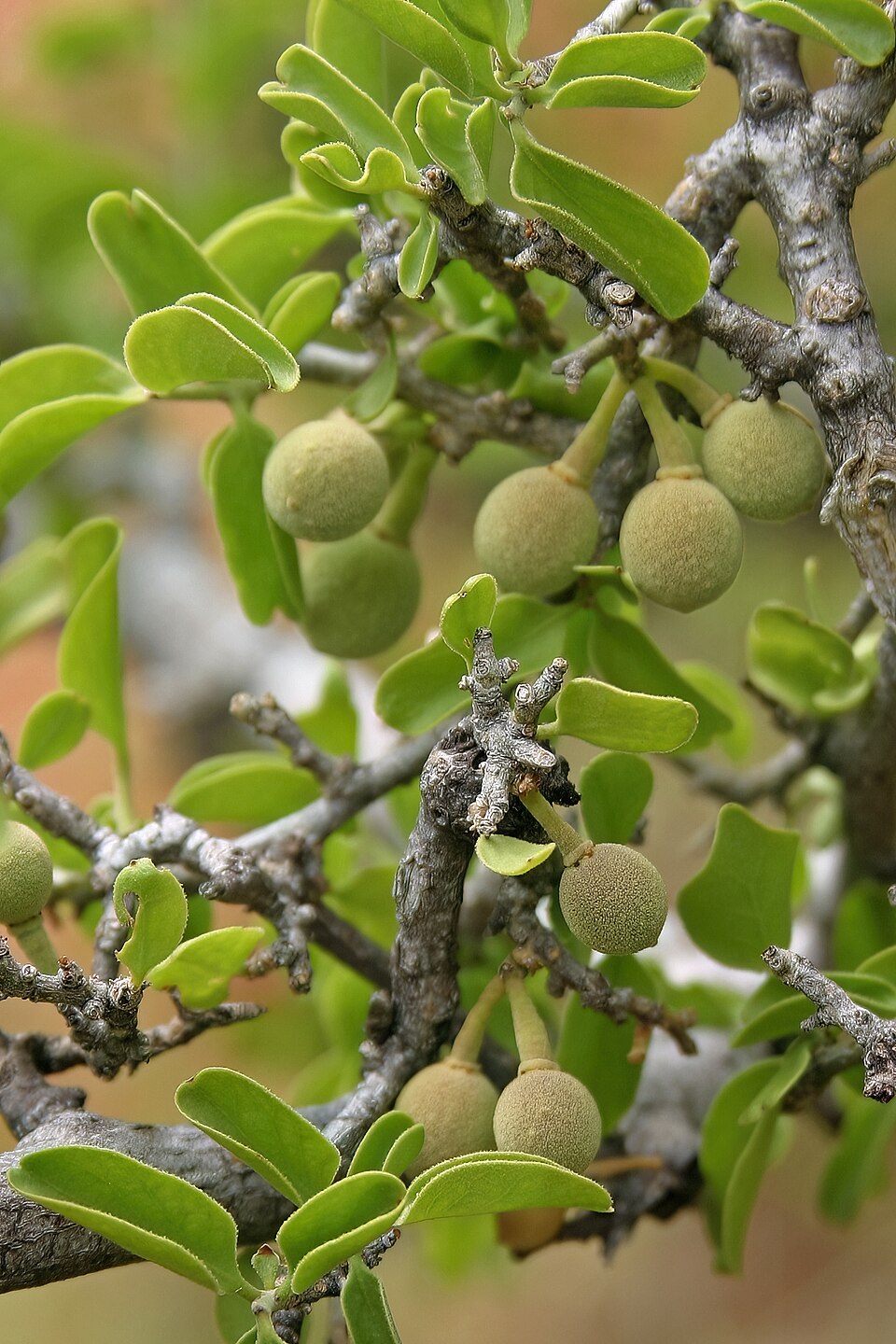
Cansjera rheedei
J. F. Gmel
iNaturalist· cc-by
(c) portioid, some rights reserved (CC BY), uploaded by portioid
iNaturalist· cc-by-nc
(c) 桃子, some rights reserved (CC BY-NC)
Summary
Source: WikipediaCansjera rheedei is a scandent shrub distributed from India, across Southeast Asia, China, Sumatra, Borneo and the Philippines. It was described by Johann Friedrich Gmelin in his work System Naturae ed. 13[bis]: 280 (1791).
Description
A woody climber. It climbs 8 m tall. It can be an erect shrub. The small branches have a yellow coating. The leaves are narrowly oval and 4-13 cm long by 3-6 cm wide. The base is wedge shaped or rounded. The fruit is fleshy and orange to red. They are 1.5 cm long by 1 cm wide.
Edible Uses
Young leaves are boiled and eaten as a vegetable.
Traditional Uses
The young leaves are boiled and eaten as a vegetable.
This uses section is brief — help expand it
Distribution
It is a tropical plant. It grows in forest and thickets. It grows from sea level to 1,400 m above sea level. It occurs in Yunnan.
Where It Grows
Asia, Australia, Cambodia, China, Himalayas, Hong Kong, India, Indochina, Indonesia, Laos, Malaysia, Myanmar, Nepal, Philippines, SE Asia, Sri Lanka, Thailand, Vietnam,
Notes
There are 3 Cansjera species. Cansjera rheedii Blanco is an unresolved name. Cansjera rheedei J. F. Gmel is an accepted name.
Synonyms
Also Known As
Daw cheu daw, Nang joom, Pitaginiari, Povi
References (8)
- Eiadthong, W., et al, 2010, Management of the Emerald Triangle Protected Forests Complex. Botanical Consultant Technical Report. p 47
- Flora of China @ efloras.org Volume 5
- Hiepko, P. 2008, Opiliaceae. Flora of the World. Species Plantarum No. 12 p 51
- Johnson, N., 2002, Environmental Change in northern Thailand: Impact on Wild Edible Plant Availability. Ecology of Food and Nutrition, 41: 5, 373-399
- Kahlon, L. K. & Singh, R., 2019, Traditional knowledge & Dynamics of edible plants of primitive tribal group ‘Paudi Bhuyan’ with changing demography migration patterns in Northern Odisha. Indian Journal of Traditional Knowledge Vol 18(1), pp 7-15
Show all 8 references Hide references
- Kumar, N. A. & Vedavalli, L., 2016, Conservation of Family Farming Heritage. In Family Farming. FAO & MSSRF. p 257
- Rasingam, L., 2012, Ethnobotanical studies on the wild edible plants of Irula tribes of Pillur Valley, Coimbatore district, Tamil Nadu, India. Asian Pacific Journal of Tropical Biomedicine. (2012) S1493-S1497
- www.theplantlist.org