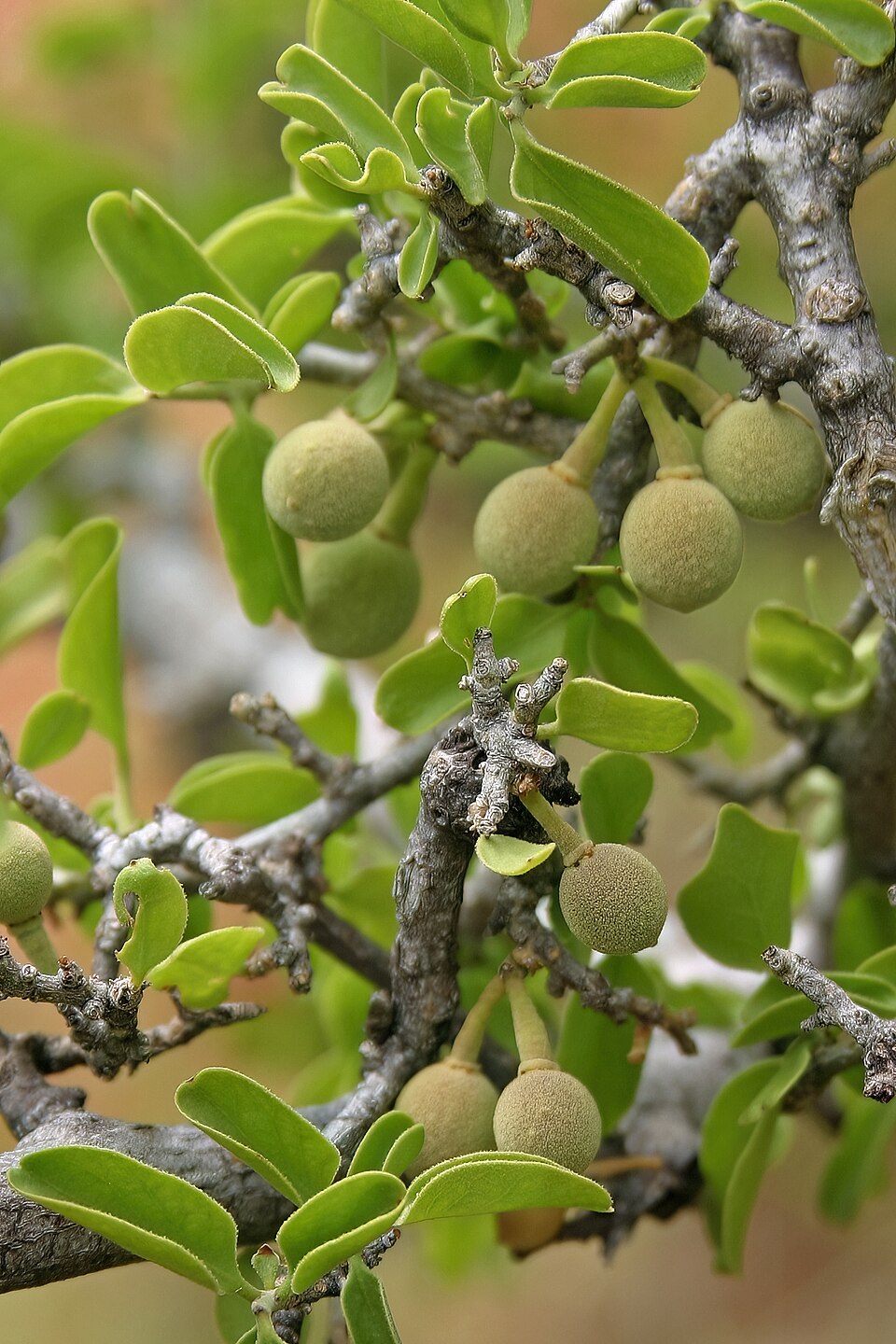
Agonandra brasiliensis
Miers ex Benth.
Brazil agonandra
iNaturalist· cc-by-nc
(c) Ricardo Dislich, some rights reserved (CC BY-NC), uploaded by Ricardo Dislich
iNaturalist· cc-by-nc
(c) A. Thiago A. Farias, some rights reserved (CC BY-NC), uploaded by A. Thiago A. Farias
iNaturalist· cc-by-nc-nd
(c) Víctor de Paiva, some rights reserved (CC BY-NC-ND), uploaded by Víctor de Paiva
Summary
Source: WikipediaAgonandra brasiliensis (Portuguese common name: pau-marfim) is a timber tree native to Amazon rainforest and Cerrado vegetation in Brazil. This plant is Brazilian wood export, and it is often used for flooring and furniture, specially chair production.
Description
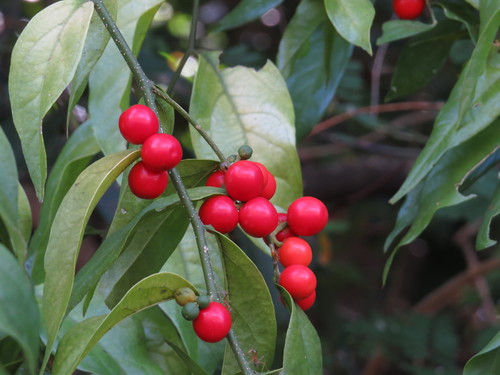
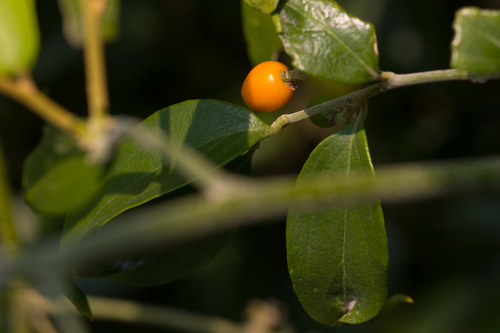
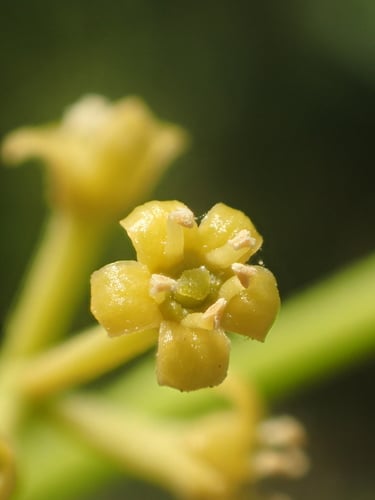
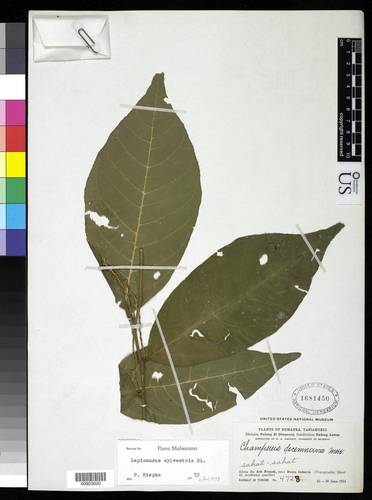
A small tree. It grows about 12 m tall. The bark is thick and corky. The leaves are oval or sword shaped and taper to a short tip. The flowers are in groups in the axils of the small branches. The fruit is yellow and fleshy with a stone inside. It is 12-15 mm long by 10-12 mm wide.
Edible Uses
Fruit - cooked. Used for making marmalade. The olive-green drupe can be up to 30mm long and 17mm wide. The roots are rich in saponins. They are used to make a frothy drink known as 'poor man's beer'.
Traditional Uses
The fruit are used to prepare marmalade.
This uses section is brief — help expand it
Medicinal Uses
The leaves are used in baths as a treatment for rheumatism. A decoction of the bark is used as a treatment for colds, diarrhoea, and malaria. The bark decoction is used externally as a wash for treating skin infections. An extract of the bark is strongly molluscicidal. The roots are used as a purgative.
Known Hazards
The wood contains a saponin which irritates mucous membranes.
Distribution
It is a tropical plant. In Brazil it grows in dry secondary forests and savannah.
Where It Grows
Amazon, Bolivia, Central America, Brazil, Colombia, Guianas, Guyana, Panama, Paraguay, Peru, South America, Suriname, Venezuela,
Cultivation
Prefers a sunny position. Established plants are at least somewhat drought tolerant. The plant can flower and produce fruit all year round. A dioecious species, both male and female forms need to be grown if fruit and seed are required.
Propagation
Seed - best sown as soon as it is ripe in a semi-shaded position in a nursery bed or individual containers. The seed usually sprouts in 70 - 80 days, with a medium percentage germinating.
Other Uses
A semi-drying oil is obtained from the seed. The seed contains over 50% of a viscous oil. The bark produces a cork up to 4cm thick. An extract of the bark is strongly moluscicidal. The straw-coloured wood is heavy, hard, straight-grained with a fine texture. It has moderate mechanical properties, but is somewhat susceptible to rot. A substitute for satinwood, it is used in carving, cabinet making, lathe work, flooring blocks, furniture, decorative items, cart wheels etc. The wood is a source of fuel and charcoal.
Notes
The Opiliaceae are tropical plants. There are 10 Agonandra species in tropical America.
Synonyms
Also Known As
Aceituno, Almiscle, Almisque, Amora-do-mato, Cacha, Caimancillo, Coquillo, Cervejinha, Hoja menuda, Imbu d'anta, Kangwaruhumyra, Marciana, Marfil, Marfim, Marfim-de-vedao, Missiana, Palo de anciano, Parei'a'y, Tange-cuia, Tatu, Tinge-cuia, Turino del monte
References (11)
- Altschul, S.V.R., 1973, Drugs and Foods from Little-known Plants. Notes in Harvard University Herbaria. Harvard Univ. Press. Massachusetts. no. 793
- Bircher, A. G. & Bircher, W. H., 2000, Encyclopedia of Fruit Trees and Edible Flowering Plants in Egypt and the Subtropics. AUC Press. p 15
- Bortolotto, I. M., et al, 2018, Lista preliminar das plantas alimenticias nativas de Mato Grosso do Sul, Brasil. Iheringia, Serie Botanica, Porto Alegre, 73 (supl.):101-116
- Bot. Jahrb. Syst. 117:498. 1995
- Grandtner, M. M. & Chevrette, J.,2013, Dictionary of Trees, Volume 2: South America: Nomenclature, Taxonomy and Ecology. Academic Press p 16 Hiepko, P., 2000, Opiliaceae: Flora Neotropica, Vol. 82, Opiliaceae p. 32
Show all 11 references Hide references
- Hiepko, P. 2008, Opiliaceae. Flora of the World. Species Plantarum No. 12 p 22
- Lopez-Diago, D. & Garcia, N., 2021, Wild edible fruits of Colombia. Biota ColomBiana 22 (2) p 46
- Paz, F. S., et al, 2021, Edible Fruit Plant Species in the Amazon Forest Rely Mostly on Bees and Beetles as Pollinators. Journal of Economic Entomology, XX(XX), 2021, 1–13
- Roa, J. A. G. & Boada, D. S. G., 2018, Fundación para el Fortalecimiento de la Fruticultura y Plantas Alimenticias no Convencionales en Colombia.
- Smith, N., Mori, S.A., et al, 2004, Flowering Plants of the Neotropics. Princeton. p 281 (Drawing)
- Zambrana, P, et al, 2017, Traditional knowledge hiding in plain sight – twenty-first century ethnobotany of the Chácobo in Beni, Bolivia. Journal of Ethnobiology and Ethnomedicine (2017) 13:57