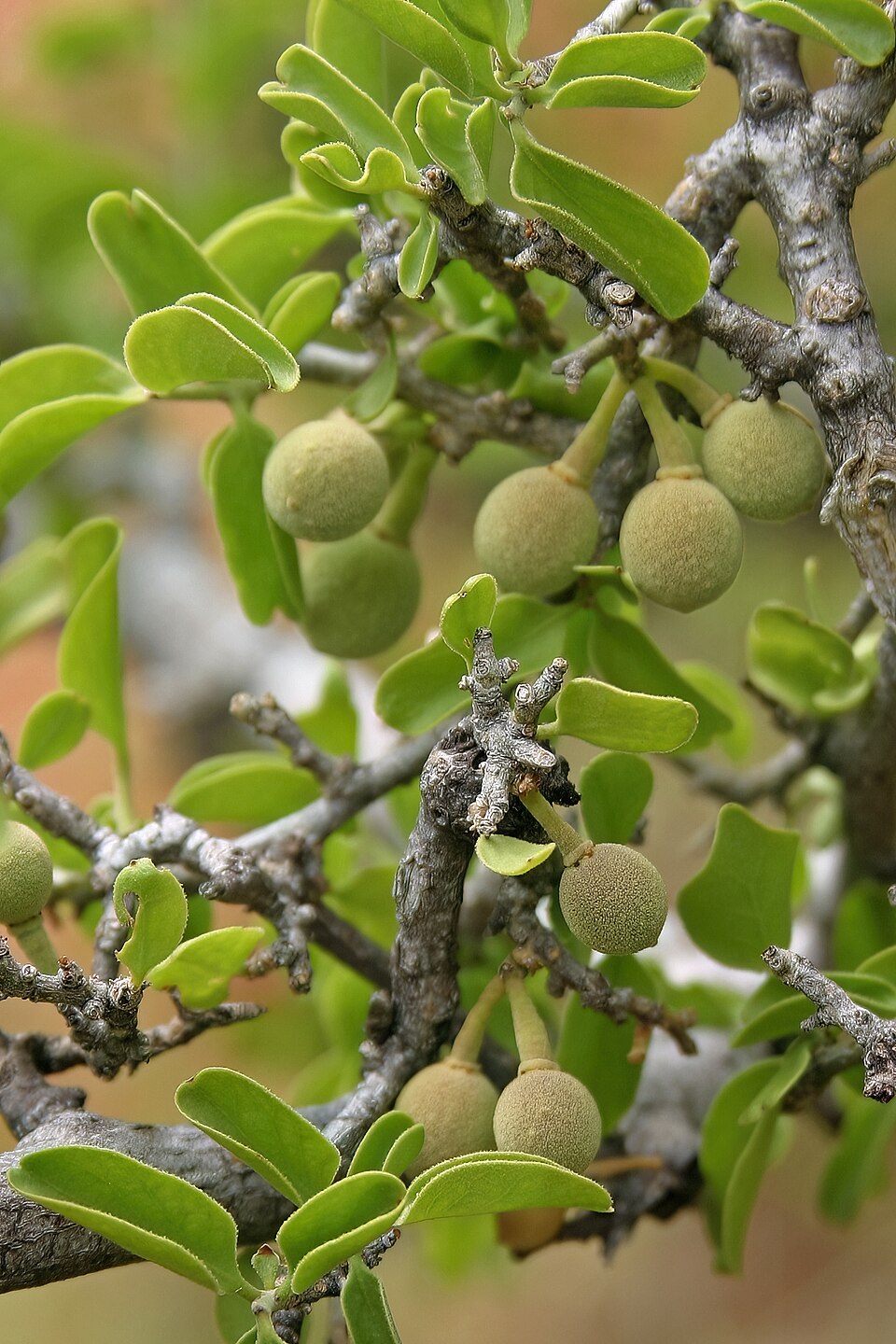
Cansjera leptostachya
Benth.
Akusepin
iNaturalist· cc-by-nc
(c) kerrycoleman, some rights reserved (CC BY-NC), uploaded by kerrycoleman
iNaturalist· cc-by-nc
(c) Russell Cumming, some rights reserved (CC BY-NC)
iNaturalist· cc-by-nc
(c) Russell Cumming, some rights reserved (CC BY-NC)
Description
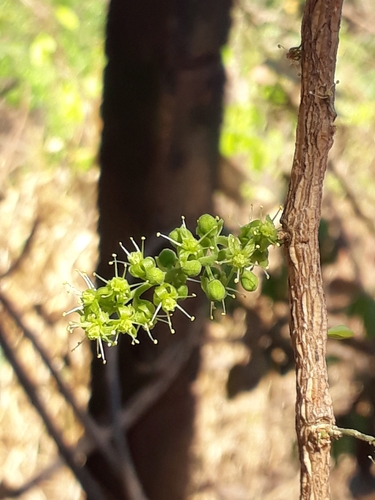
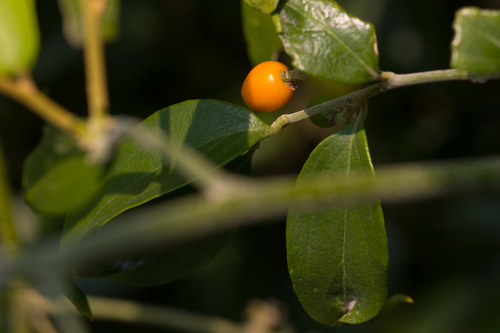
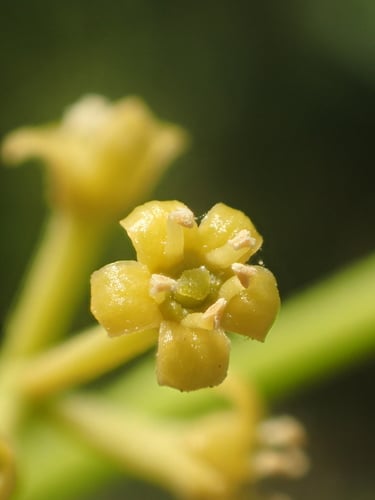
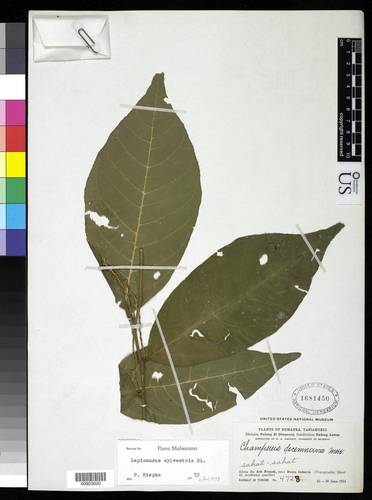
A climbing tropical forest plant. It can be 6 m long. It can also be as an erect shrub. The branches hang downwards. The young twigs are hairy but these often become smooth. The leaves are oval and 4-9 cm long by 1.1-4 cm wide. The leaf stalk is 2-6 mm long and hairy. The midrib is easy to see underneath the leaf. The top of the leaf often comes to a small point and the base tapers. There are 1-4 flower spikes in each leaf axil. They are 2 cm long. The flowers are sweetly scented. The floral tube is green or yellow. The fruit is yellow to orange an oval. It is 1.5 cm long by 1 mm wide.
Edible Uses
The fruit are eaten.
Traditional Uses
The fruit are eaten.
This uses section is brief — help expand it
Distribution
A tropical plant. It is in vine thickets. It is often climbing on the edge of forests. It grows from sea level up to 700 m altitude. It can grow on limestone rocks or sandy soil. It can grow in arid places.
Where It Grows
Asia, Australia*, East Timor, Indonesia, Pacific, Papua New Guinea, PNG, SE Asia, Timor-Leste,
Production
It flowers throughout the year.
Other Information
It is not known if it is used for food in Papua New Guinea.
Notes
There are 3 Cansjera species.
Synonyms
References (9)
- Cooper, W. and Cooper, W., 2004, Fruits of the Australian Tropical Rainforest. Nokomis Editions, Victoria, Australia. p 380
- Cowie, I, 2006, A Survey of Flora and vegetation of the proposed Jaco-Tutuala-Lore National Park. Timor-Lests (East Timor) www.territorystories.nt/gov.au p 51
- Dunlop, C.R., Latz, P.K., & Maconochie, J.R., 1976, A Botanical survey of Elcho Island. Northern Territory Botanical Bulletin 1:1-61 p 59
- Hiepko, P., 1984, Opiliaceae, Flora Malesiana Series 1 Vol 10(1) p 51
- Jackes, B.R., 2001, Plants of the Tropics. Rainforest to Heath. An Identification Guide. James Cook University. p 71
Show all 9 references Hide references
- Morley, B.D., & Toelken, H.R., (Eds), 1983, Flowering Plants in Australia. Rigby. p231
- Paczkowska, G . & Chapman, A.R., 2000, The Western Australian Flora. A Descriptive Catalogue. Western Australian Herbarium. p 414
- Wheeler, J.R.(ed.), 1992, Flora of the Kimberley Region. CALM, Western Australian Herbarium, p 566
- World Checklist of Useful Plant Species 2020. Royal Botanic Gardens, Kew