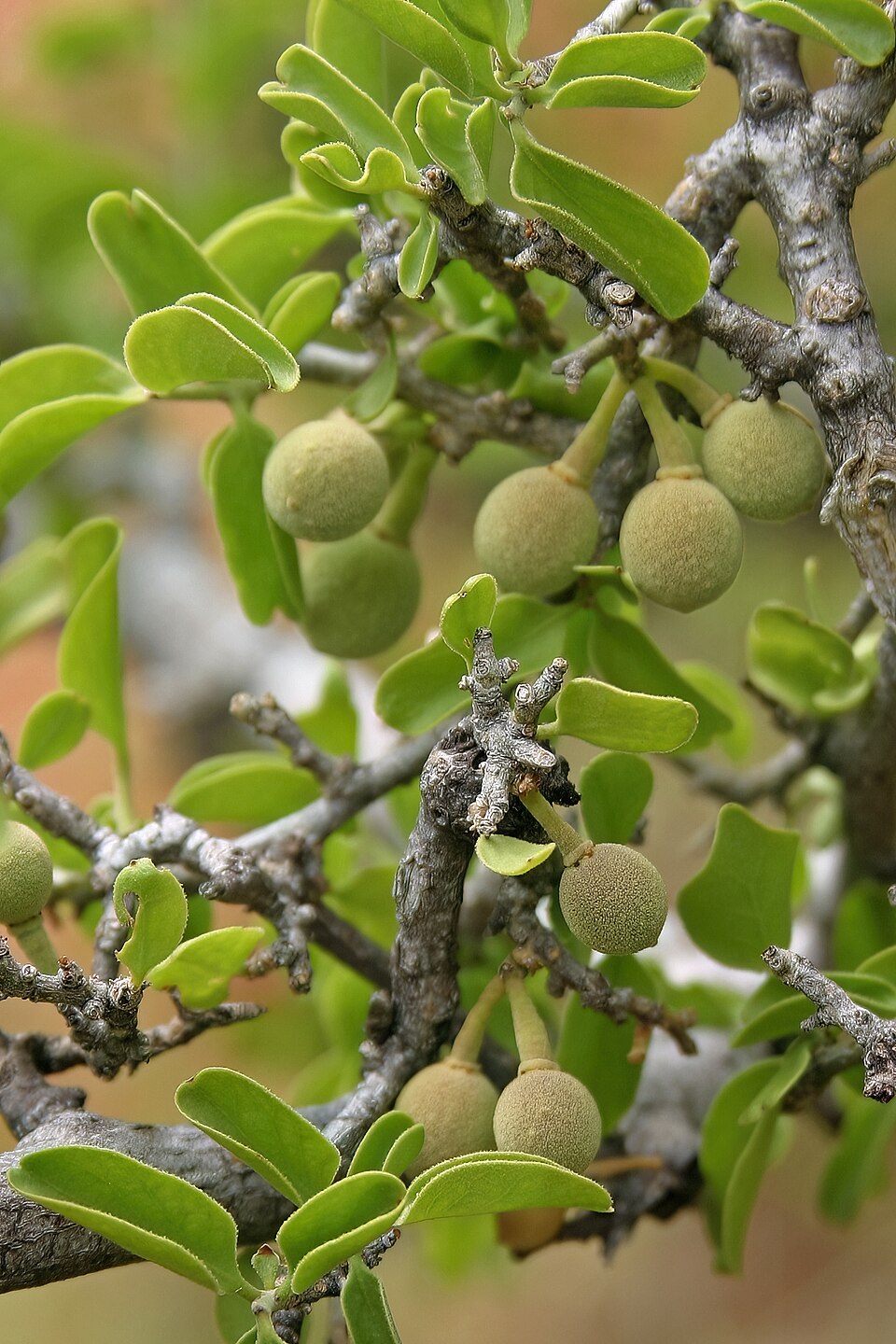
Champereia manillana
(Blume) Merr.
False olive
iNaturalist· cc0
no rights reserved, uploaded by 葉子
iNaturalist· cc0
no rights reserved, uploaded by 葉子
iNaturalist· cc-by-nc
(c) Lijin Huang (紫楝), some rights reserved (CC BY-NC), uploaded by Lijin Huang (紫楝)
Description
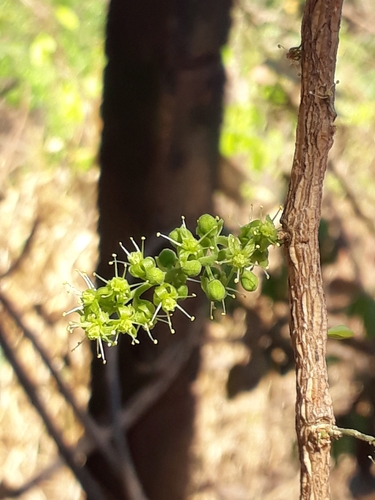
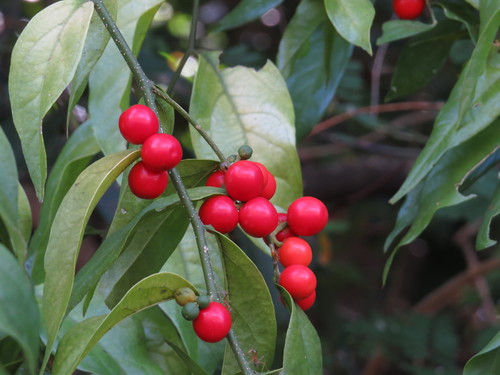
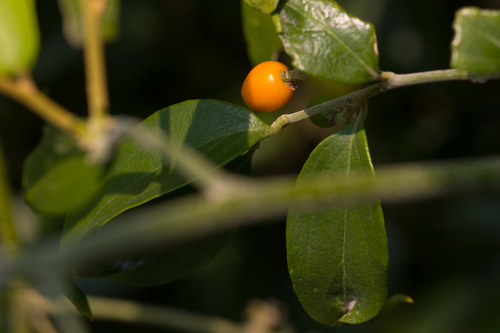
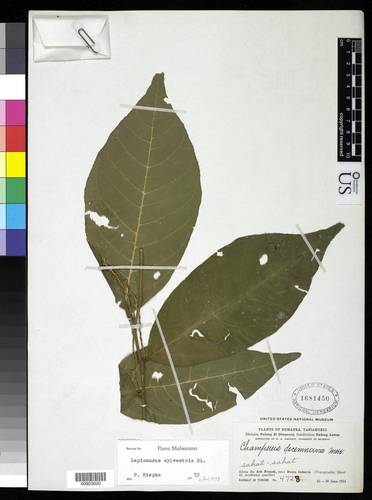
A small tree. It grows 6-7 m tall. The branches are slender. The leaves are slightly leathery and narrowly oval. They are 3-10 cm long by 1-5 cm wide. They are often wavy along the edges. They are shiny. There are 4-8 pairs of side veins. The flowers are in the axils of leaves on branched stalks. Flowers can have both sexes or be female. The fruit is fleshy and rounded and is orange-red when ripe.
Edible Uses
The leaves, flowers, and young fruit are cooked and eaten as a vegetable. Young leaves are also used fresh in salads.
Traditional Uses
The leaves, flowers and young fruit are cooked and eaten as a vegetable. The young leaves are also used in salads.
This uses section is brief — help expand it
Medicinal Uses
Leaves and roots are pounded to make a poultice for ulcers, and the boiled root is used for rheumatism. The leaves are pounded and applied for headache and stomach ache.
Distribution
A tropical plant. It grows from sea level to 1,300 m above sea level. It occurs in Yunnan.
Where It Grows
Andamans, Australia, Asia, China, Christmas Island, India, Indochina, Indonesia, Malaysia, Myanmar, New Guinea, Pacific, Philippines, SE Asia, Taiwan, Thailand, Vietnam,
Cultivation
The plant can flower and produce fruit all year round.
Production
In southern China flowers occur February to June and fruit from February to July.
Notes
The Flora of China says there is only one Champereia species. Burkill says there are 2 or 3. There are 2 varieties.
Synonyms
Also Known As
Apeng, Banitog, Cemperai, Mitha bhaji, Ngot rung, Pannalayapen
References (15)
- Altschul, S.V.R., 1973, Drugs and Foods from Little-known Plants. Notes in Harvard University Herbaria. Harvard Univ. Press. Massachusetts. no. 791
- Dobriyal, M. J. R. & Dobriyal, R., 2014, Non Wood Forest Produce an Option for Ethnic Food and Nutritional Security in India. Int. J. of Usuf. Mngt. 15(1):17-37 (As Champereia griffithiana)
- Flora of China @ efloras.org Volume 5
- Flora of Taiwan Vol. 2:267
- Hiepko, P., 1984, Opiliaceae, Flora Malesiana Series 1 Vol 10(1) p 35
Show all 15 references Hide references
- Khumgratok, S., Edible Plants in Cultural Forests of Northeastern Thailand. Mahasarakham University Thailand.
- Kuo, W. H. J., (Ed.) Taiwan's Ethnobotanical Database (1900-2000), http://tk.agron.ntu.edu.tw/ethnobot/DB1.htm
- Maghirang, R. G., et al, 2018. Ethnobotanical Studies of Some Plants Commonly Used as Vegetables in Selected Provinces of the Philippines. Journal of Nature Studies. 17(2), 30-43.
- Menisa, A. A., et al, 2012, Survey and characterization of Indigenous Food Plants in Ilocos Norte, Philippines. SEARCA Discussion Paper series No. 2011-2
- Milow, P., et al, 2013, Malaysian species of plants with edible fruits or seeds and their evaluation. International Journal of Fruit Science. 14:1, 1-27
- Ong, H. C., Mojiun, P. F. J., & Milow, P., 2011, Traditional knowledge of edible plants among the Temuan villagers in Kampung Guntor, Negeri Sembilan, Malaysia. African Journal of Agricultural Research Vol. 6(8), pp. 1962-1965, 18 April, 2011
- Reis, S. V. and Lipp, F. L., 1982, New Plant Sources for Drugs and Foods from the New York Botanical Garden herbarium. Harvard. p 49
- Sang, D. T., & Mizoue, K. O. N., 2012, Use of Edible Forest Plants among Indigenous Ethnic Minorities in Cat Tien Biosphere Reserve, Vietnam. Asian Journal of Biodiversity Vol. 3 (1), p 23-49
- Slik, F., www.asianplant.net
- World Checklist of Useful Plant Species 2020. Royal Botanic Gardens, Kew