Ochradenus baccatus
Delile
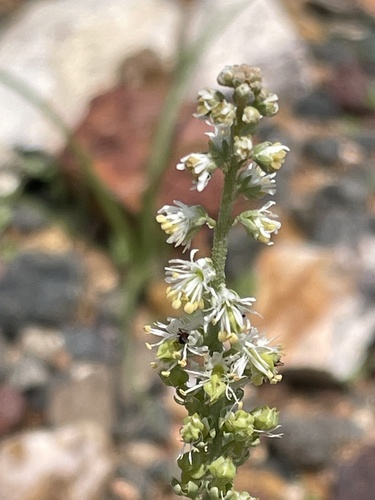
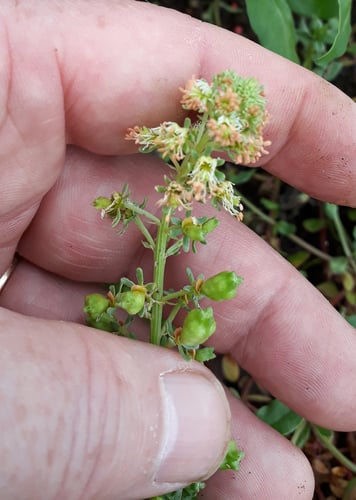
iNaturalist· cc-by-nc
(c) Stefano Doglio, some rights reserved (CC BY-NC), uploaded by Stefano Doglio
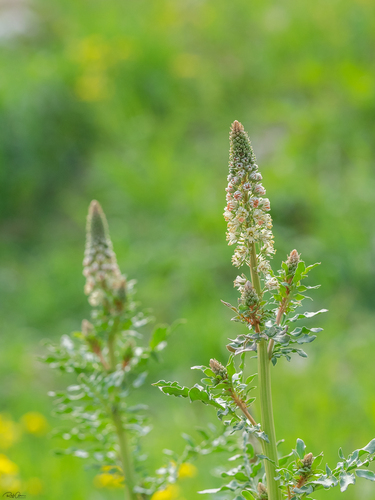
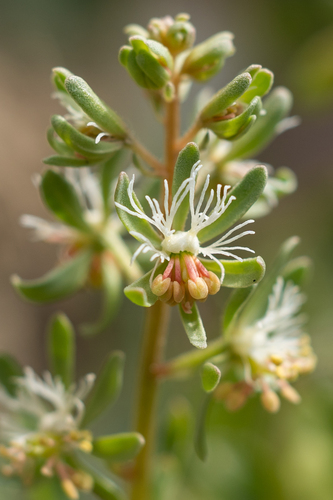
iNaturalist· cc-by-nc
(c) einati125, some rights reserved (CC BY-NC)
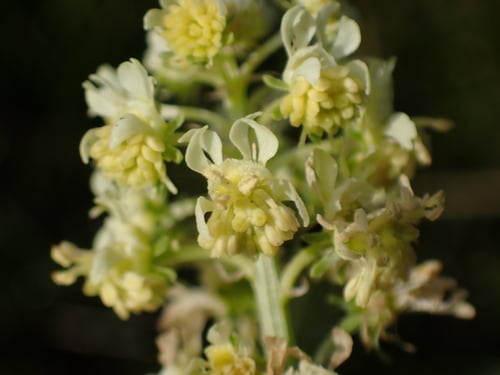
iNaturalist· cc-by-nc
(c) einati125, some rights reserved (CC BY-NC)
Summary
Source: WikipediaOchradenus baccatus is a perennial shrub of the family Resedaceae, native to arid and semi-arid regions of the Middle East, North Africa, and into Iran and Pakistan. It is characterized by its green, leafless branches and distinctive yellow flowers and white berries. It is widespread in disturbed habitats and desert depressions, including roadsides and semi-natural areas.
Description
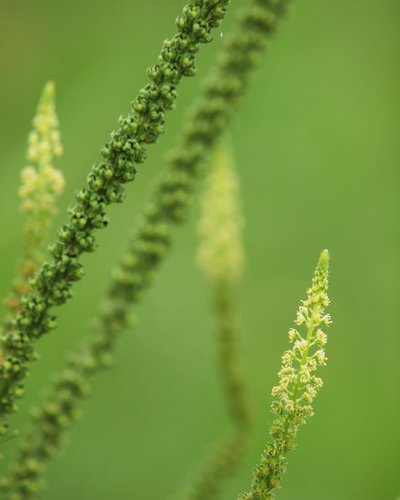
A straggling shrub. The branches are slender and greenish-yellow when mature. The leaves are 1-4 cm long by 1-2 mm wide. The flowers are yellowish-green. The are in dense groups at the ends of branches. These are 5-15 cm long. The fruit is a berry 3-5 mm wide. It is white. The seeds are white and 1.5 mm long and kidney shaped.
Edible Uses
The sweet fruit are eaten raw.
Traditional Uses
The fruit are sweet and are eaten raw.
This uses section is brief — help expand it
Distribution
It grows in tropical and Mediterranean climate places. A desert shrub. It can grow in arid places.
Where It Grows
Afghanistan, Africa, Asia, Bahrain, Central Africa, Chad, East Africa, Egypt, Ethiopia, Iran, Israel, Jordan, Kuwait, Libya, Mediterranean, Middle East, Niger, North Africa, Oman, Pakistan, Palestine, Sahel, Saudi Arabia, Socotra, Somalia, Sudan, Syria, United Arab Emirates, UAE, West Africa, Yemen,
Notes
There are about 5 Ochradenus species.
References (5)
- Al-Sodany, Y. M., et al, 2013, Medicinal Plants in Saudi Arabia: I. Sarrwat Mountains at Taif, KSA. Academic Journal of Plant Sciences 6 (4): 134-145
- Flora of Pakistan. www.eFloras.org
- Mahklouf, M. H., 2019, Ethnobotanical Study of Edible Wild Plants in Libya. European Journal of Ecology. 5(2): 30-40
- Royal Botanic Gardens, Kew (1999). Survey of Economic Plants for Arid and Semi-Arid Lands (SEPASAL) database. Published on the Internet; http://www.rbgkew.org.uk/ceb/sepasal/internet [Accessed 6th June 2011]
- World Checklist of Useful Plant Species 2020. Royal Botanic Gardens, Kew