Reseda lutea
L.
Wild mignonette, Cut-leaved Mignonette
iNaturalist· cc-by-nc-sa
(c) Pierre Corbrion, some rights reserved (CC BY-NC-SA), uploaded by Pierre Corbrion
iNaturalist· cc-by-nc
(c) chorty, some rights reserved (CC BY-NC)
iNaturalist· cc-by-nc
(c) Михаил Шовкун, some rights reserved (CC BY-NC)
Summary
Source: WikipediaReseda lutea, the yellow mignonette or wild mignonette, is a species of fragrant herbaceous flowering plant. Its leaves and flowers have been used to make a yellow dye called "weld" since the first millennium BC, although the related plant Reseda luteola was more widely used for that purpose. A native of Eurasia and North Africa, the plant is present on other continents as an introduced species and a common weed. In Australia it is a noxious weed and pest of agricultural crops.
Description
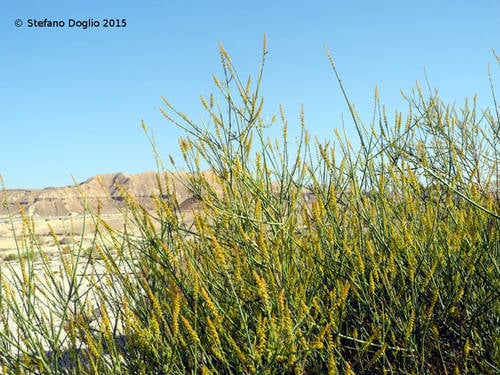
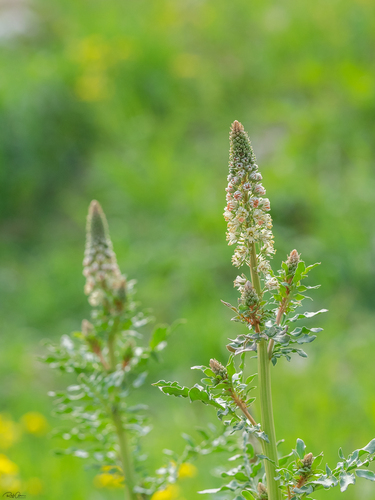
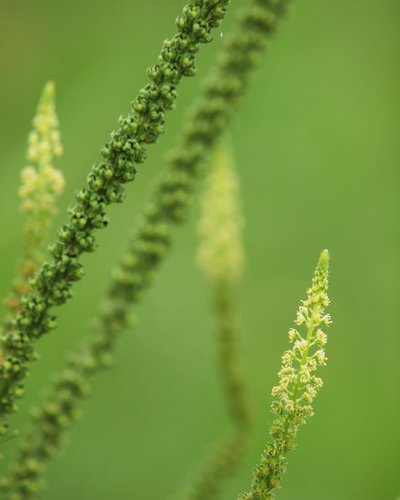
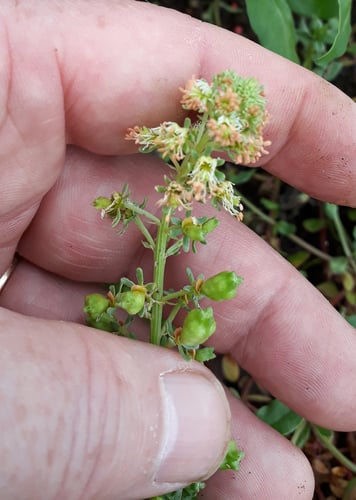
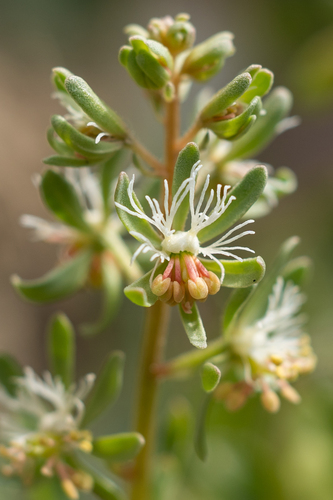
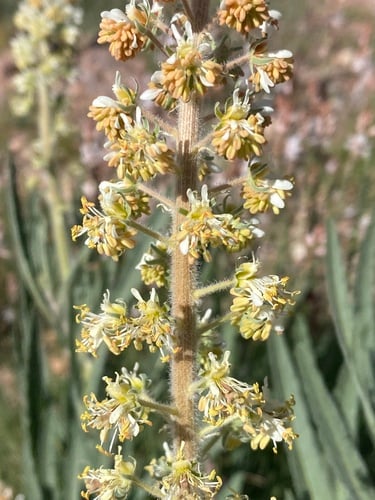
A herb. It can grow each year from seed or keep growing from year to year. It is 30-75 cm tall. It spreads 50-70 cm wide. The stem is branched and angular. The leaves have 3-5 parts. They are papery. The lobes are narrow. The flower racemes occur at the end of stalks. They are yellow ot yellowish green. There are 6 petals which are rounded and clawed at the base. The fruit is a capsule which is 3 angled. The seeds are shiny and black. They are kidney shaped and about 2 mm across.
Edible Uses
Young leaves can be eaten raw.
Traditional Uses
The leaves are eaten in salads.
This uses section is brief — help expand it
Medicinal Uses
None known.
Distribution
It is a temperate plant. It grows on mountain slopes. It is often on calcareous soils. It suits hardiness zones 7-9. Tasmania Herbarium.
Where It Grows
Africa, Australia, Britain, Central Asia, China, Europe, France, Greece, Iran, Ireland, Italy, Luxembourg, Mediterranean, Middle East, North Africa, Portugal, Scandinavia, Slovenia, Spain, Sweden, Tajikistan, Tasmania, Turkey, Türkiye, Turkmenistan,
Cultivation
Easily grown in any well-drained neutral to slightly alkaline soil in a sunny position or in some shade if the summers are long and hot. Plants can sometimes be established on old mortared walls. A good plant for bees and butterflies.
Propagation
Sow seed in situ in spring, covering only very lightly. In areas where winter temperatures stay above around -10°c, an autumn sowing will generally succeed.
Other Uses
Special uses: attracts wildlife.
Notes
There are between 55 and 60 Reseda species.
Also Known As
Huang mu xi cao, Rumeni katanec, Yellow mignonette
References (14)
- Blamey, M and Grey-Wilson, C., 2005, Wild flowers of the Mediterranean. A & C Black London. p 70
- Bremness, L., 1994, Herbs. Collins Eyewitness Handbooks. Harper Collins. p 267
- Cundall, P., (ed.), 2004, Gardening Australia: flora: the gardener's bible. ABC Books. p 1138
- Dashorst, G.R.M., and Jessop, J.P., 1998, Plants of the Adelaide Plains & Hills. Botanic Gardens of Adelaide and State Herbarium. p 64
- Flora of China @ efloras.org Volume 8
Show all 14 references Hide references
- Flora of China Resedaceae.
- http://www.botanic-gardens-ljubljana.com/en/plants
- Irving, M., 2009, The Forager Handbook, A Guide to the Edible Plants of Britain. Ebury Press p 208
- Lamp, C & Collet F., 1989, Field Guide to Weeds in Australia. Inkata Press. p 235
- Morley, B. & Everard, B., 1970, Wild Flowers of the World. Ebury press. Plate 11
- Paczkowska, G . & Chapman, A.R., 2000, The Western Australian Flora. A Descriptive Calatogue. Western Australian Herbarium. p 506
- Plants for a Future database, The Field, Penpol, Lostwithiel, Cornwall, PL22 0NG, UK. http://www.scs.leeds.ac.uk/pfaf/
- Sp. pl. 1:449. 1753
- Tasmanian Herbarium Vascular Plants list p 48