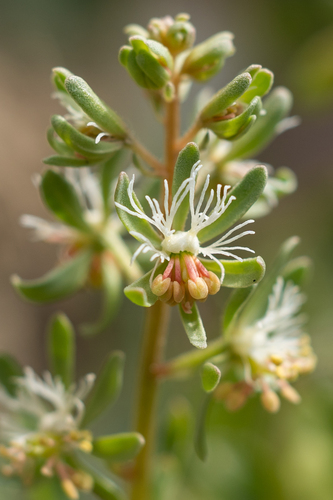
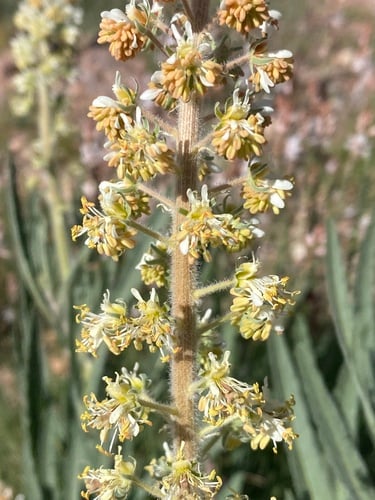
Reseda luteola
L.
Weld
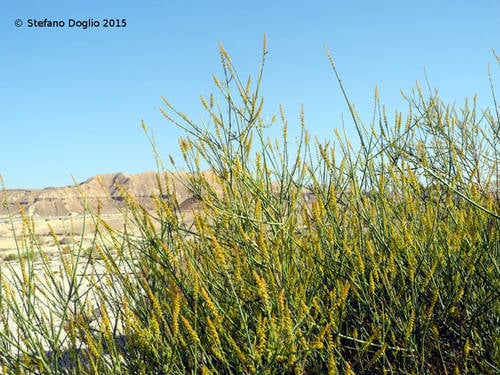
iNaturalist· cc-by-nc
(c) HermannFalkner/sokol, some rights reserved (CC BY-NC)
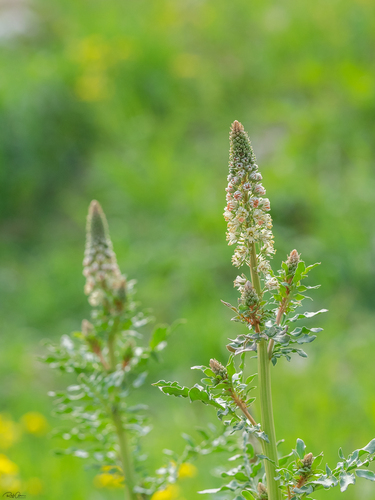
iNaturalist· cc-by-nc-sa
(c) Valter Jacinto | Portugal, some rights reserved (CC BY-NC-SA)
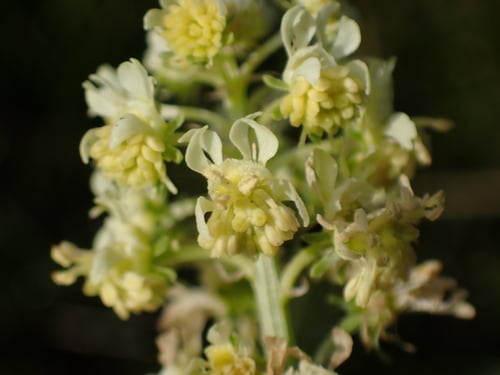
iNaturalist· cc-by-nc
(c) jansson, some rights reserved (CC BY-NC), uploaded by jansson
Summary
Source: WikipediaReseda luteola is a flowering plant species in the family Resedaceae. Common names include dyer's rocket, dyer's weed, weld, woold, and yellow weed. A native of Europe and Western Asia, the plant can also be found in North America as an introduced species and common weed. While other resedas were used for the purpose, this species was the most widely used source of the natural dye known as weld. The plant is rich in luteolin, a flavonoid which produces a bright yellow dye. The yellow could be mixed with the blue from woad (Isatis tinctoria) to produce greens such as Lincoln green.
Description
A biennial reaching 1.5 m tall and 0.5 m wide. Hardy to UK zone 6 and not frost tender. Flowers June to August; seeds ripen August to September. Hermaphroditic and self-fertile, pollinated by bees and insects. Attracts wildlife. Tolerates light sandy, medium loamy, and heavy clay soils with good drainage. Grows in mildly acid, neutral, mildly alkaline, and very alkaline soils. Prefers moist soil but requires full sun.
Edible Uses
An oil can be obtained from the seed, though no edible uses for it have been identified.
Medicinal Uses
Mildly narcotic.
Distribution
It is a temperate plant.
Where It Grows
Afghanistan, Australia, Central Asia, Europe, Iran, Luxembourg, Mediterranean*, Mexico, Tajikistan, Tasmania,
Cultivation
Easily grown in any well-drained neutral to slightly alkaline soil in a sunny position or in some shade if the summers are long and hot. At one time this plant was commonly cultivated for the dye obtained from the leaves and seed but with the advent of chemical dyes it has fallen into disuse. A good plant for bees and butterflies. Plants dislike root disturbance, they can be transplanted but care must be taken not to break the tap root.
Propagation
Sow seed in situ in spring, covering only very lightly. An autumn sowing usually succeeds where winter temperatures do not fall below about -10°c. In the wild, the seed germinates in autumn.
Other Uses
A deep yellow, high-quality dye is obtained from the plant, which is harvested as the last flowers fade; most of the dye is concentrated in the seed. An oil extracted from the seed is used for lighting. Special uses: attracts wildlife.
Synonyms
Also Known As
Common names include dyer's rocket, dyer's weed, weld, woold, and yellow weed.
References (2)
- Caballero, J. N., & Mapes, C. S., 1985, Gathering and Subsistence Patterns among the P'urhepecha Indians of Mexico. J. Ethnol. 5(1): 31-47
- Zeven, A. C. & de West, J. M. J., 1982, Dictionary of cultivated plants and their regions of diversity. Wageningen. p 117