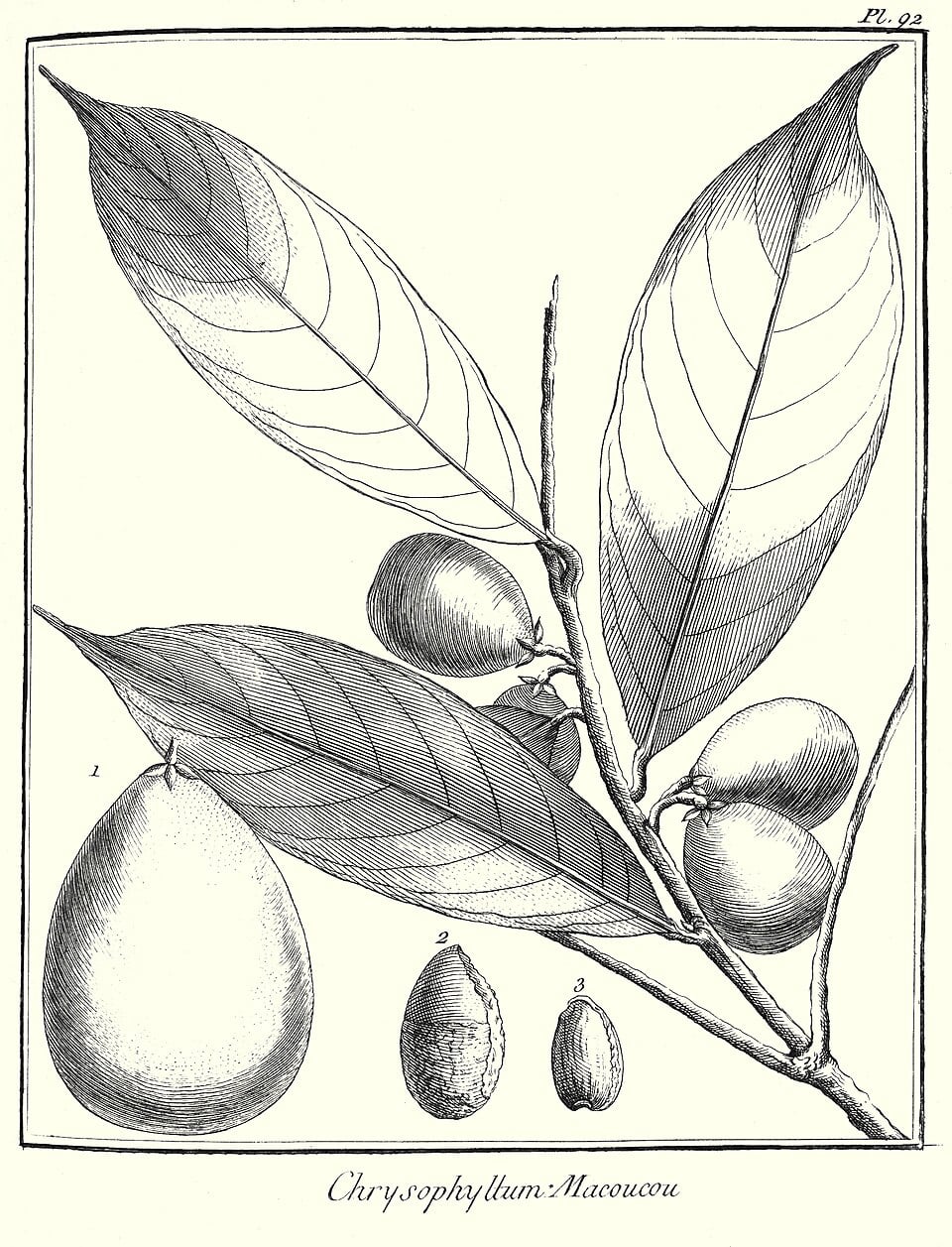
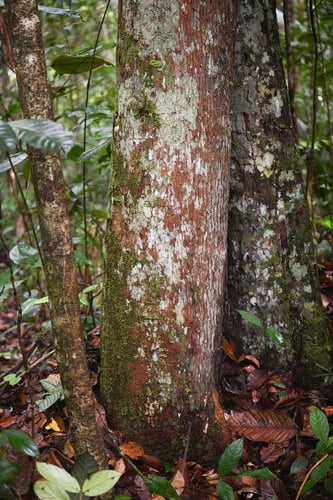
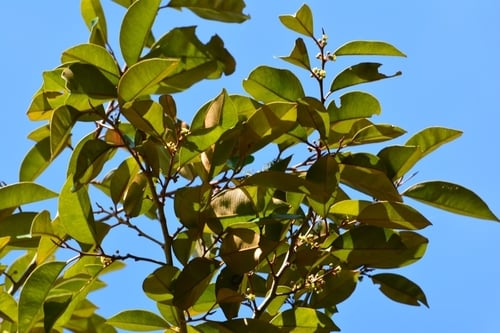
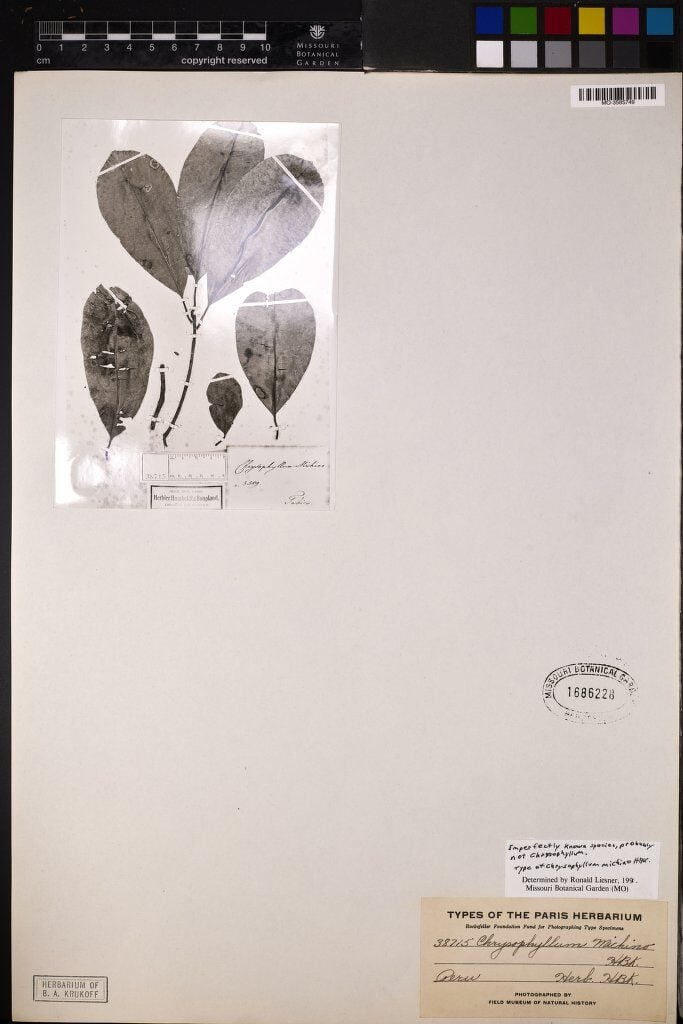
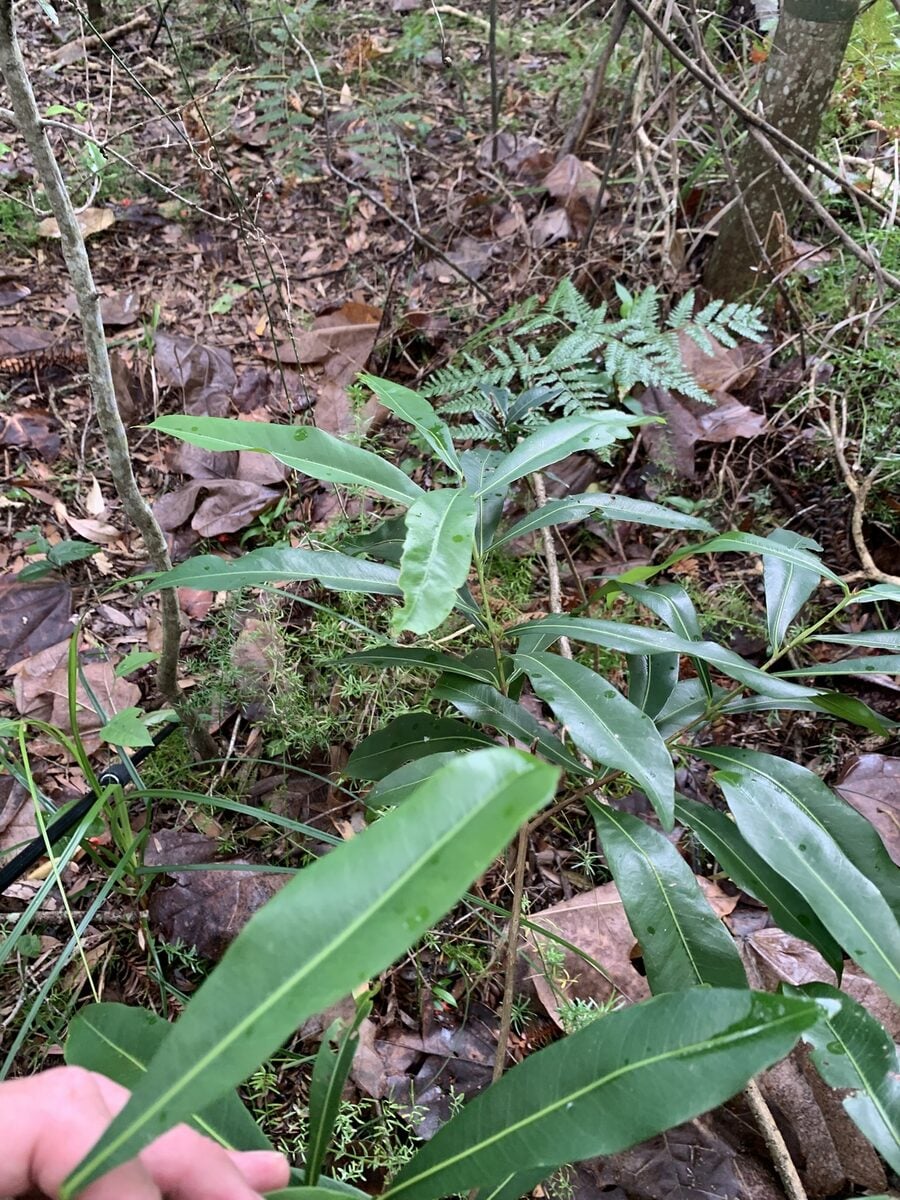
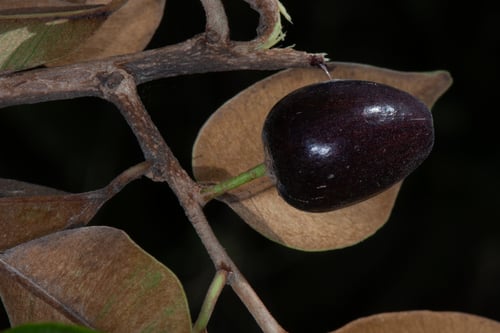
Autranella congolensis
(De Willd.) A. Chev.
Ntiore, Uku
iNaturalist· cc-by-nc
(c) clementine_db, some rights reserved (CC BY-NC), uploaded by clementine_db
iNaturalist· cc-by-nc
(c) clementine_db, some rights reserved (CC BY-NC)
Description
A large tree. It grows to 40 m high. The trunk is straight and does not have branches until 30 m up. The leaves are in spirals and are at the ends of branches. The leaves are narrowly oval and 10-15 cm long by 4-5 cm wide. The flowers contain both sexes. The fruit is a fleshy berry 5-10 cm long. It is yellowish green and has a warty appearance. It has one or two seeds. The seed is about 4.5 cm long.
Edible Uses
An edible oil is extracted from the seeds and used for cooking; the seeds themselves are also eaten.
Traditional Uses
An edible oil is extracted from the seeds and used for cooking.
This uses section is brief — help expand it
Medicinal Uses
A decoction of the bark is taken to treat gonorrhoea, syphilis, dyspepsia, colic and colds. Applied externally, the bark decoction is used to treat fever, pain, skin diseases and wounds. The crushed and decocted bark is used for cleaning cuts and sores. The wood contains saponins.
Known Hazards
The wood dust may cause serious irritation to nose, throat and eyes.
Distribution
It is a tropical plant. It grows in evergreen rainforest. It suits humid locations.
Where It Grows
Africa, Cameroon, Central Africa, Central African Republic, CAR, Congo DR, Gabon, Nigeria, West Africa,
Cultivation
A slow-growing tree. The fruits take 10 - 14 months to ripen. It has been reported that in the dry season many young fruits fall, long before they are ripe. Natural regeneration is poor, seedlings are often rare in the wild. Logs sink in water and cannot be transported by river.
Propagation
Seed - it has a thick and hard seed coat and shows a dormancy of 2.5 - 12 months before germinating. Germination rate may be up to 40%, but is often lower; the germination rate of depulped seeds is lowest, up to 9%. Under experimental nursery conditions, the survival rate of seedlings was 100% after 18 months. Seedlings grow slowly. After germination, growth of aerial parts stops for about 2 months, after which seedlings grow at a rate of 1cm per month, reaching an average height of 25cm after 18 months and 36cm after 29 months. The seedlings are shade tolerant, but are classified as non-pioneer light demanders, preferring small gaps in the forest canopy. Elephants eat the fruits and are probably the main seed dispersers. It is unknown whether seeds that have passed through elephants’ guts germinate more easily, but seeds that have not been eaten by elephants do germinate although the germination rate is low.
Other Uses
The broken seed coats are strung together to make rattles. The heartwood is reddish brown with dark brown streaks; it is usually distinctly demarcated from the 1 - 3cm wide layer of greyish or brownish sapwood. The grain is straight or sometimes interlocked; somewhat lustrous; texture fine and even. The wood is heavy; durable and resistant to fungi and dry-wood borers, but sometimes there is slight termite attack; resistant to acids, making it suitable for chemical containers and laboratory tables. It saws easily but slowly, with serious blunting effect on tools due to the high density and the presence of silica. Stellite-tipped sawteeth and tungsten- carbide-tipped cutting tools are recommended. The wood planes fairly easily with a smooth finish. It holds nails and screws well, but pre-boring is needed. The gluing properties are poor to satisfactory. The presence of saponins has been reported for the wood, which contributes to the resistance to fungi. The wood is used for heavy construction, heavy-duty flooring, bridges, sluice gates and other waterworks, railway sleepers, stairs, poles, vats, vehicle bodies and quarter-sliced veneer. It is locally used to make canoes and paddles. It is suitable for joinery, marquetry, turnery, interior trim, furniture and cabinet work, sporting goods, toys and novelties, musical instruments, draining boards, agricultural implements, ship and boat building and mine props.
Production
Seedlings grow slowly. In Central African Republic flowers have been recorded in March. The fruit take 4-5 months to ripen.
Other Information
The seeds are used for oil in Gabon.
Synonyms
Also Known As
Bukambanda, Mbanda
References (6)
- Bircher, A. G. & Bircher, W. H., 2000, Encyclopedia of Fruit Trees and Edible Flowering Plants in Egypt and the Subtropics. AUC Press. p 48
- Burkill, H. M., 1985, The useful plants of west tropical Africa, Vol. 5. Kew.
- http://aflora.africa.kyoto-u.ac.jp
- Lemmens, R.H.M.J., 2007. Autranella congolensis (De Wild.) A.Chev. [Internet] Record from Protabase. Louppe, D., Oteng-Amoako, A.A. & Brink, M. (Editors). PROTA (Plant Resources of Tropical Africa / Ressources végétales de l’Afrique tropicale), Wageningen, Netherlands. < http://database.prota.org/search.htm>. Accessed 13 October 2009.
- Terashima, H., & Ichikawa, M., 2003, A comparative ethnobotany of the Mbuti and Efe hunter-gatherers in the Ituri Forest, Democratic Republic of Congo. African Study Monographs, 24 (1, 2): 1-168, March 2003
Show all 6 references Hide references
- World Checklist of Useful Plant Species 2020. Royal Botanic Gardens, Kew