Tieghemella heckelii
(A. Chev.) Pierre ex Dubard
African mahogany, Cherry mahogany, Dumori butter
iNaturalist· cc-by
(c) ehoumanevans, some rights reserved (CC BY)
iNaturalist· cc-by
(c) ehoumanevans, some rights reserved (CC BY)
Summary
Source: WikipediaTieghemella heckelii (also called baku or cherry mahogany) is a tree species of the genus Tieghemella in the plant family Sapotaceae. The species occurs in Cameroon, Ivory Coast, Gabon, Ghana, Liberia, Nigeria, and Sierra Leone and is threatened by habitat loss and over exploitation. This timber tree species can grow up to 45 meters tall and 1.2 meters in diameter. One individual, the Big Tree of Oda, is 66.5 m (218 ft) tall and 396 cm (13 ft) in diameter and is believed to be the tallest tree in West Africa.
Description
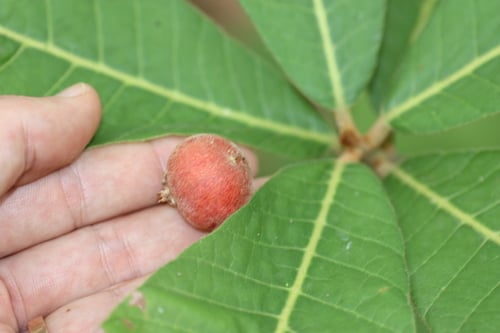
A large tree. It grows 50 m high. The trunk is angular at the base. It does not have buttresses. The trunk is 25 m long and 1-2 m across. It has horizontal branches near the top. The bark is thick, grey and cracked. The leaves are simple and 15 cm long by 7.5 cm wide. They are oval and dark green and shiny. The flower are small and white and have a scent. The fruit are yellow berries. They usually contain a single seed. The seeds are 6-8 cm long and there can be 1-3 in a large pulpy fruit. Half the seed is shiny and the other half is dull and rough.
Edible Uses
The seed kernels (cotyledons), known locally as 'baco', are rich in an edible fat called 'dumori butter' or 'makore butter', which is widely used as a cooking or seasoning oil and is often preferred to palm oil. The seeds are 60–75mm long, with 1–3 seeds contained in each large, pulpy fruit. The kernel comprises about 60% oil by weight. The oil is yellowish and semi-fluid, has no distinct flavour or taste (occasionally slightly spicy), and is composed of approximately 51% oleic acid, 43% stearic acid, 3.5% palmitic acid, and 2.5% linoleic acid.
Traditional Uses
The seeds are rich in an edible fat. It is used for cooking and seasoning. The pulp around the seeds is eaten raw.
This uses section is brief — help expand it
Medicinal Uses
The bark is reportedly effective for treating blennorrhoea and toothache. Young buds are used to treat snake bites.
Known Hazards
Dust produced from sawing the wood may cause irritation to the skin and mucous membranes. It has been suggested that this is caused by the presence of saponins or the contact allergen 2,6-dimethoxy-1,4-benzoquinone. A highly haemolytic saponin has been isolated from the wood.
Distribution
A tropical plant. It grows in moist evergreen and semi-deciduous forests. It is best in a heavy soil. Young trees can tolerate shade and mature trees need full sun.
Where It Grows
Africa, Central Africa, Congo DR, Côte d'Ivoire, Ghana, Ivory Coast, Liberia, Nigeria, Sierra Leone, West Africa,
Cultivation
Plants can be grown by seeds. Seeds germinate in shade but seedlings grow best in sunlight.
Propagation
Seed is best sown as soon as it is ripe, as viability decreases rapidly once seeds are removed from the fruit. In the nursery, seeds are typically planted at a spacing of 40cm × 40cm under light shade in well-watered seedbeds. Germination exceeds 90% under optimal conditions without any pre-treatment. It begins after about 4 weeks, with most seeds germinated by 10 weeks, though the process may continue for up to 16 weeks. Saplings of about 2.5 years old and 1–1.5 metres tall are usually planted out at the start of the rainy season, though in western Côte d'Ivoire 0.5-year-old seedlings are used instead. Seeds are heavy, with 30–50 per kg. Rodents can cause considerable damage to seeds and seedlings (cotyledons). Air layering is possible — in one trial, 39% of branches rooted after 8 weeks. Branch cuttings can also be used; the average rooting rate after 6 months was 73%.
Other Uses
The fat extracted from the seeds is applied as a pomade to the body and hair and is also used in soap production. The wood resembles African mahogany (Khaya and Entandrophragma spp.) but has a finer texture. The heartwood is pinkish-, purplish-, or reddish-brown with a silky lustre and often displays a decorative flame or stripe figure. It is very distinctly demarcated from the sapwood, which forms a band up to 8cm wide and is pinkish-white to greyish-brown. The grain is straight or interlocked with a fine, even texture. The wood is medium-weight and moderately hard, and is rated among the most durable African timbers, being resistant to termites and fungi, though occasional damage by pinhole borers and powder-post beetles has been recorded. While resistant to marine borers in temperate waters, it is less durable in tropical, especially brackish, waters. The wood is somewhat difficult to work due to silica content — blunting effects when sawing are moderately severe and stellite-tipped sawteeth are recommended. It finishes well; staining and polishing give good results; pre-boring is recommended before nailing or screwing to avoid splitting; gluing properties are good; and it can be peeled satisfactorily. The heartwood is very difficult to impregnate, while the sapwood is moderately easy. Traded as makore or cherry mahogany, the timber is used for furniture, exterior and interior construction, flooring, doors, vehicle frames, sports goods, railway sleepers, turnery, and sculptures. It also makes an attractive and decorative veneer, often used to face plywood, particularly for marine applications.
Synonyms
Also Known As
Abaku, Bacu, Baku, Duomore, Gwah, Judu buo, Julu-tu, Makore, Mbalambala, Mgbabou
References (19)
- Burkill, H. M., 1985, The useful plants of west tropical Africa, Vol. 5. Kew.
- Busson, 1965,
- Dalziel, J. M., 1937, The Useful plants of west tropical Africa. Crown Agents for the Colonies London.
- Diop, A. l., et al, 2021, Cultural importance of wild edible plants in three sympatric communities: Agni, Akyé and Gwa in the Department of Alépé (Southeast of Côte d’Ivoire). Ethnobotany Research and Applications 22:35. p 7
- Facciola, S., 1998, Cornucopia 2: a Source Book of Edible Plants. Kampong Publications, p 229
Show all 19 references Hide references
- Fern, K., 2012, Tropical Species Database http://theferns.info/tropical/
- Hwang, L. C., et al, 2020, Traditional Botanical Uses of Non-Timber Forest Products (NTFP) in Seven Counties in Liberia. ACS Symposium Series; American Chemical Society: Washington, DC, 2020.
- INFOODSUpdatedFGU-list.xls
- Jardin, C., 1970, List of Foods Used In Africa, FAO Nutrition Information Document Series No 2.p 48
- Keay, R.W.J., 1989, Trees of Nigeria. Clarendon Press, Oxford. p 392
- Les Vegetaux utiles de l'Afrique tropicale francais 2:172. 1907
- Manvell, A., 2011, Use of Non-Timber Forest Products around Sapo National Park, Liberia (Report B) p 52
- Menninger, E.A., 1977, Edible Nuts of the World. Horticultural Books. Florida p 32 (As Mimusops heckelii)
- Oteng-Amoako, A. A. (Ed.), 2006, 100 Tropical African Timber Trees from Ghana. Forestry Research Institute of Ghana. p 244
- Peters, C. R., O'Brien, E. M., and Drummond, R.B., 1992, Edible Wild plants of Sub-saharan Africa. Kew. p 184
- Polansky, C., 2018, Annex: Tree Identification and Propagation Images and text for 29 species found in Nimba County, Liberia. ACDI p 5
- Terashima, H., & Ichikawa, M., 2003, A comparative ethnobotany of the Mbuti and Efe hunter-gatherers in the Ituri Forest, Democratic Republic of Congo. African Study Monographs, 24 (1, 2): 1-168, March 2003
- Wickens, G.E., 1995, Edible Nuts. FAO Non-wood forest products. FAO, Rome. p153
- World Checklist of Useful Plant Species 2020. Royal Botanic Gardens, Kew
More from Sapotaceae
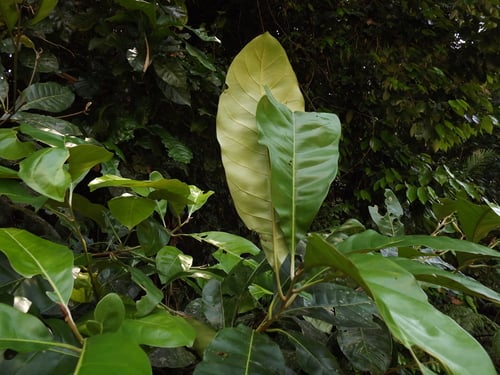
Planchonella myrsinodendron
Northern Yellow Boxwood, Yellow Teak
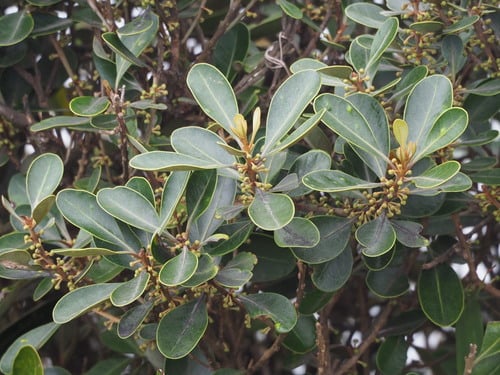
Planchonella obovata
Northern Yellow Boxwood, Black Ash, Yellow Teak
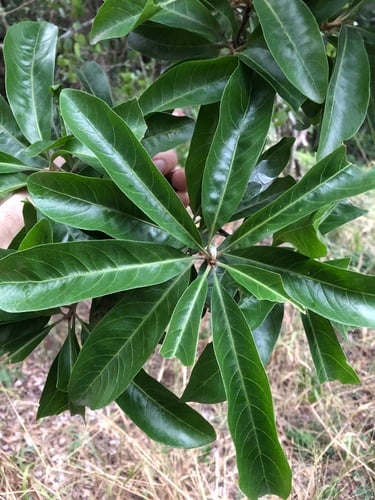
Planchonella pohlmaniana
Big Green Plum, Yellow Boxwood, Engraver’s Wood, Great green plum
Pouteria adolfi-friederici
Sosi
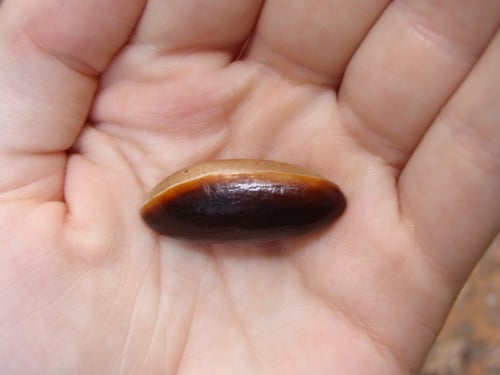
Pouteria adolfi-friederici subsp. australis
Pouteria alnifolia