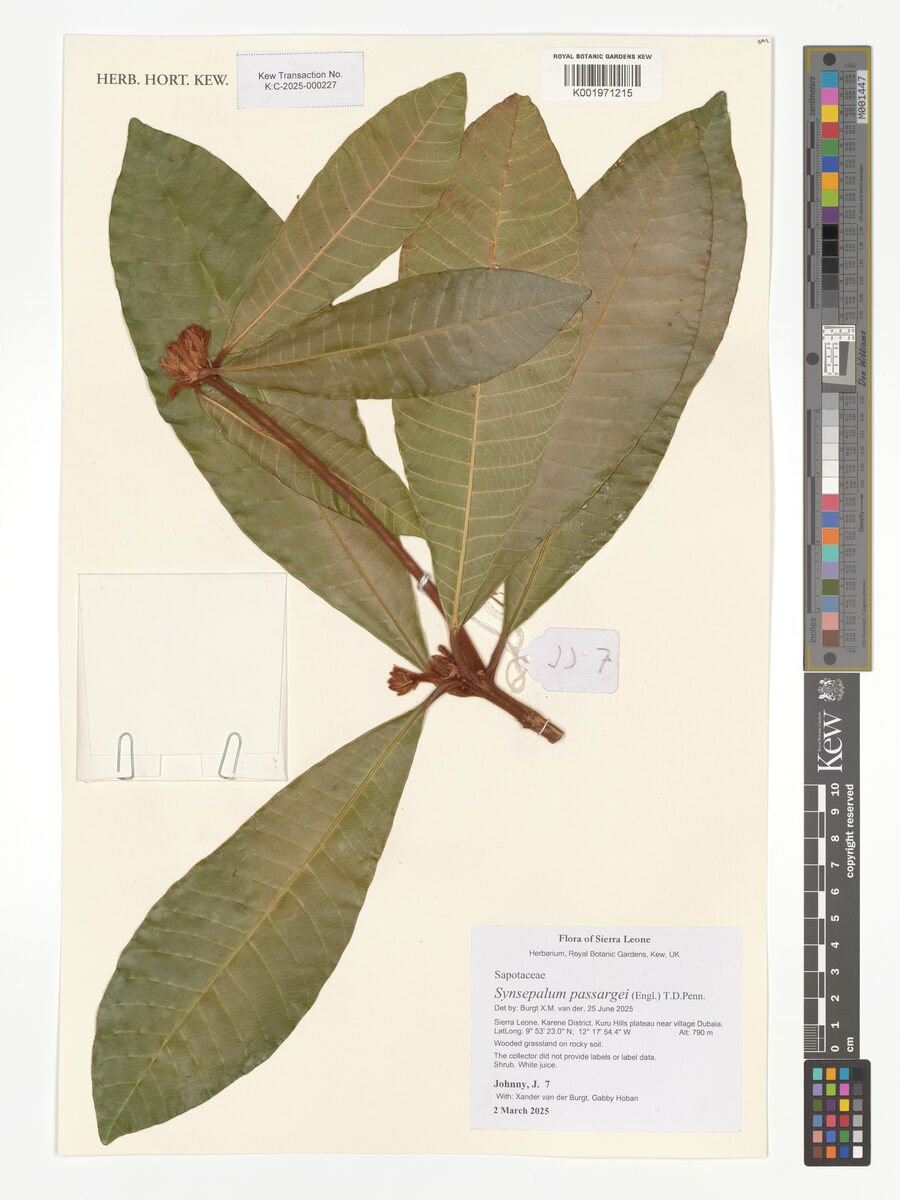
Synsepalum subcordatum
De Wild.
Miraculous fruit
gbif· cc-by
Meise Botanic Garden
gbif· cc-by-nc-nd
Roger Boussougou, West & Central Africa programme
gbif· cc-by-nc-nd
Roger Boussougou, West & Central Africa programme
Description
A tropical tree in the sapote family (Sapotaceae) that grows 15 m tall.
This description is brief — help expand it
Edible Uses
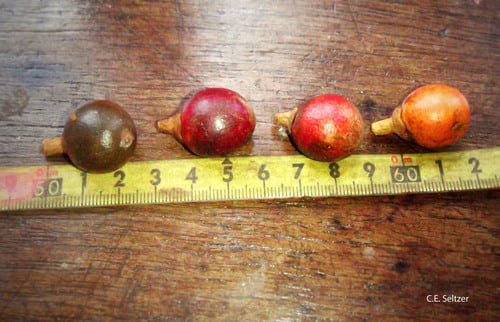
The fruit pulp is eaten raw. The fruit has the notable property of making other foods taste sweet when consumed after eating it.
Traditional Uses
The pulp of the fruit is eaten raw. The fruit makes other foods taste sweet if they are eaten after this fruit.
This uses section is brief — help expand it
Distribution
A tropical plant.
Where It Grows
Africa, Central Africa, Central African Republic, CAR, Congo DR,
Production
Fruiting is seasonal.
Synonyms
Pouteria subcordata (De Willd.) BaehniRichardella subcordata (De Willd.) Baehni
Also Known As
Munga, Onga, Phunga, Shonga, Tonga, Tongase, Tunga, Yonga
References (5)
- Danforth, R.M., & Boren, P.D., 1997, Congo Native fruits. Twenty-five of the best. Privately published. p 33
- Jardin, C., 1970, List of Foods Used In Africa, FAO Nutrition Information Document Series No 2.p 23
- Mosango, M., Szafranski, F., 1985, Plantes sauvages à fruits comestibles dans les environs de Kisangani (Zaïre). In: Journal d'agriculture traditionnelle et de botanique appliquée, 32e année, pp. 177-190
- Termote, C., et al, 2011, Eating from the wild: Turumbu, Mbole and Bali traditional knowledge of non-cultivated edible plants, District Tshopo, DRCongo, Gen Resourc Crop Evol. 58:585-618
- World Checklist of Useful Plant Species 2020. Royal Botanic Gardens, Kew