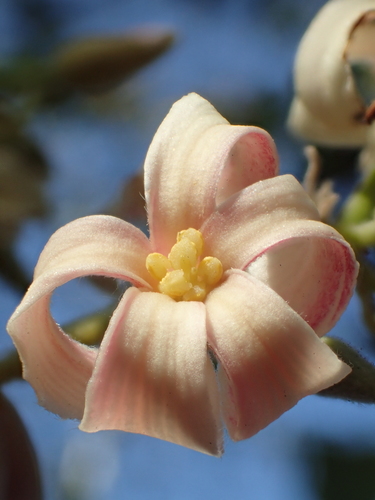
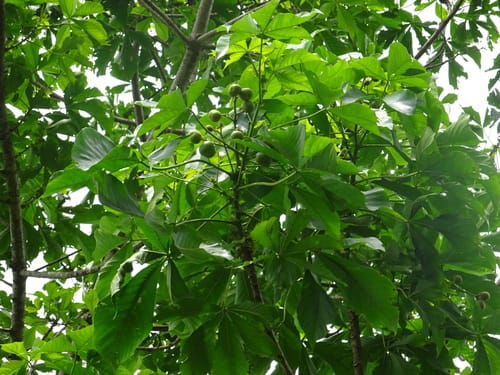
Acalypha fruticosa
Forssk.
Birch leaved acalypha
iNaturalist· cc-by
(c) Aravinth, some rights reserved (CC BY), uploaded by Aravinth
iNaturalist· cc-by-nc
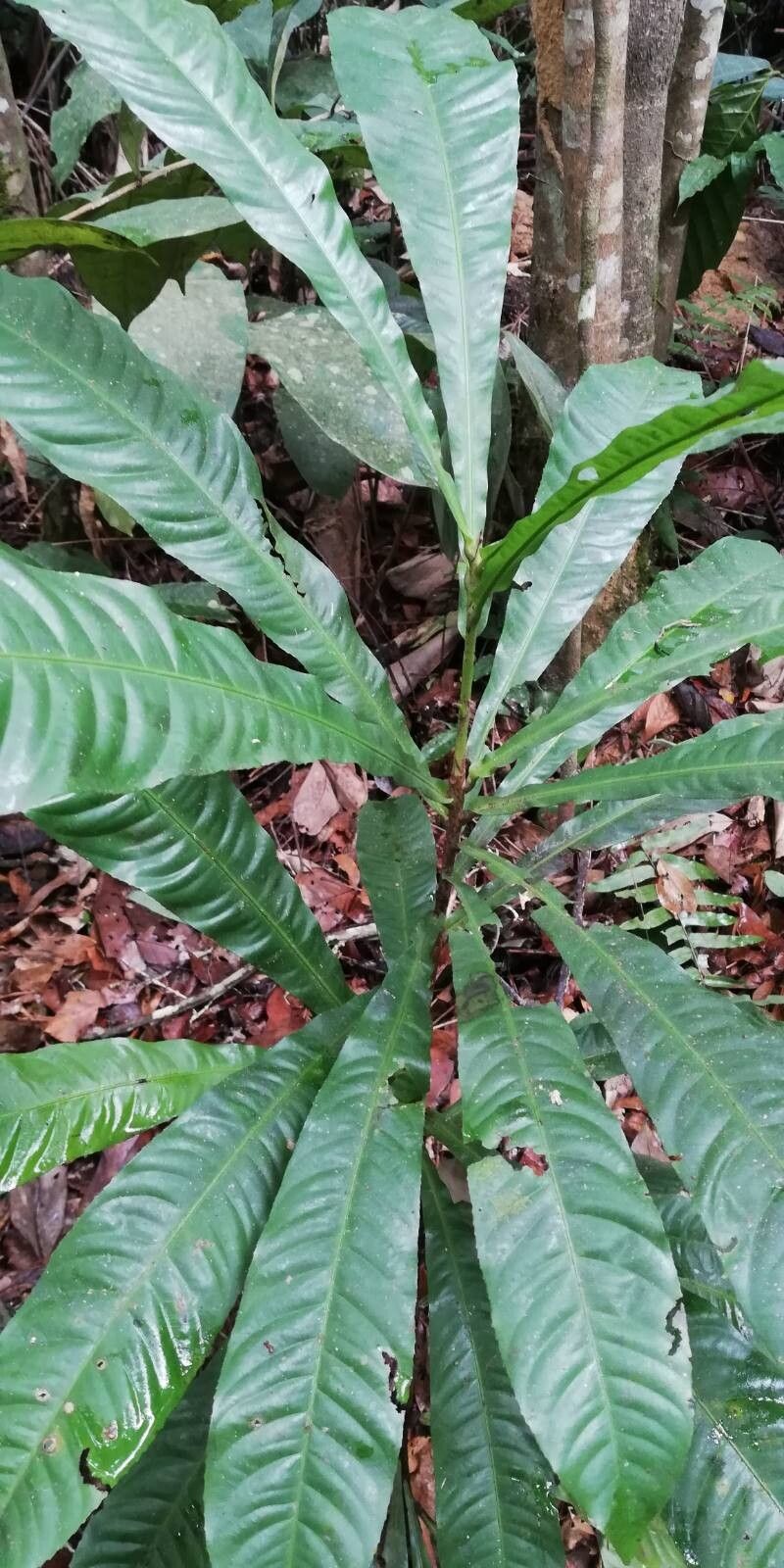
(c) KANS, some rights reserved (CC BY-NC), uploaded by KANS
iNaturalist· cc-by
(c) Aravinth, some rights reserved (CC BY), uploaded by Aravinth
Summary
Source: WikipediaAcalypha fruticosa is a species of flowering plant in the botanical family Euphorbiaceae. It occurs widely in East and southern Africa where it is eaten as a vegetable. It is also an important browse plant for sheep. In East Africa and southern Africa it is used as a medicinal plant. In northern Kenya, arrow shafts and beehive lids are made from the stem. From the dried leaves a tea is made in Ethiopia.
Description
A shrub or small tree. It grows 5 m tall. There are prickles along the stem. The leaves are twice divided and there are 8-18 pairs of pinnae. There are up to 50 pairs of pinnules on each pinnae. The flowers are yellow. They are in large clusters at the ends of branches. The pods are flattened.
Edible Uses
Young leaves are cooked as a vegetable, chopped and boiled, and mixed with other vegetables or staple foods. Dried leaves are used for tea.
Traditional Uses
The young leaves are cooked as a vegetable. They are chopped and boiled and mixed with other vegetables or the staple food. The dried leaves are used for tea.
Medicinal Uses
The leaves are used as medicine.
Distribution
It is a tropical plant. It grows in moist spots in arid areas. It grows from sea level to 1,800 m above sea level.
Where It Grows
Africa, Asia, Botswana, East Africa, Ethiopia, Kenya, Maldives, Middle East, Mozambique, Myanmar, Namibia, Saudi Arabia, SE Asia, Somalia, Sri Lanka, Tanzania,
Cultivation
The plant has a strong, foetid smell when bruised.
Other Uses
The stems are used for weaving granaries and local doors, or as withies. The stems are used to make arrow shafts. In laboratory experiments larvae of several species of livestock ticks were particularly attracted to the odour of this plant. Larvae, especially of Rhipicephalus appendiculatus, are commonly found on the plant in the wild.
Notes
There are over 450 Acalypha species. They are tropical. There are 225 in tropical America. The leaves are also used as medicine.
Also Known As
Dhikri, Gonasokola, Keryaya hola, Kuppameni, Mfulwe, Mhacha, Mkima-dimbya, Ndyavadimi, Nyautitili, Pan-lahpet, Shaiti
References (7)
- Grubben, G. J. H. and Denton, O. A. (eds), 2004, Plant Resources of Tropical Africa 2. Vegetables. PROTA, Wageningen, Netherlands. p 559
- Jansen, P.C.M., 2004. Acalypha bipartita Müll.Arg. [Internet] Record from Protabase. Grubben, G.J.H. & Denton, O.A. (Editors). PROTA (Plant Resources of Tropical Africa / Ressources végétales de l’Afrique tropicale), Wageningen, Netherlands. < http://database.prota.org/search.htm>. Accessed 13 October 2009.
- Lulekal, E., et al, 2011, Wild edible plants in Ethiopia: a review on their potential to combat food insecurity. Afrika Focus - Vol. 24, No 2. pp 71-121
- Ruffo, C. K., Birnie, A. & Tengnas, B., 2002, Edible Wild Plants of Tanzania. RELMA p 92
- Sujanapal, P., & Sankaran, K. V., 2016, Common Plants of Maldives. FAO & Kerala FRI, p 17
Show all 7 references Hide references
- World Checklist of Useful Plant Species 2020. Royal Botanic Gardens, Kew
- Yesodharan, K. & Sujana, K. A., 2007, Wild edible plants traditionally used by the tribes in the Parambokulam Wildlife Sanctuary, Kerala, India. Natural Product Radiance 6(1) pp 74-80