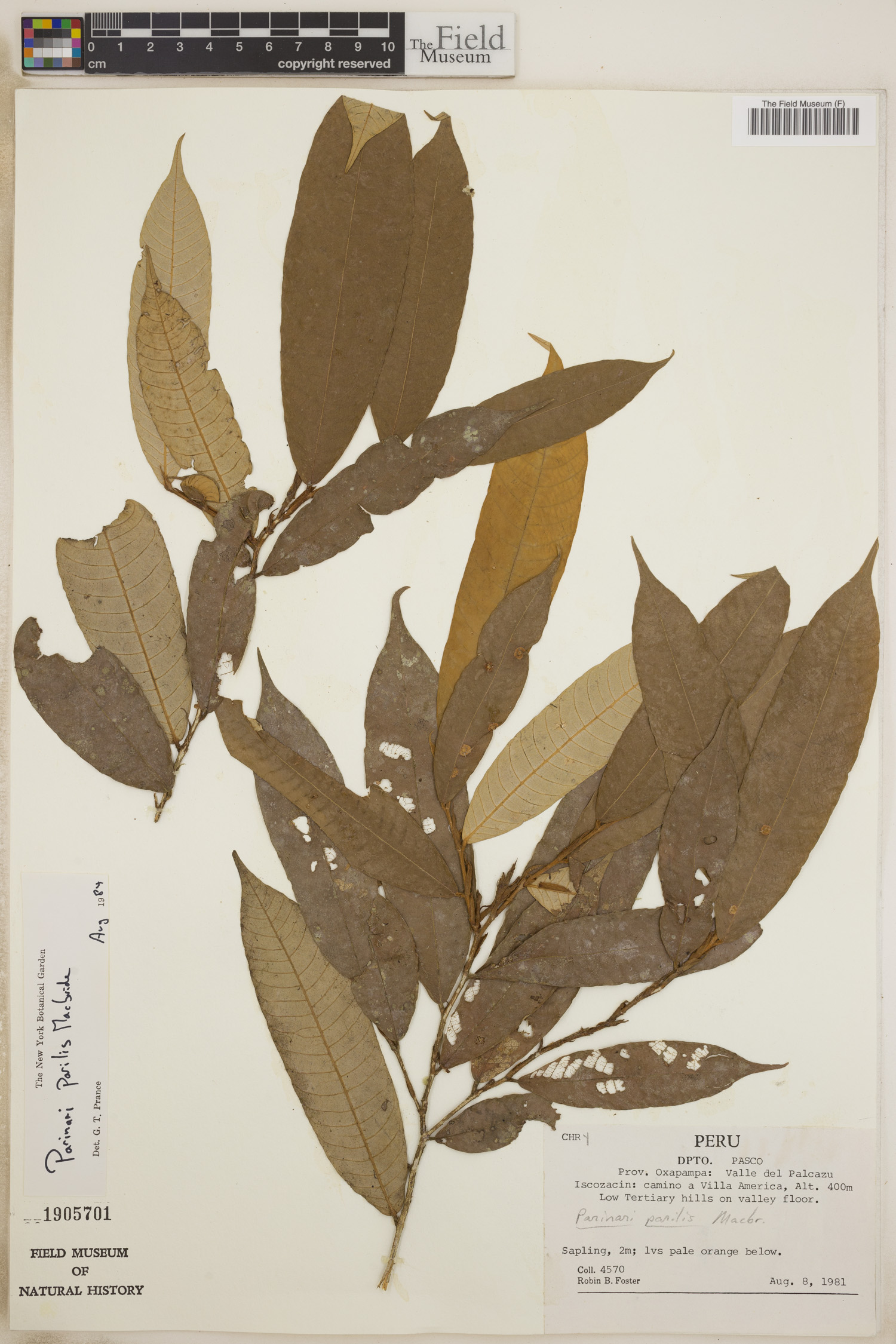
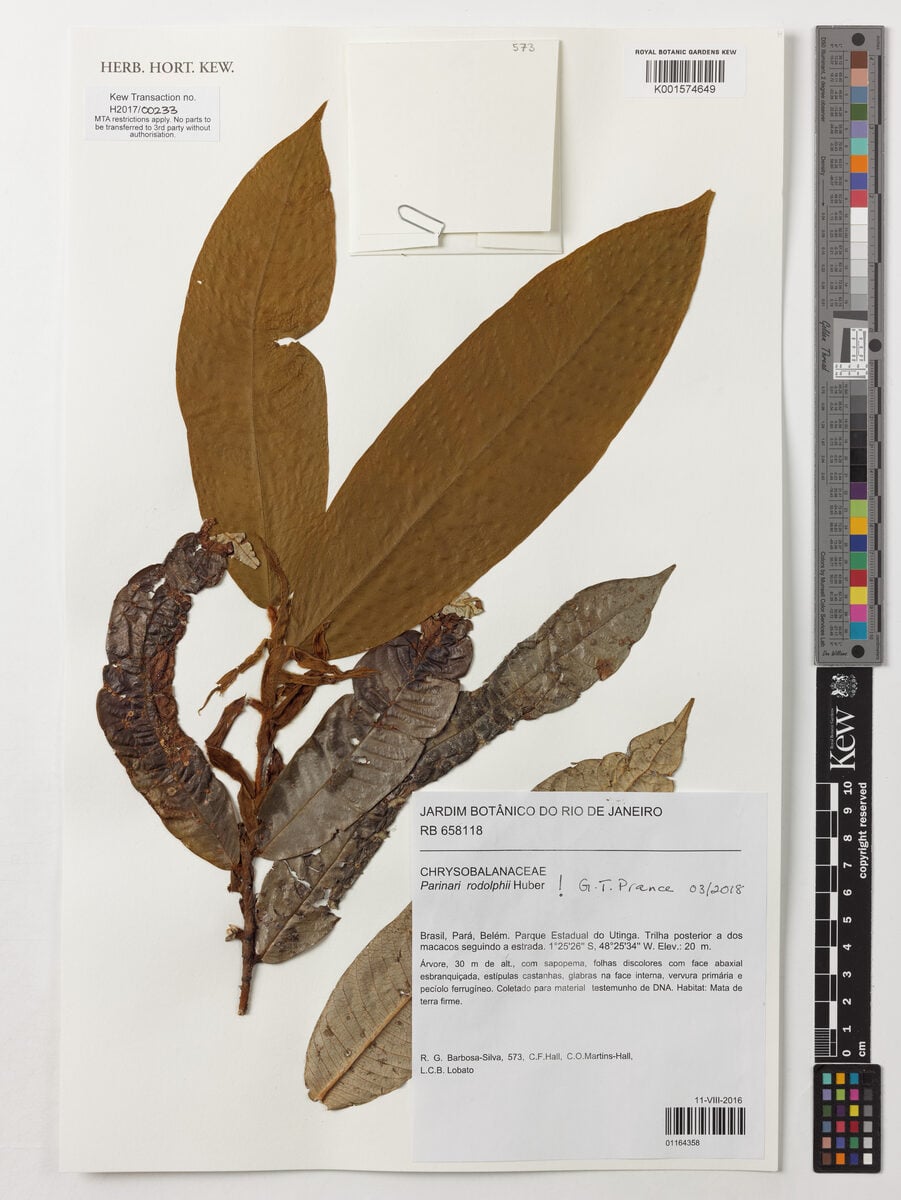
Acioa dolichopoda
(Prance) Sothers & Prance
gbif· cc-by-nc
C. Dennis : Field Museum of Natural History - Botany Department
gbif· cc-by-nc
I. Huamantupa : Universidad Nacional San Antonio Abad de Cusco
gbif· cc-by-nc
Rapid Reference Collection (RRC) | Field Museum of Natural History - Keller Science Action Center
Description
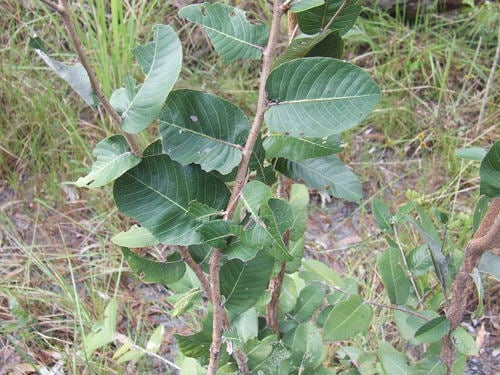
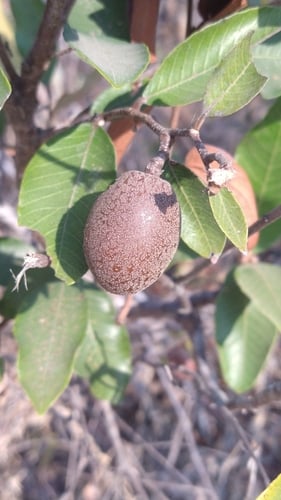
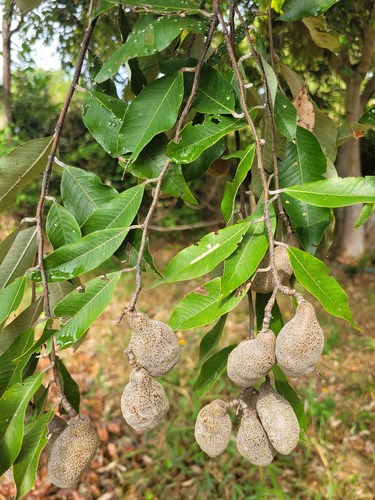
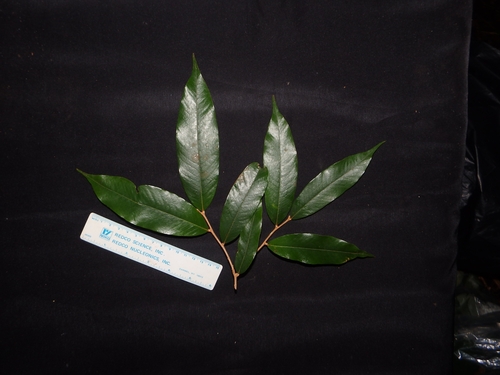
A shrub or small tree. It grows 5 m tall. There are prickles along the stem. The leaves are twice divided and there are 8-18 pairs of pinnae. There are up to 50 pairs of pinnules on each pinnae. The flowers are yellow. They are in large clusters at the ends of branches. The pods are flattened.
Edible Uses
The seeds are eaten raw or cooked and are rich in oil. Oil can be extracted from the seeds.
Traditional Uses
The seeds are eaten raw or cooked. They are rich in oil.
This uses section is brief — help expand it
Distribution
It is a tropical plant. It grows in forests. It cannot tolerate flooding.
Where It Grows
Amazon, Brazil, Colombia, Peru, South America,
Cultivation
Plants can be grown from seeds.
Synonyms
Also Known As
Hamaca huayo
References (8)
- Fern, K., 2012, Tropical Species Database http://theferns.info/tropical/ (As Couepia dolichopoda)
- Grandtner, M. M. & Chevrette, J., 2013, Dictionary of Trees, Volume 2: South America: Nomenclature, Taxonomy and Ecology. Academic Press p 165 (As Couepia dolichopoda)
- Kermath, B. M., et al, 2014, Food Plants in the Americas: A survey of the domesticated, cultivated and wild plants used for Human food in North, Central and South America and the Caribbean. On line draft. p 269 (As Couepia dolichopoda)
- Kew Plants of the World onLine
- Prance, G. T., 1989 , Chrysobalanaceae: Flora Neotropica, Vol. 9, Chrysobalanaceae (Supplement) (Mar. 8, 1989), pp. 76 (As Couepia dolichopoda)
Show all 8 references Hide references
- Sothers, C & Prance, G. T., et al, 2016, Taxonomic novelties in Neotropical Chrysobalanaceae: towards a monophyletic Couepia. Phytotaxa 172 (3) © 2014 Magnolia Press
- Vasquez, R. and Gentry, A. H., 1989, Use and Misuse of Forest-harvested Fruits in the Iquitos Area. Conservation Biology 3(4): 350f (As Couepia dolichopoda)
- World Checklist of Useful Plant Species 2020. Royal Botanic Gardens, Kew