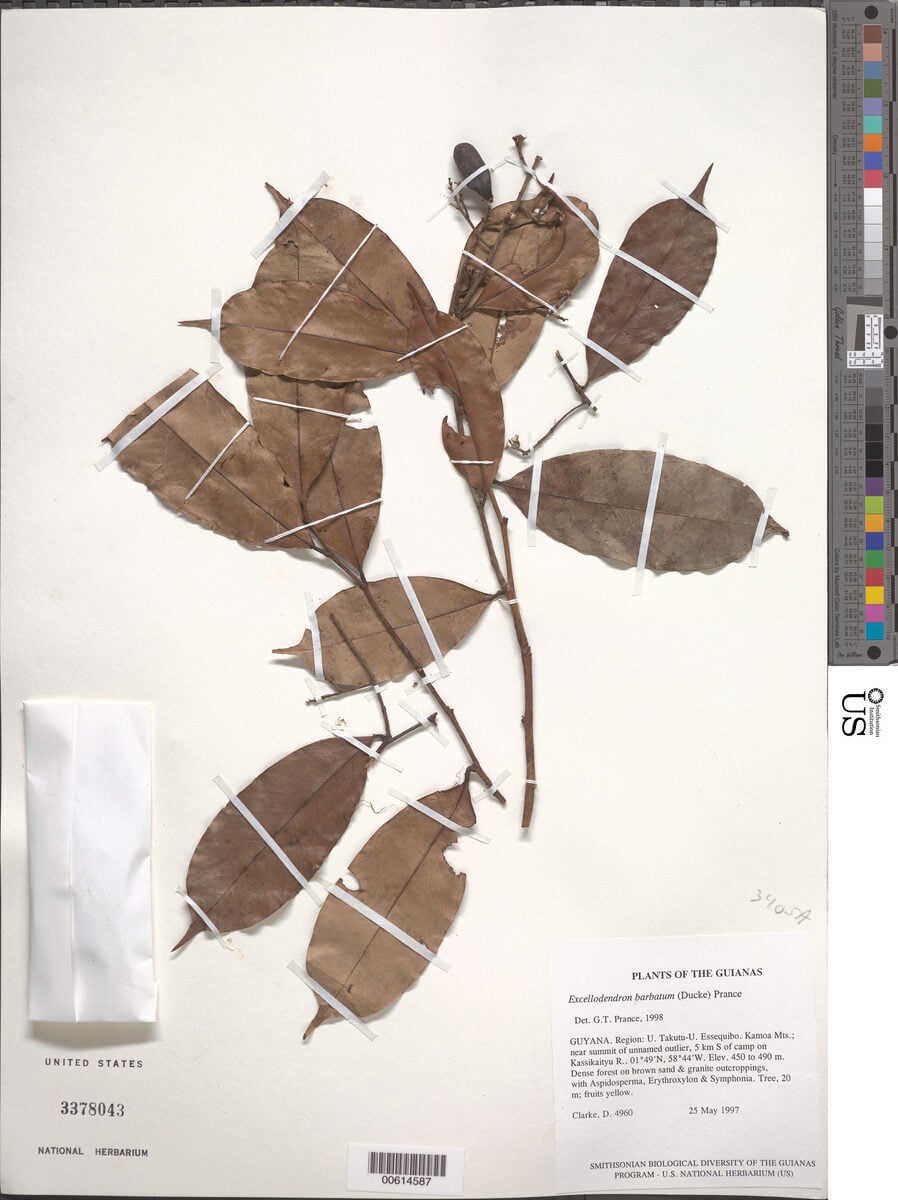
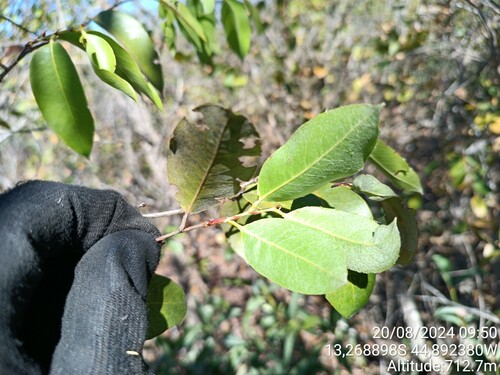
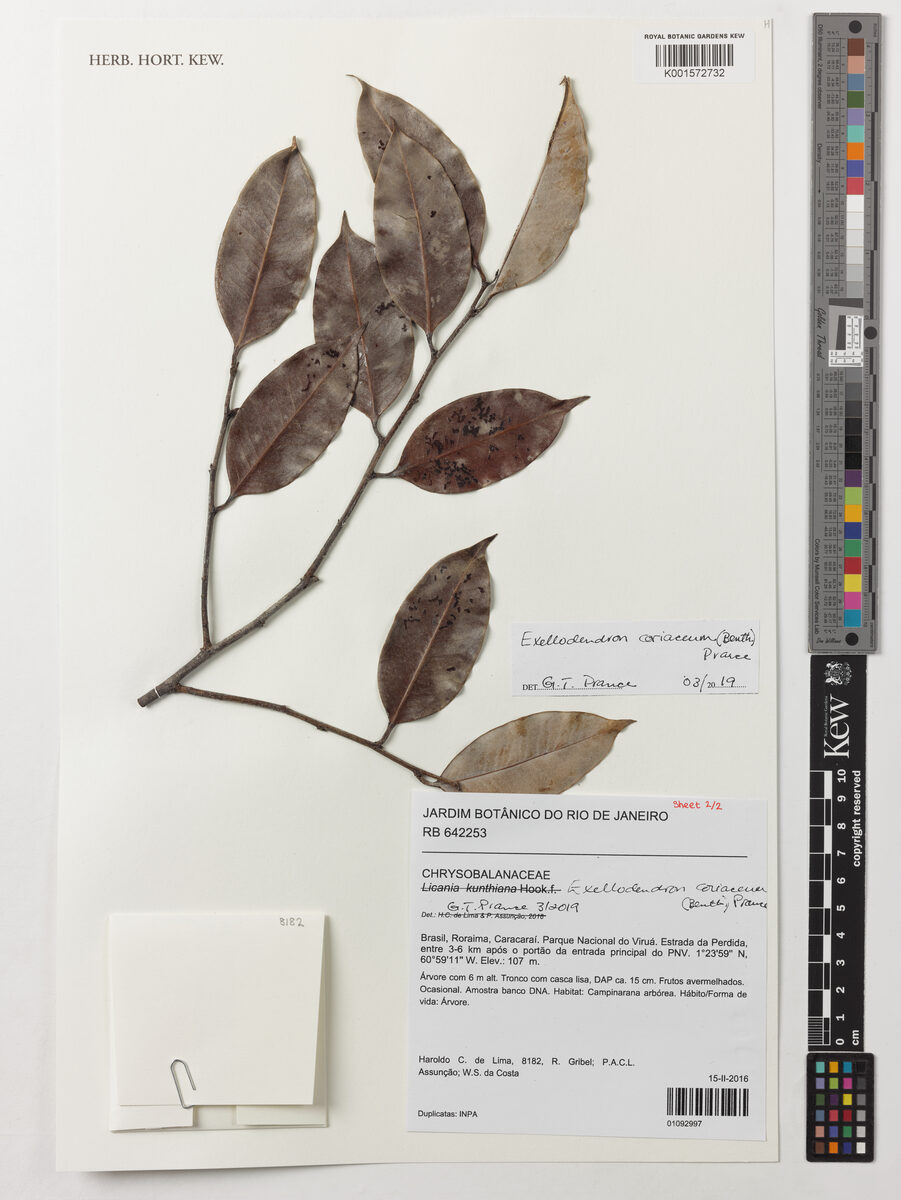
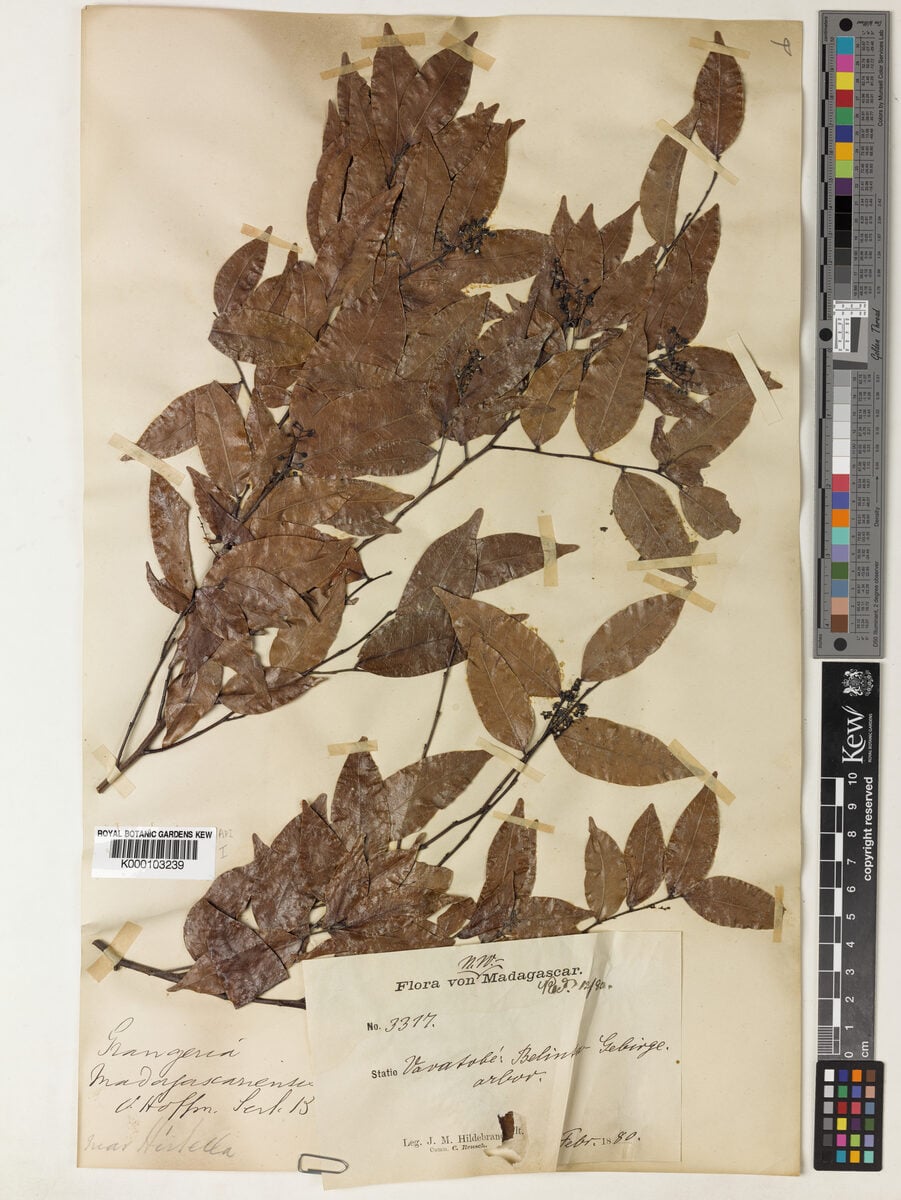
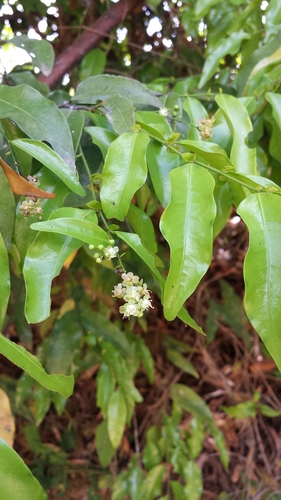
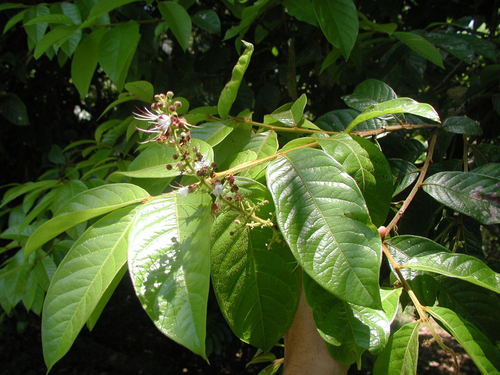
Licania incana
Aubl.
Caligni blanc
wikimedia· cc-by
Wikimedia Commons - Projet :RECOLNAT (ANR-11-INBS-0004)
Description
A shrub or small tree. It can grow to 10 m tall. The trunk can be 50-60 cm across. The fruit are 1-2 cm long and have red dots.
This description is brief — help expand it
Edible Uses
Fruit. The fruit is the size of a large olive and is dotted with red; the pulp is white; melting, and of a sweetish taste.
Traditional Uses
The fruit pulp is eaten raw.
This uses section is brief — help expand it
Distribution
A tropical plant. It grows in savannah.
Where It Grows
Bolivia, Brazil, French Guiana, Guianas, Guyana, South America, Suriname, Venezuela,
Other Uses
The bark is a source of tannins. The yellow wood is hard and very heavy. A beautiful wood, it is often used in cabinet making and joinery, as well as general construction, internal and external works. We have no more specific information on the qualities of this wood, the following is the general description for the genus:- The wood is a pale or pinkish brown with a greyish tinge, sometimes darkening on exposure, and with long, broad, prominent, dark reddish brown gum streaks. Straight-grained; medium or coarse-textured; when seasoned it is odourless and tasteless. The wood is heavy, hard, strong, and durable. It is easy to split and takes a smooth, fairly lustrous polish. It should be suitable for heavy construction.
Other Information
It is sometimes cultivated for its fruit.
Notes
There are 218 Licania species. Most are in tropical America.
Also Known As
Ajuru, Caligni, Kwepilan, Marishiballi
References (8)
- Fern, K., 2012, Tropical Species Database http://theferns.info/tropical/
- Hedrick, U.P., 1919, (Ed.), Sturtevant's edible plants of the world. p 381
- Heywood, V.H., Brummitt, R.K., Culham, A., and Seberg, O. 2007, Flowering Plant Families of the World. Royal Botanical Gardens, Kew. p 99
- Kermath, B. M., et al, 2014, Food Plants in the Americas: A survey of the domesticated, cultivated and wild plants used for Human food in North, Central and South America and the Caribbean. On line draft. p 486
- Mansfeld,
Show all 8 references Hide references
- Martin, F.W., C.W. Campbell and R.M. Ruberté. 1987. Perennial edible fruits of the tropics - An inventory. United States Department of Agriculture, Agricultural Research Service, Agriculture Handbook No. 642. Washington, D.C., USA. p 92
- Prance, G. T. 1972. Chrysobalanaceae. In: Organization for Flora Neotropica, ed., Fl. Neotrop. Monogr. 9:162–163.
- Prance, G. T. & C. A. Sothers. 2003. Chrysobalanaceae 1, Chrysobananus to Parinari. In: Orchard, A. E., ed., Species Plantarum: Flora of the World. Canberra. (Species Plant) 9:164.