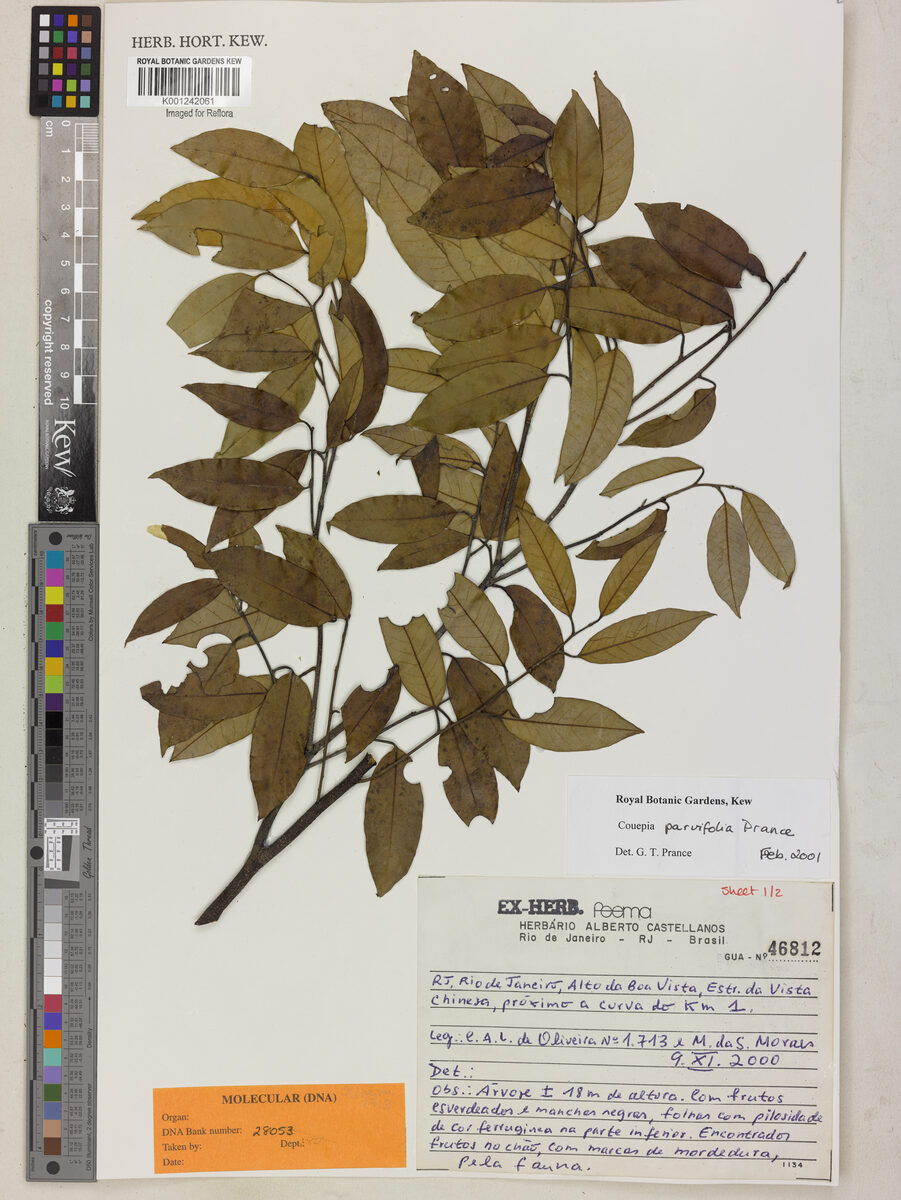
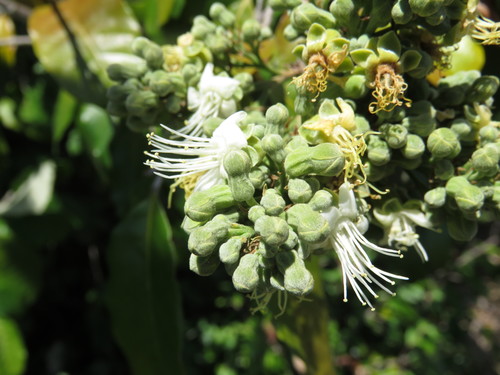
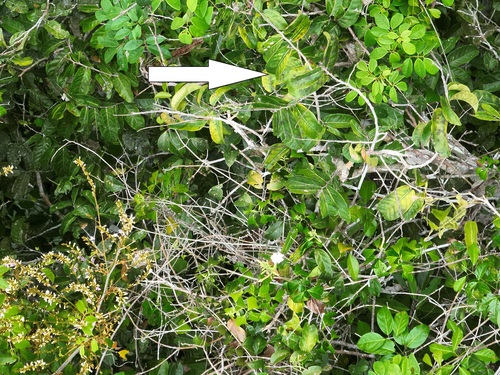
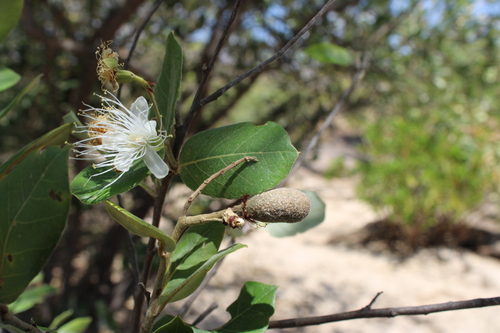
Licania kunthiana
Hook.f.
iNaturalist· cc-by-nc
(c) Luiz M. R. Gadelha Jr., some rights reserved (CC BY-NC), uploaded by Luiz M. R. Gadelha Jr.
iNaturalist· cc-by
(c) Marcio Santos Ferreira, some rights reserved (CC BY)
Description
Licania kunthiana is a tropical tree in the family Chrysobalanaceae.
This description is brief — help expand it
Edible Uses
The fruit is edible.
Distribution
It is a tropical plant.
Where It Grows
Humid rainforests and gallery forests, mainly found in secondary formations. Non-flooded forest, riverine forest, savannah, or secondary forest.
Cultivation
Requires a sunny position. The plant has a moderate rate of growth.
Propagation
Seed - best sown as soon as it is ripe in a partially shaded position in a nursery seedbed. A very low germination rate can be expected, with the seed taking a long time to sprout.
Other Uses
The wood is of medium texture, irregular-grained, heavy, very strong, durable, with good resistance to wood eating organisms. It is used in general construction and for external use. A natural pioneer species within its native range, it can be used in reforestation projects.
Synonyms
Also Known As
Oiti, Pajurazinho
References (5)
- Grandtner, M. M. & Chevrette, J., 2013, Dictionary of Trees, Volume 2: South America: Nomenclature, Taxonomy and Ecology. Academic Press p 351
- Kermath, B. M., et al, 2014, Food Plants in the Americas: A survey of the domesticated, cultivated and wild plants used for Human food in North, Central and South America and the Caribbean. On line draft. p 486
- Kew Plants of the World onLine
- Reis, S. V. and Lipp, F. L., 1982, New Plant Sources for Drugs and Foods from the New York Botanical Garden herbarium. Harvard. p 109
- Roa, J. A. G. & Boada, D. S. G., 2018, Fundación para el Fortalecimiento de la Fruticultura y Plantas Alimenticias no Convencionales en Colombia.