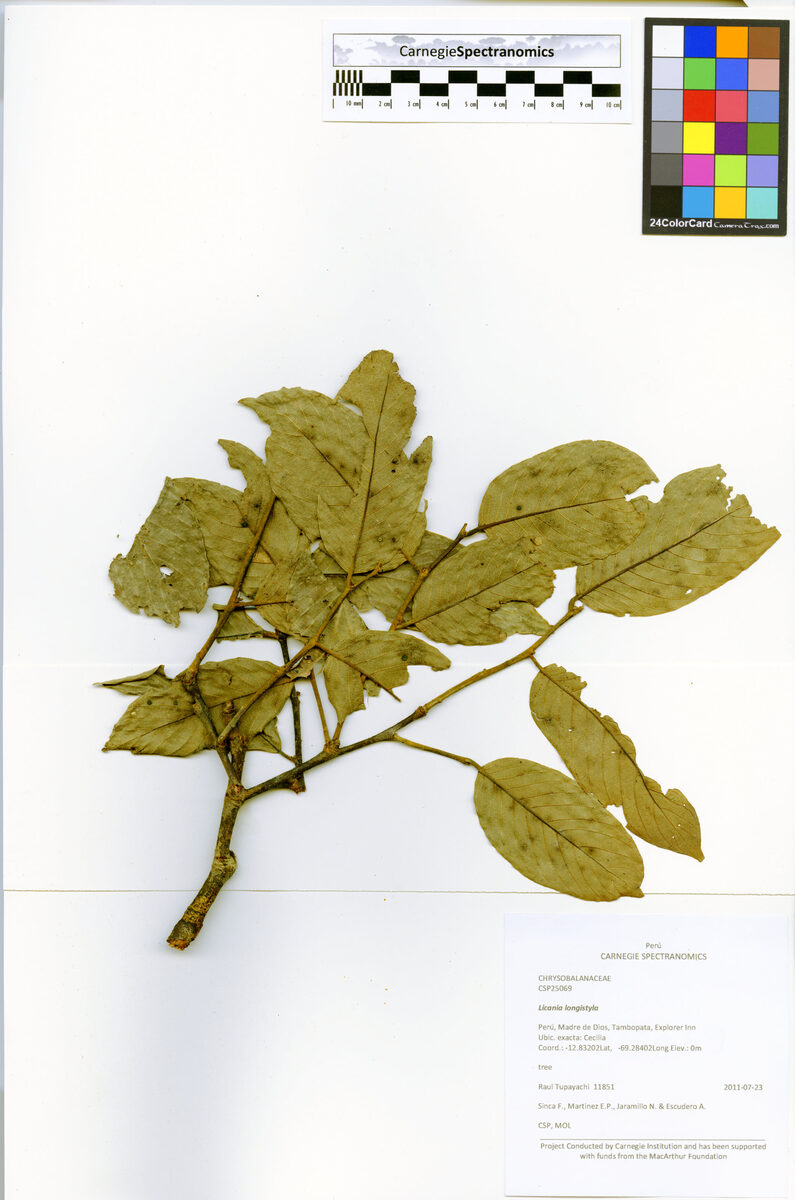
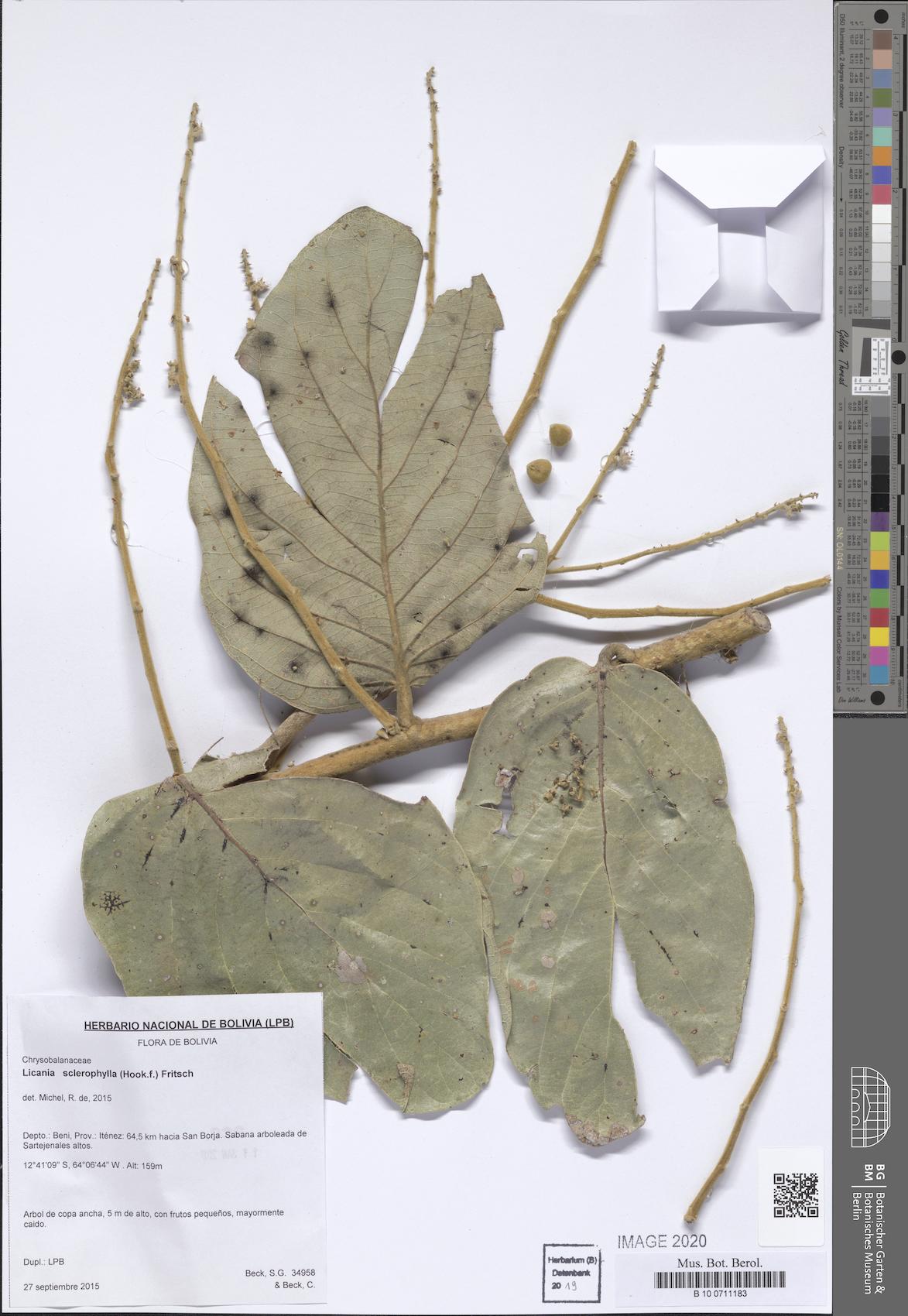
Licania heteromorpha
Benth.
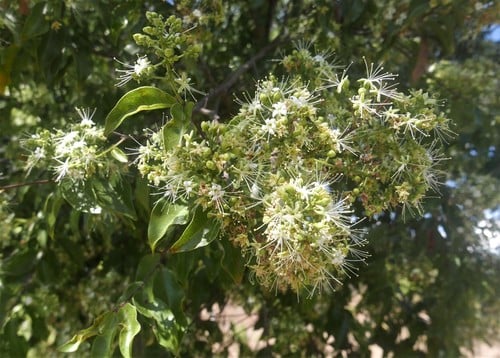
iNaturalist· cc-by-nc
(c) esa_bt, some rights reserved (CC BY-NC)
iNaturalist· cc-by-nc
(c) esa_bt, some rights reserved (CC BY-NC)
iNaturalist· cc-by-nc
(c) esa_bt, some rights reserved (CC BY-NC)
Description
A tropical tree in the Chrysobalanaceae family that produces edible fruit.
This description is brief — help expand it
Edible Uses
The fruit is eaten.
Medicinal Uses
An infusion of the inner bark is drunk as a treatment for tuberculosis. An infusion of the bark is used to treat venereal diseases and diarrhoea. The powdered outer bark is sprinkled on wounds to keep them clean and dry. An unspecified plant part is used as an antidiarrhoeal. The sap of the plant is applied externally to treat sores and skin blemishes such as 'lotta', a fungal infection.
Distribution
It is a tropical plant.
Where It Grows
Amazon, Bolivia, Brazil, Colombia, Guiana, Guianas, Guyana, Peru, South America, Suriname, Venezuela,
Other Uses
An oil or resinous matter is extracted from the fruits. It is used for making paints. An infusion of the inner bark is used as a mordant to fix the inks when decorating items such as bottle gourds. The wood is hard and very durable - in tests it lasted for 18 years in the soil. It is used for internal works and cabinet making. The wood is a good fuel, burning well with a clean flame. We have no more specific information on this wood - the following is a general description for the wood of this genus:- The wood is a pale or pinkish brown with a greyish tinge, sometimes darkening on exposure, and with long, broad, prominent, dark reddish brown gum streaks. Straight-grained; medium or coarse-textured; when seasoned it is odourless and tasteless. The wood is heavy, hard, strong, and durable. It is easy to split and takes a smooth, fairly lustrous polish. It should be suitable for heavy construction.
Synonyms
Also Known As
Ajuru, Coba ao ni, Kairiaballi, Macucu-xiador
References (3)
- Kermath, B. M., et al, 2014, Food Plants in the Americas: A survey of the domesticated, cultivated and wild plants used for Human food in North, Central and South America and the Caribbean. On line draft. p 486
- Martin, F. W., et al, 1987, Perennial Edible Fruits of the Tropics. USDA Handbook 642 p 92
- Roa, J. A. G. & Boada, D. S. G., 2018, Fundación para el Fortalecimiento de la Fruticultura y Plantas Alimenticias no Convencionales en Colombia.