Colutea istria
Mill.
Bladder senna
iNaturalist· cc-by-nc
(c) דבורה שיצר, some rights reserved (CC BY-NC), uploaded by דבורה שיצר
iNaturalist· cc-by-nc
(c) דבורה שיצר, some rights reserved (CC BY-NC), uploaded by דבורה שיצר
iNaturalist· cc-by-nc
(c) yishay, some rights reserved (CC BY-NC)
Summary
Source: WikipediaColutea istria, or Pocock's bladder senna, is a species of flowering plant in the family Fabaceae. It is native to southeastern Turkey, the Levant, and the Sinai Peninsula. A deciduous shrub, it has inflated fruit pods.
Description
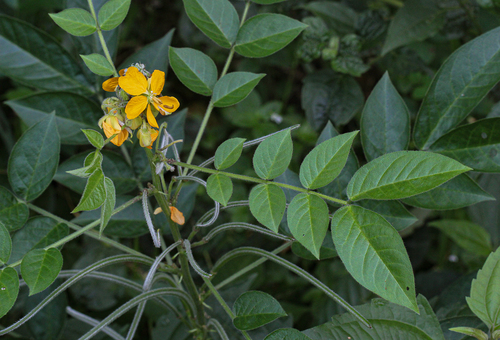
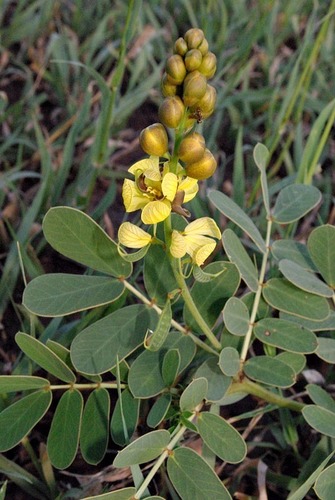
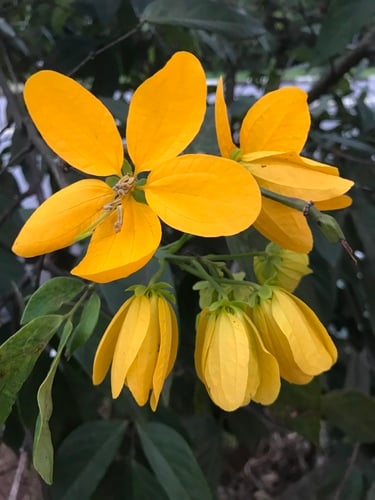
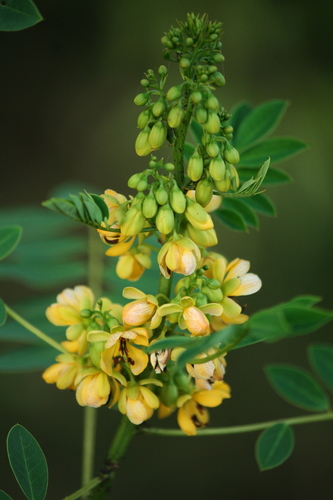
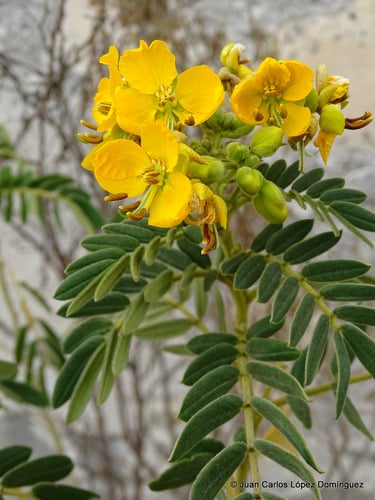
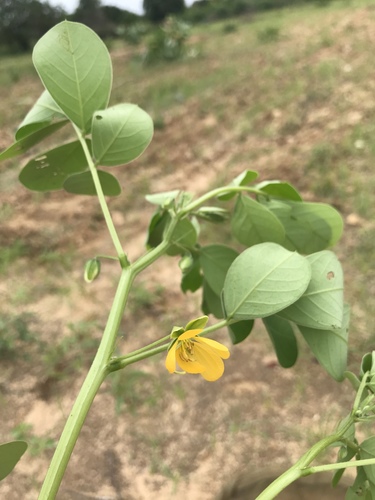
A shrub that loses its leaves. It grows 2 m high and spreads 2 m wide. The stem is erect and branching. The leaves have leaflets along the stalk. They are small and oval. The flowers are yellow and red. They are pea shaped. The fruit are inflated pods. It contains a few seeds.
Edible Uses
None known
Medicinal Uses
None known
Distribution
It will grow on most soils. It grows in protected sunny positions. It is resistant to drought and sensitive to frost. It can grow in arid places.
Where It Grows
Africa, Australia, Balkans, Bulgaria, Egypt - Sinai, Europe, Israel, Jordan, Lebanon, Mediterranean, Middle East, North Africa*, Syria, Turkey, Türkiye,
Cultivation
Requires a well-drained soil in full sun. Grows well on dry sunny banks and in poor soils. Dislikes strong winds, though another entry in the same book says that it tolerates salt-laden winds. This species is not very hardy in Britain, tolerating temperatures down to about -5°c, but it should succeed outdoors in the milder areas of the country. Even there it is probably best grown on a south or south-west facing wall. According to the International Legume Database, this species may actually be Colutea abyssinica Kunth & Bouch., a species found in N. Africa where it grows in montane grassland and shrubland. Flowers are produced on the current year's growth. Plants in this genus are notably resistant to honey fungus. This species has a symbiotic relationship with certain soil bacteria, these bacteria form nodules on the roots and fix atmospheric nitrogen. Some of this nitrogen is utilized by the growing plant but some can also be used by other plants growing nearby.
Propagation
Seed — pre-soak for 24 hours in hot water and sow in late winter in a greenhouse. Scarification can help speed up germination. Germination can be slow and erratic, though treated seed usually sprouts within 1–3 months at 20°C. Prick seedlings into individual pots as soon as they are large enough to handle and grow on in the greenhouse through their first winter, then plant out in late spring or early summer after the last expected frosts. Cuttings of half-ripe wood, 7–10 cm with a heel, taken in July or August in a frame. Cuttings are not very long-lived.
Other Uses
Used in land reclamation projects in the Negev desert, where it consolidates soil and plant debris deposited by flood waters. Can also be grown as a hedge. It is a nitrogen fixer.
Notes
There are about 26 Colutea species. Possibly misapplied to Colutea abyssinica.
Also Known As
Saysib
References (3)
- Bailey, C. and Danin, A., 1981, Bedouin Plant Utilization in Sinai and the Negev. Economic Botany 35(2): 145-162
- Bodkin, F., 1991, Encyclopedia Botanica. Cornstalk publishing, p 273
- Royal Botanic Gardens, Kew (1999). Survey of Economic Plants for Arid and Semi-Arid Lands (SEPASAL) database. Published on the Internet; http://www.rbgkew.org.uk/ceb/sepasal/internet [Accessed 28th April 2011]