Bursaria spinosa
Cav.
Australian Blackthorn, Sweet Bursaria
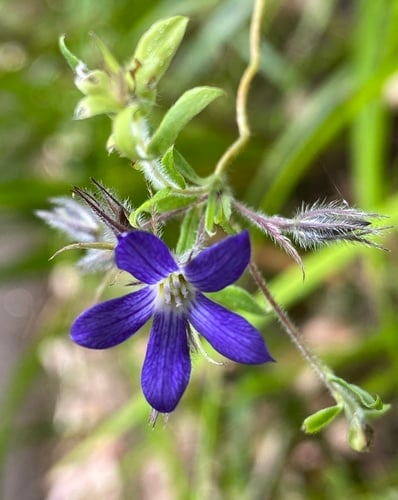
iNaturalist· cc-by-nc
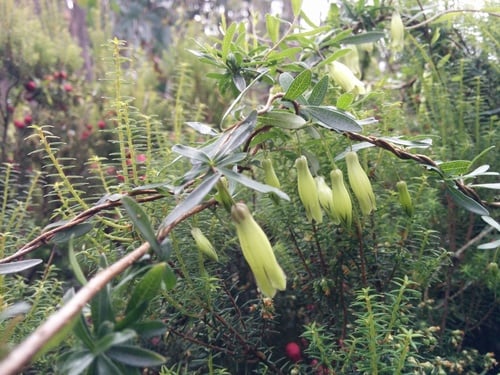
(c) David Spencer Muirhead, some rights reserved (CC BY-NC), uploaded by David Spencer Muirhead
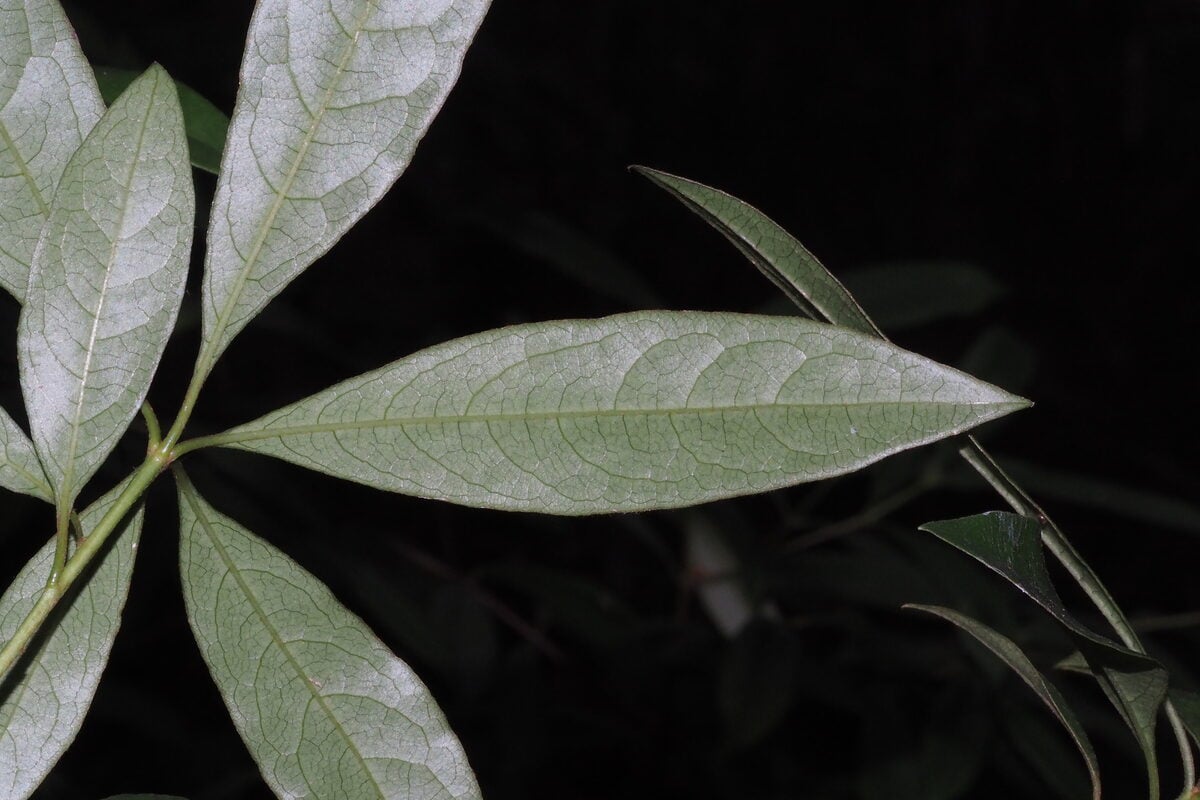
iNaturalist· cc-by-nc
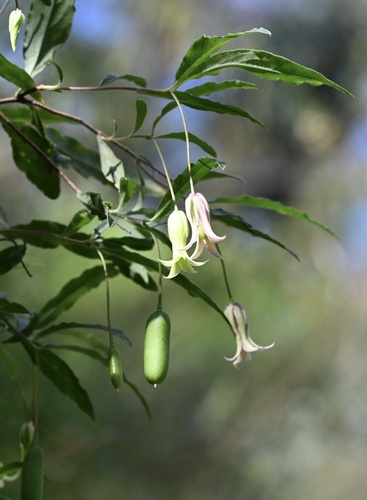
(c) suecee, some rights reserved (CC BY-NC), uploaded by suecee
iNaturalist· cc-by-nc
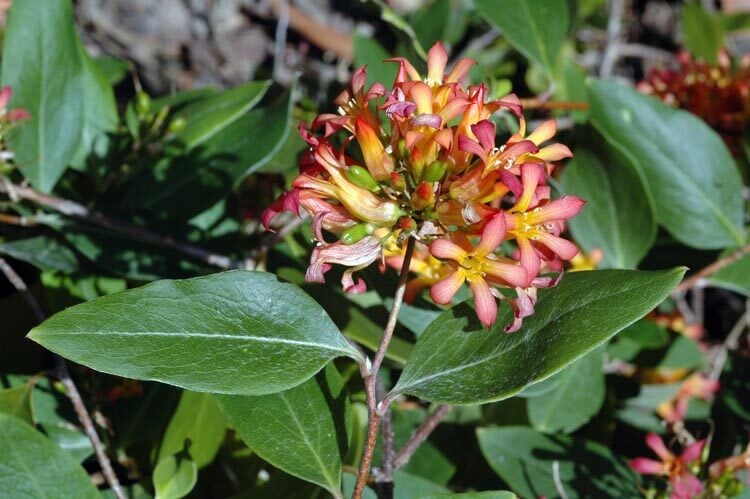
(c) 🦔🐠🐝🌿🦆🐢 Rocky 🦘🐌🪻🐜🍄🦋, some rights reserved (CC BY-NC), uploaded by 🦔🐠🐝🌿🦆🐢 Rocky 🦘🐌🪻🐜🍄🦋
Summary
Source: WikipediaBursaria spinosa is a small tree or shrub in the family Pittosporaceae. The species occurs mainly in the eastern and southern half of Australia and not in Western Australia or the Northern Territory. Reaching 10 m (35 ft) high, it bears fragrant white flowers at any time of year but particularly in summer. A common understorey shrub of eucalyptus woodland, it colonises disturbed areas and fallow farmland. It is an important food plant for several species of butterflies and moths, particularly those of the genus Paralucia, and native bees.
Description
An erect shrub or small tree. It grows up to 3.5-10 m tall. There are many branches in the upper part. The small branches and shoots end in spines. The leaves occur in clusters. The leaves are oval or sword shaped and rather thin. They are 1-5 cm long. The flowers occur in branched flower clusters which form a cone shape. These are at the tips of branches. The flowers have 5 narrow oblong petals. They are white and star like. The fruit is a heart-shaped brittle capsule. These dry capsules tend to hang on the plant after the seed have fallen. There are both large leafed and small leafed kinds.
Edible Uses
None known
Medicinal Uses
Skin Skin. The leaves contain the coumarin 'aesculin' - this is used in the treatment of lupus by irradiation and as a screen from ultra-violet light in suntan lotions.
Distribution
It is a warm temperate plant. It grows in coastal sands and on dry hillsides. It will grow in most soils. It is best in an open sunny position. It is resistant to drought and frost. It suits hardiness zones 8-11. Melbourne Botanical gardens. Tasmania Herbarium. In Wittunga Botanical Gardens Adelaide. On Mt Roland. Arboretum Tasmania.
Where It Grows
Australia*, Tasmania*,
Cultivation
Requires a well-drained moisture retentive soil in full sun. This species only succeeds outdoors in Britain in the mildest areas of the country. Plants are hardy to at least -7°c in Australian gardens, though this cannot be translated directly to British gardens due to our cooler summers and longer, colder and wetter winters. They require a warm south or south-west facing wall in Britain, succeeding in areas where frosts are light and short lived. A good bee plant, the flowers are sweetly fragrant. Very ornamental.
Propagation
Seed - sow spring in a greenhouse. It does not require pre-treatment. When large enough to handle, prick the plants out into individual pots. Grow on the young plants for at least the first winter in a greenhouse and plant out in late spring or early summer. Consider giving the plants some protection from winter cold for at least their first winter outdoors. Cuttings of half-ripe wood, July/August in a frame. They require a little bottom heat if they are to root well.
Other Uses
Hedge Hedge Weather protection Wood Leaves contain the coumarin 'aesculin' which is used in the treatment of lupus by irradiation and as an ultraviolet radiation screen in suntan lotions. Plants can be grown as a hedge in mild climates. Wood - tough, hard, close grained, easily worked. Used for tool handles, cabinet making etc. Special Uses Attracts Wildlife Hedge Hedge Scented Plants
Production
They are fast growing but not very long lived. Flowers occur from November to January.
Notes
There are 6 Bursaria species. They grow in Australia.
Also Known As
Prickly Box, Tasmanian Christmas Bush
References (27)
- Blomberry, A.M., 1979, Australian Native Plants. Angus and Robertson p 165
- Bodkin, F., 1991, Encyclopedia Botanica. Cornstalk publishing, p 177
- Bonney, N., 1997, Economic Native Trees and Shrubs for South Australia. Greening Australia (SA) inc. Campbelltown SA 5074 p 52
- Boomsma, C.D., 1972, Native Tree of South Australia. Woods & Forests Department South Australia, Bulletin No.19. p 59
- Cameron, M., (Ed.) 1981, A Guide to Flowers & Plants of Tasmania. Reed p 82
Show all 27 references Hide references
- Caton, J.M. & Hardwick, R. J., 2016, Field Guide to Useful Native Plants from Temperate Australia. Harbour Publishing House. p 124
- Collier, P., 1993, Woodland Wild flowers of Tasmania. Plant Identikit. Society for growing Australian Plants Tasmania Region. Hobart. p 21
- Cooper, W. and Cooper, W., 2004, Fruits of the Australian Tropical Rainforest. Nokomis Editions, Victoria, Australia. p 400
- Cronin, L., 1989, The Concise Australian Flora. Reed. p 154
- Cundall, P., (ed.), 2004, Gardening Australia: flora: the gardener's bible. ABC Books. p 270
- Curtis, W.M., 1956, The Students Flora of Tasmania Vol 1 p 54
- Dashorst, G.R.M., and Jessop, J.P., 1998, Plants of the Adelaide Plains & Hills. Botanic Gardens of Adelaide and State Herbarium. p 76
- Elliot, W.R., & Jones, D.L., 1982, Encyclopedia of Australian Plants suitable for cultivation. Vol 2. Lothian. p 393
- Etherington, K., & Imwold, D., (Eds), 2001, Botanica's Trees & Shrubs. The illustrated A-Z of over 8500 trees and shrubs. Random House, Australia. p 149
- Gilfedder, L et al, 2003, The Nature of the Midlands. Midlands Bushweb. PO Box 156 Longford, Tasmania. p 119
- Harris, S., Buchanan, A., Connolly, A., 2001, One Hundred Islands: The Flora of the Outer Furneaux. Tas Govt. p 124
- Hibbert, M., 2002, The Aussie Plant Finder 2002, Florilegium. p 48
- Holliday, I., 1989, A Field Guide to Australian Trees. Hamlyn. p 88
- Ic. 4: 30. T. 350. 1797
- Jackes, B.R., 2001, Plants of the Tropics. Rainforest to Heath. An Identification Guide. James Cook University. p 73
- Kirkpatrick, J.B. & Backhouse, S., 1985, Native Trees of Tasmania. p 58
- Lazarides, M. & Hince, B., 1993, Handbook of Economic Plants of Australia, CSIRO. p 41
- Lord, E.E., & Willis, J.H., 1999, Shrubs and Trees for Australian gardens. Lothian. p 13
- Tasmanian Herbarium Vascular Plants list p 43
- Townsend, K., 1994, Across the Top. Gardening with Australian Plants in the tropics. Society for Growing Australian Plants, Townsville Branch Inc. p 109
- Whiting, J. et al, 2004, Tasmania's Natural Flora. Tasmania's Natural Flora Editorial Committee PO Box 194, Ulverstone, Tasmania, Australia 7315 p 251
- Woolmore, E et al, 2002, King Island Flora: A Field Guide. p 64