Pittosporum sinuatum
Blume
iNaturalist· cc-by-nc
(c) Imam Taufik Hidayat, some rights reserved (CC BY-NC), uploaded by Imam Taufik Hidayat
iNaturalist· cc-by-nc
(c) Imam Taufik Hidayat, some rights reserved (CC BY-NC)
Description
A tree.
This description is brief — help expand it
Medicinal Uses
A decoction of the roots is locally applied to treat belly-ache in children.
Distribution
It is a tropical plant.
Where It Grows
Asia, Australia, Indonesia, Papua, Papua New Guinea, PNG, SE Asia, Solomon Islands,
Cultivation
Pittosporum species generally grow best in a sunny position, but tolerate light shade. They succeed in most well-drained soils. Although flowers usually appear to be hermaphrodite, many species of Pittosporum are functionally dioecious, with individual specimens bearing mainly or totally flowers of one sex only. Even so, occasional functionally hermaphrodite flowers will appear and, in at least some species, these flowers can be self-compatible and produce fertile seed even in the absence of any other plants of that species. The species in this genus are also very likely to hybridize with other members of the genus. When growing a species from seed it is important to ensure that the seed either comes from a known wild source, or from isolated specimens in cultivation.
Propagation
Seed - best sown as soon as it is ripe. Cuttings of half-ripe wood, 5 - 7cm with a heel. Basal ripewood cuttings in a cold frame.
Synonyms
References (1)
- World Checklist of Useful Plant Species 2020. Royal Botanic Gardens, Kew
More from Pittosporaceae
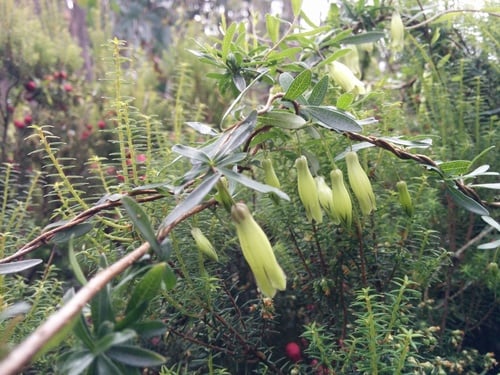
Billardiera longiflora
Purple Apple-berry, Mountain Blue Berry
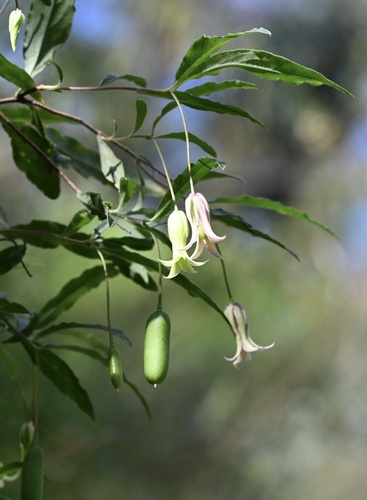
Billardiera mutabilis
Green appleberry
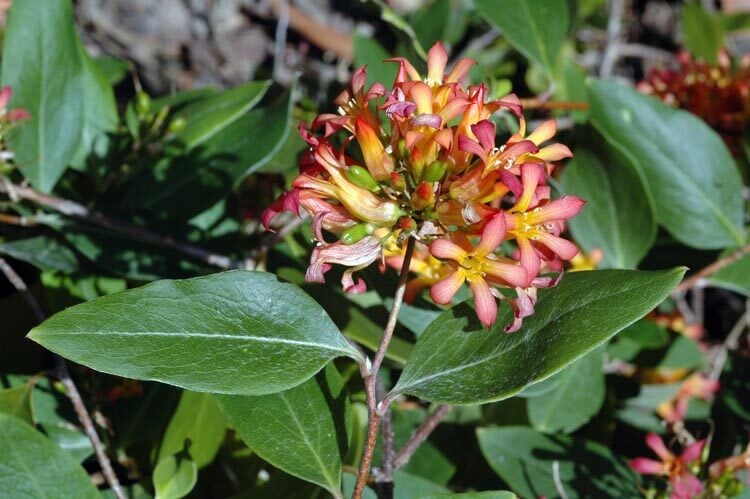
Billardiera ringens
Chapman River Climber, Chapman creeper
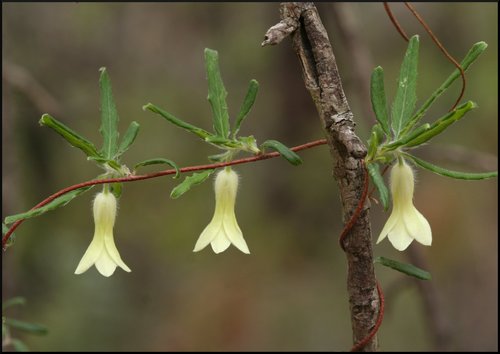
Billardiera scandens
Appleberry, Apple dumpling, Common Appleberry
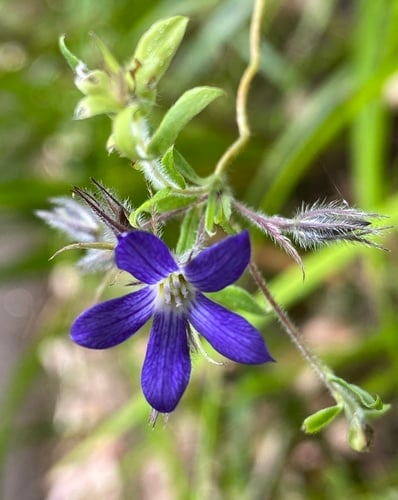
Billardiera variifolia
Western bluebell
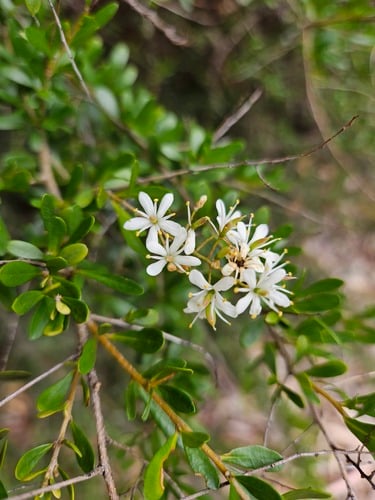
Bursaria spinosa
Australian Blackthorn, Sweet Bursaria