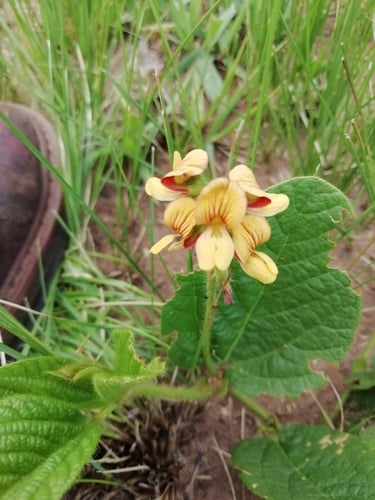
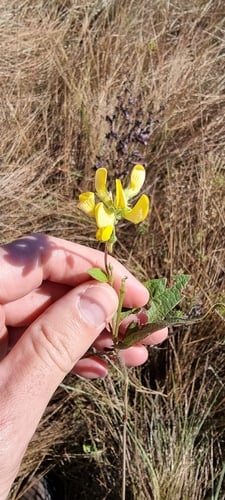
Inga leiocalycina
Benth.
Guaba, Smooth calyx inga
gbif· cc-by-sa
GBIF
Description
A tree. It grows 22 m tall. It has buttresses. The leaves have 2 pairs of leaflets. They have golden hairs when young. The flowers are white and in short clustered spikes. The fruit are pods that can be 15-40 cm long. They are dark green and swollen around the pods. The pulp of the pods is white.
Edible Uses
The white pulp of the pods and the aril (fleshy layer around the seeds) are eaten raw. The fruit is sold in local markets.
Traditional Uses
The aril or fleshy layer around the seeds is eaten raw.
This uses section is brief — help expand it
Distribution
It is a tropical plant. It is usually in uplands but also in floodplains. It grows up to 1,000 m above sea level in the Amazon. It can grow in areas with a distinct dry season as well as in area with a year round rainfall.
Where It Grows
Amazon, Bolivia, Brazil, Central America, Colombia, Costa Rica, Ecuador, Galapagos, Guyana, Guatemala, Honduras, Mexico, Nicaragua, Panama, Peru*, South America, Venezuela,
Cultivation
Plants grow easily from seeds. Seeds germinate in 1-2 weeks given moisture and shade.
Other Uses
The wood of Inga species is generally attractive, but it has a coarse texture, is susceptible to attack by dry-wood termites and is not durable in the soil.
Other Information
It is sold in local markets.
Notes
Also as Mimosaceae.
Synonyms
Also Known As
Aague, Aguhue, Ananawen, Apipjoroi, Goiwagawe, Guabilla, Guamo careota, Inga leite, Kala oueko, Kalo-weko, Inga leite, Lebi-weko, Llutipa, Main sampi, Noywagawe, Pois sucre, Prokoni, Qui, Shimbillo de la cocha, Shimbillo del rosario, Warakosa
References (12)
- Ferns, Useful Tropical Plants
- Galeano, G., 2000, Forest Use at the Pacific Coast of Choco, Colombia: A Quantitative Approach. Economic Botany, Vol. 54, No. 3, pp. 358-376
- Grandtner, M. M. & Chevrette, J., 2013, Dictionary of Trees, Volume 2: South America: Nomenclature, Taxonomy and Ecology. Academic Press p 356
- Jernigan, K. A., 1997, An Ethnobiological Exploration of Sensory and Ecological Aspects of Tree Identification among the Aguaruna Kivaro (Peru). PhD thesis. Athens, Georgia. p 201
- Kermath, B. M., et al, 2014, Food Plants in the Americas: A survey of the domesticated, cultivated and wild plants used for Human food in North, Central and South America and the Caribbean. On line draft. p 438 (Also as Inga dumosa)
Show all 12 references Hide references
- Lopez-Diago, D. & Garcia, N., 2021, Wild edible fruits of Colombia. Biota ColomBiana 22 (2) p 38
- Roa, J. A. G. & Boada, D. S. G., 2018, Fundación para el Fortalecimiento de la Fruticultura y Plantas Alimenticias no Convencionales en Colombia.
- Smith, N., et al, 2007, Amazon River Fruits. Flavors for Conservation. Missouri Botanical Gardens Press. p 126
- Torre, de la, L., et al, 2008, Enciclopedia de las Plantas Útiles del Ecuador. Herbario QCA. Pontificia Universidad Católica del Ecuador. p 345
- Van den Eynden, V., et al, 2003, Wild Foods from South Ecuador. Economic Botany 57(4): 576-603
- van Andel, T., 2000, Useful plants of Guyana. Non-Timber Forest Products of the North-West District of Guyana Part 2. p 367
- Vasquez, R. and Gentry, A. H., 1989, Use and Misuse of Forest-harvested Fruits in the Iquitos Area. Conservation Biology 3(4): 350f (As Inga dumosa)