Grewia inaequilatera
Garcke
Forest raisin, Large-leaved yellow raisin
iNaturalist· cc-by-nc
(c) Troos van der Merwe, some rights reserved (CC BY-NC), uploaded by Troos van der Merwe
iNaturalist· cc-by-nc
(c) Bart Wursten, some rights reserved (CC BY-NC)
Description
A shrub or small tree. It can be a scrambler. It grows up to 7 m tall. It has a round stem, grey branches and hairy twigs. The leaves are large and green. They are 5-18 cm long by 2.5-8 cm wide. The base is rounded and very lopsided. The edges of the leaves have teeth. The leaves are green and hairless above and with velvety white hairs underneath. The flowers are in small groups in the axils of leaves. The flower stalks are sturdy with white dots. The fruit are round but often with 2 lobes. They are slightly hairy and yellow when ripe. They are edible.
Edible Uses
The round, slightly hairy yellow fruits are edible and eaten raw.
Traditional Uses
The fruit are eaten raw.
This uses section is brief — help expand it
Distribution
A tropical plant. It grows in open woodland. It grows in dry sandy soils. It grows between 245-275 m above sea level. It can grow in arid places.
Where It Grows
Africa, Botswana, East Africa, Malawi, Mozambique, Namibia, South Africa, Southern Africa, Tanzania, Zambia, Zimbabwe,
Notes
There are about 200 Grewia species. They are mostly tropical. The fruit of most may be edible. These were in the Sparrmanniaceae and the Tiliaceae.
Also Known As
Bastard silver raisin, Cisese, Cucussula, Mucacate, M'tenza, Muntesya
References (9)
- FAO, 1988, Traditional Food Plants, FAO Food and Nutrition Paper 42. FAO Rome p 310
- Fowler, D. G., 2007, Zambian Plants: Their Vernacular Names and Uses. Kew. p 45
- Fox, F. W. & Young, M. E. N., 1982, Food from the Veld. Delta Books. p 356
- Palgrave, K.C., 1996, Trees of Southern Africa. Struik Publishers. p 573
- Palmer, E and Pitman, N., 1972, Trees of Southern Africa. Vol. 2. A.A. Balkema, Cape Town p 1442
Show all 9 references Hide references
- Peters, C. R., O'Brien, E. M., and Drummond, R.B., 1992, Edible Wild plants of Sub-saharan Africa. Kew. p 192
- Royal Botanic Gardens, Kew (1999). Survey of Economic Plants for Arid and Semi-Arid Lands (SEPASAL) database. Published on the Internet; http://www.rbgkew.org.uk/ceb/sepasal/internet [Accessed 11th June 2011]
- Schmidt, E., Lotter, M., & McCleland, W., 2007, Trees and shrubs of Mpumalanga and Kruger National Park. Jacana Media p 404
- World Checklist of Useful Plant Species 2020. Royal Botanic Gardens, Kew
More from Malvaceae
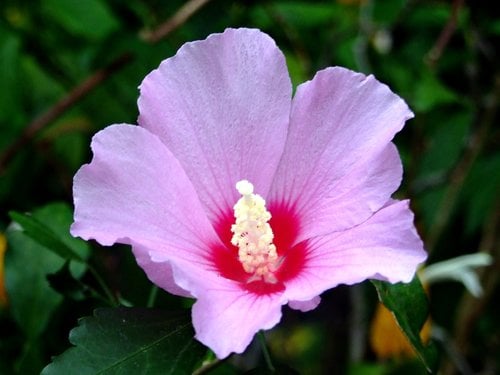
Hibiscus syriacus
Syrian Hibiscus, Blue Hibiscus, Rose of Sharon
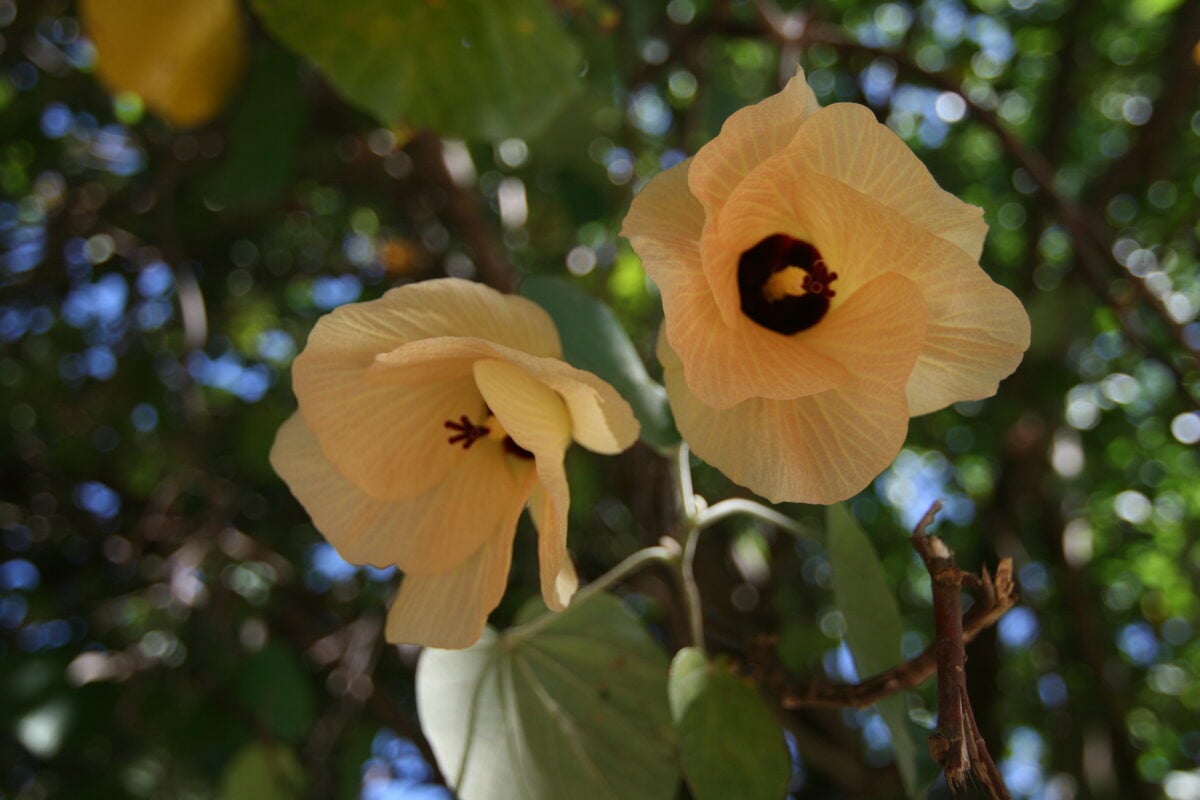
Hibiscus tiliaceus
Cotton Tree, Beach Hibiscus, Country mallow, Sea hibiscus, Yellow mallow
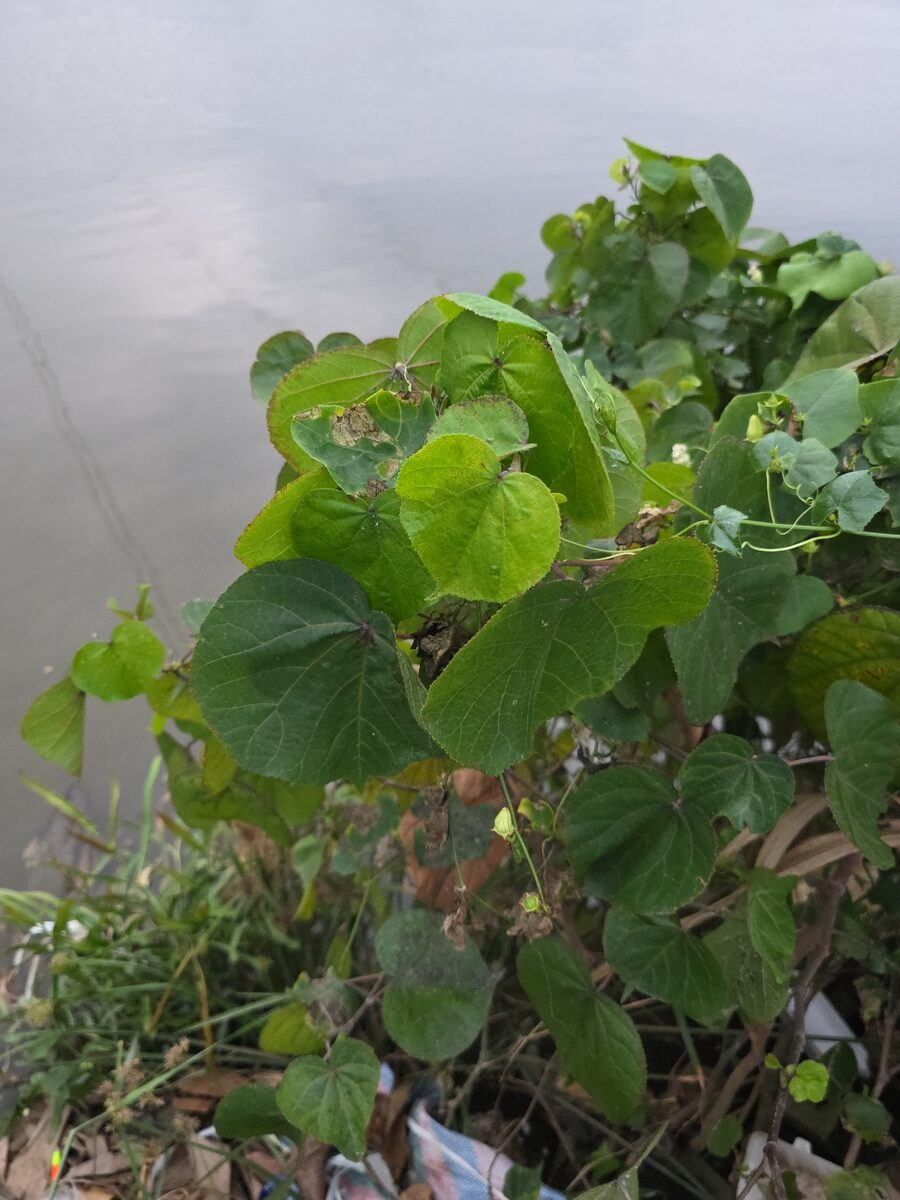
Hibiscus tilliaceus
Beach Hibiscus, Sea Hibiscus
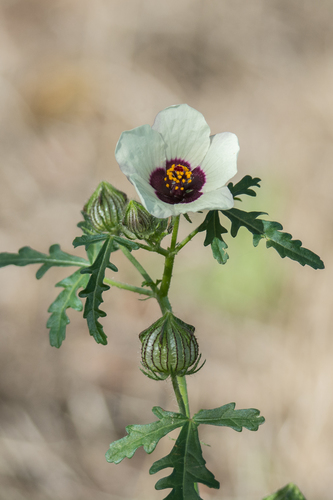
Hibiscus trionum
Flower-of-an-hour
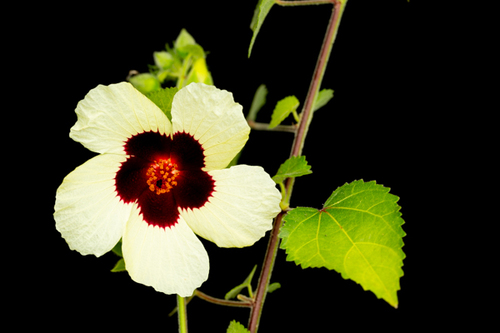
Hibiscus vitifolius
Tropical rose mallow
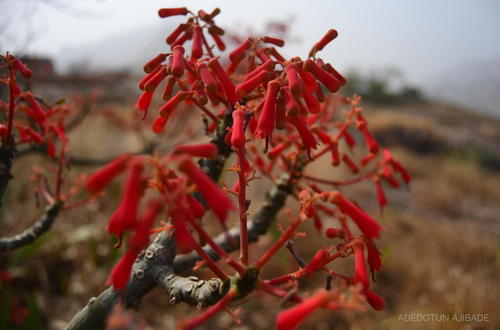
Hildegardia barteri
Krobo Christmas tree, Kariya tree