Grewia lasiodiscus
K. Schum.
iNaturalist· cc-by-nc-sa
(c) Marco Schmidt, some rights reserved (CC BY-NC-SA), uploaded by Marco Schmidt
iNaturalist· cc-by-nc
(c) AMADOU BAHLEMAN FARID, some rights reserved (CC BY-NC)
iNaturalist· cc-by-nc
(c) AMADOU BAHLEMAN FARID, some rights reserved (CC BY-NC)
Description
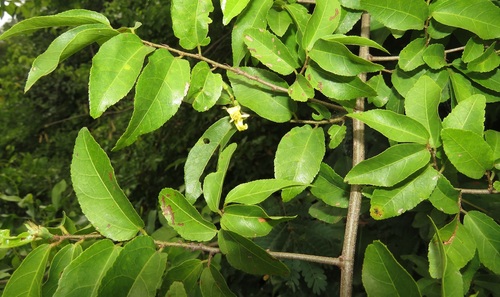
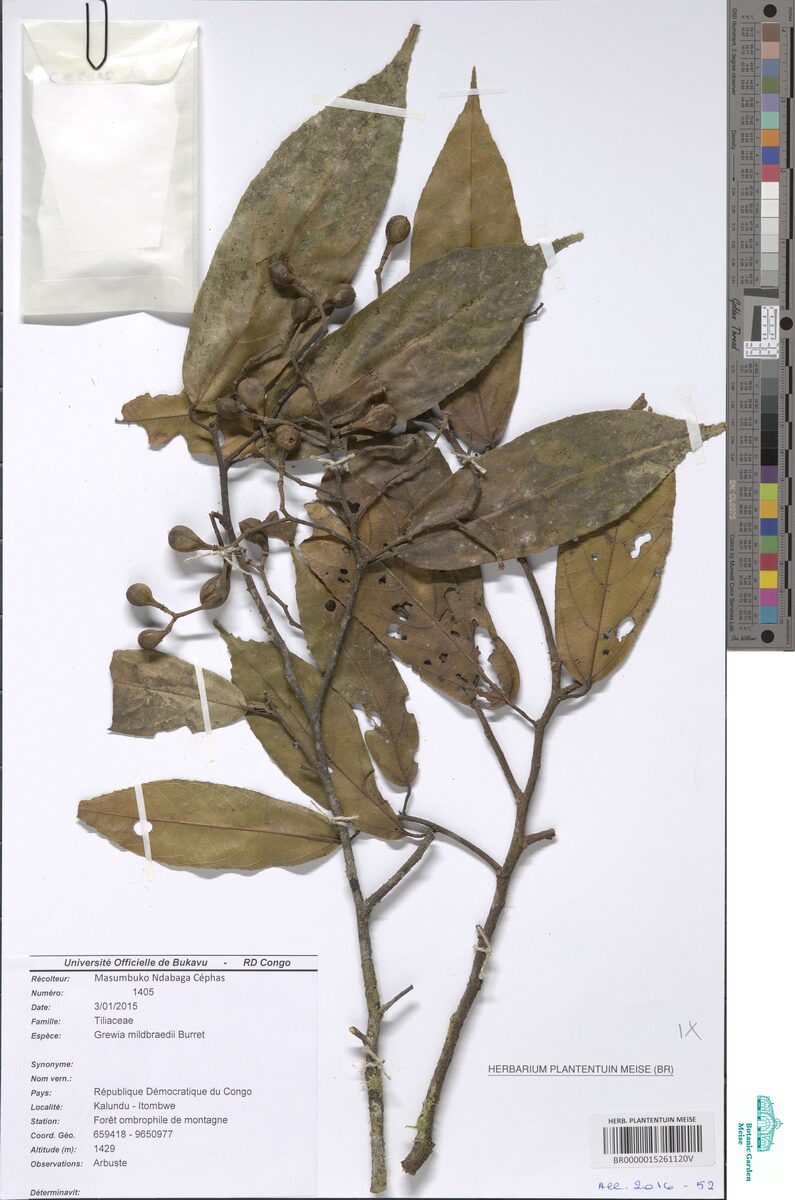
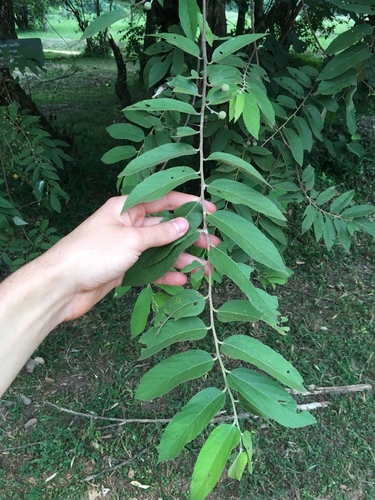
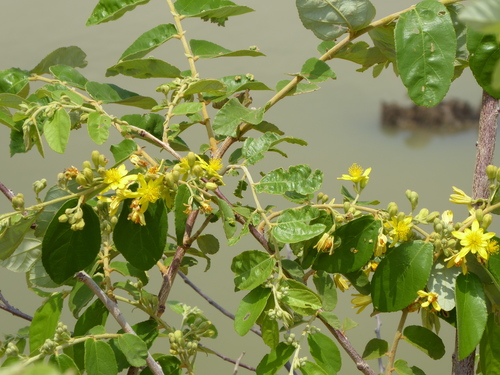
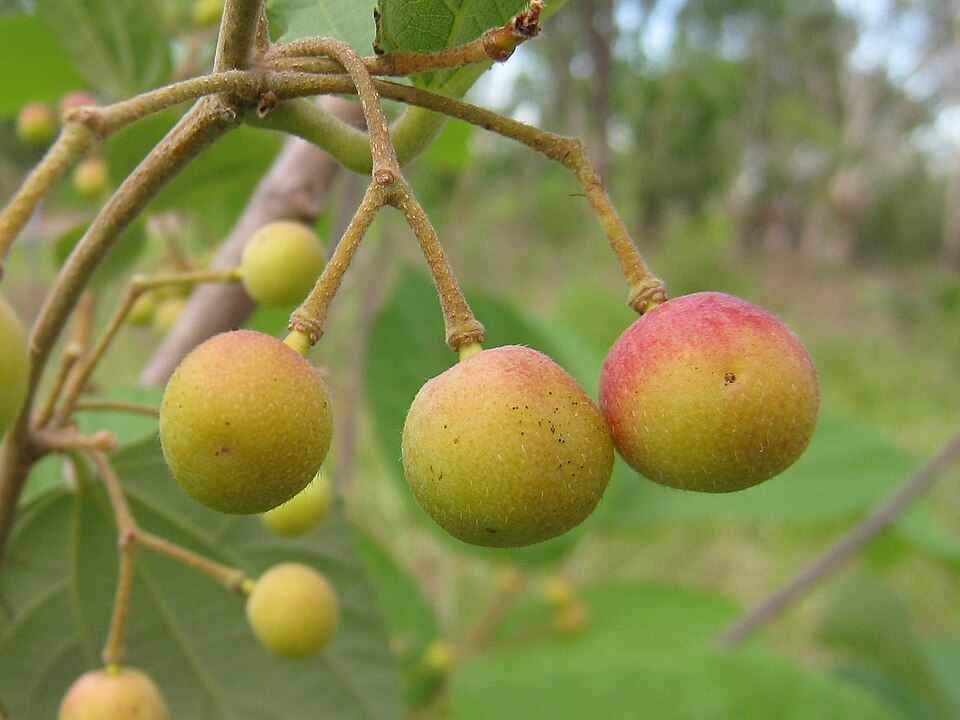
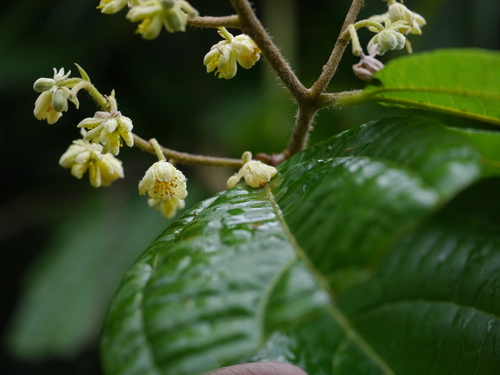
A shrub or small tree. It grows 6 m tall. The branches are often tangled. The leaves are simple and alternate. The leaves are narrowly oval and 3-10 cm long by 2-6 cm wide. The base is rounded or wedge shaped. The flowers are in groups in the axils of the leaves. There are 1-4 flowers in a group. The flowers are 2 cm across. The sepals are yellow to red. The fruit is round and fleshy and 7-12 mm across. It is brown and is not lobed. There are 1-2 seeds.
Edible Uses
Fruit is eaten fresh and used to make drinks. It is also used as a spice or condiment. Leaves are also edible.
Traditional Uses
The fruit is eaten. It is also used to make a drink. It is also used as a spice or condiment,.
This uses section is brief — help expand it
Medicinal Uses
Grewia species are valued in many cultures for their medicinal virtues. The main medicinal action appears to come from the mucilage that is found in the leaves, stems and roots, which has been shown to have soothing and healing properties. Taken internally it is often used as a remedy for diarrhoea and dysentery, for example, whilst externally it is applied to wounds, cuts, ulcers, irritations etc. The plant can be taken as a simple infusion or decoction, or it can be applied topically as a poultice of the plant, or the mucilage can be extracted from the plant, if required, by maceration and then decoction. . A maceration of the root is drunk to treat intercostal pain, female sterility and urinary retention. It is also drunk or used in baths to treat diarrhoea and as a mild aphrodisiac. The root is also used to control fever, pain and vomiting. A paste of the freshly ground root is applied as a poultice on the chest and also drunk in the treatment of intercostal pain and stiffness of the limbs. The branch and the pounded bark are cooked with food to prepare a sauce eaten as a remedy for stomach problems. A maceration of the bark fibre is drunk for the treatment of diarrhoea and constipation. A maceration of the leaf is drunk to treat urinary retention. The root contains saponins, tannins and terpenes. The bark and flowers contain farnesol, which has shown spasmolytic effects on the smooth muscle fibre of intestines and sedative activity in case of over-excitement.
Distribution
It is a tropical plant. It grows in arid places. It grows in the savannah in West Africa.
Where It Grows
Africa, Benin, Burkina Faso, Côte d'Ivoire, Ghana, Ivory Coast, Nigeria, Senegal, Togo, West Africa,
Cultivation
Plants can be grown from seed. Seed are best soaked in sulphuric acid for 60 minutes then soaked in water for 24 hours before planting.
Propagation
Seed - soaking in sulphuric acid for 60 minutes, followed by soaking in water for 24 hours gave the best results in germination experiments in Burkina Faso, with germination rates of about 40%.
Other Uses
A fibre obtained from the bark is made into cordage. The bark is used to cover groundnut baskets. The stem is used for wickerwork, baskets and fish traps. The twigs are used as toothbrushes. The bark is used to precipitate impurities in traditional beer making.
Production
It flowers at the beginning of the rainy season.
Notes
These were in the families Sparrmanniaceae and the Tiliaceae.
Synonyms
Also Known As
Kpekpera, Mussantipe
References (9)
- Atato, A., et al, 2010, Diversity of Edible Wild Fruit Tree Species of Togo. Global Science Books.
- Bonou, A., et al, 2013, Valeur economique des Produits Forestiers Non Ligneux (PFNL) au Benin. Editions Universitaires Europeennes p 93
- Codjia, J. T. C., et al, 2003, Diversity and local valorisation of vegetal edible products in Benin. Cahiers Agricultures 12:1-12
- Dansi, A., et al, 2008, Traditional leafy vegetables and their use in the Benin Republic. Genet Resour Crop Evol (2008) 55:1239–1256
- Gallagher, D. E., 2010, Farming beyond the escarpment: Society, Environment, and Mobility in Precolonial Southeastern Burkina Faso. PhD University of Michigan.
Show all 9 references Hide references
- Gueye, M., et al, 2014, Wild Fruits Traditionally Gathered by the Malinke Ethnic Group in the Edge of Niokolo Koba Park (Senegal). American Journal of Plant Sciences 5, 1306-1317
- PROTA
- Segnon, A. C. and Achigan-Dako, E. G., 2014, Comparative analysis of diversity and utilization of edible plants in arid and semi-arid areas in Benin. Journal of Ethnobiology and Ethnomedicine. 10:80
- World Checklist of Useful Plant Species 2020. Royal Botanic Gardens, Kew