Grewia kakothamnos
K. Schum.
gbif· cc-by-sa
Susan Brown
gbif· cc-by-sa
Susan Brown
gbif· cc-by-sa
Susan Brown
Summary
Source: WikipediaGrewia kakothamnos is a species of flowering plant in the family Malvaceae, found from southern Ethiopia to Tanzania. Its flowers are white to pale lilac, and its two or four-lobed fruit are orange when ripe, and edible in a famine situation. Grewia kakothamnos is particularly enjoyed as a forage by domestic goats (Capra aegagrus hircus), which will even eat the dead fallen leaves during the dry season.
Description
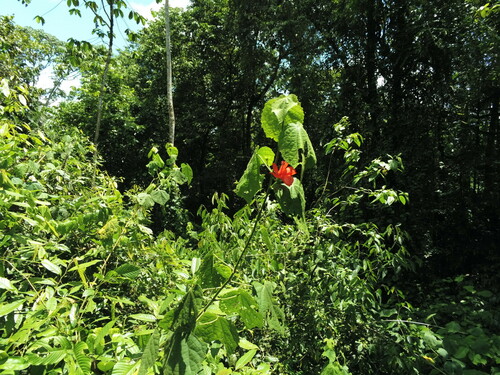
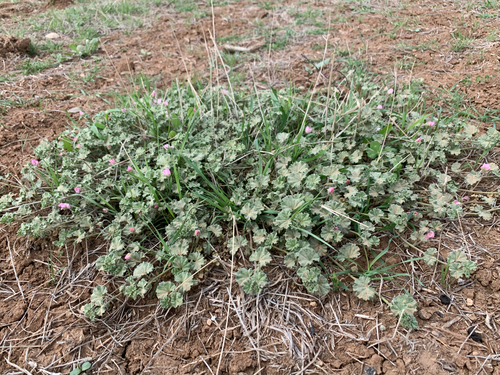
A shrub. It grows 4 m tall. It keeps growing from year to year. It flowers when it has no leaves. The leaves are green and can be slightly hairy on both surfaces. The leaves are 2-7 cm long by 2-5 cm wide. They are rounded at both ends. There are irregular rounded teeth along the edge. The flowers occur singly opposite the leaves. They are white to pale lilac. The fruit have 2-4 lobes. They are green when young and turn orange when ripe.
Edible Uses
The fruit are eaten raw or cooked by frying.
Traditional Uses
The fruit are eaten raw and also cooked by frying
This uses section is brief — help expand it
Distribution
It is a tropical plant. It grows between 100-1,180 m above sea level.
Where It Grows
Africa, East Africa, Ethiopia, Kenya, Tanzania, Uganda,
Other Information
It is a famine food
Notes
These were in the families Sparrmanniaceae and the Tiliaceae.
Synonyms
Also Known As
Demak, Mnangu
References (6)
- Edwards. S., et al, (Eds), 1995, Flora of Ethiopia and Eritrea. Vol.2, Part 2 Canellaceae to Euphorbiaceae. Uppsala, Sweden. p 152
- Harkonen, M. & Vainio-Mattila, K., 1998, Some examples of Natural Products in the Eastern Arc Mountains. Journal of East African Natural History 87:265-278
- Lulekal, E., et al, 2011, Wild edible plants in Ethiopia: a review on their potential to combat food insecurity. Afrika Focus - Vol. 24, No 2. pp 71-121
- Mutie, F. M., et al, 2023, Important Medicinal and Food Taxa (Orders and Families) in Kenya, Based on Three Quantitative Approaches. Plants 2023, 12, 1145
- Teklehaymanot, T., and Giday., M., 2010, Ethnobotanical study of wild edible plants of Kara and Kwego semi-pastoralist people in Lower Omo River Valley, Debub Omo Zone, SNNPR, Ethiopia. J Ethnobiol Ethnomed. 2010; 6: 23.
Show all 6 references Hide references
- Vainio-Mattila, K., 2000, Wild vegetables used by the Sambaa in the Usumbara Mountains, NE Tanzania. Ann. Bot. Fennici 37:57-67