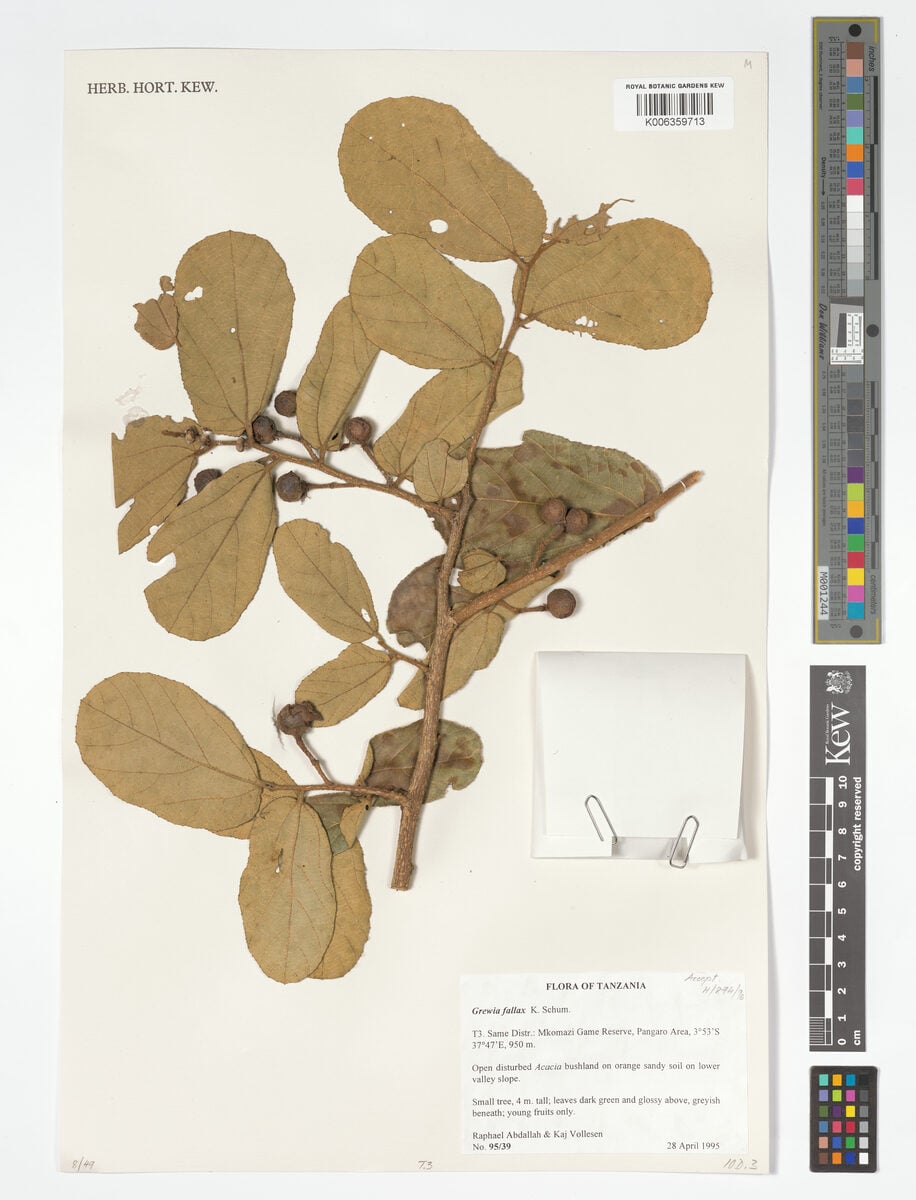
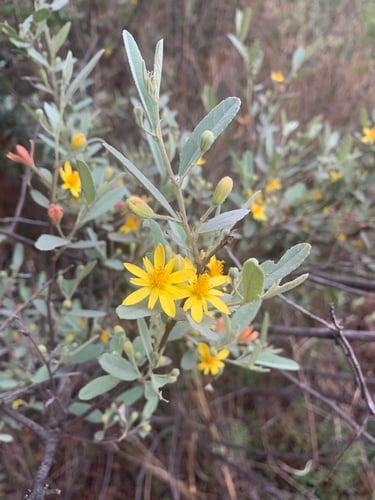
Grewia laevigata
Vahl
iNaturalist· cc-by-nc-nd
(c) Dinesh Valke, some rights reserved (CC BY-NC-ND)
iNaturalist· cc-by
(c) Samuel Lee, some rights reserved (CC BY)
iNaturalist· cc-by-nc
(c) ndionson, some rights reserved (CC BY-NC)
Description
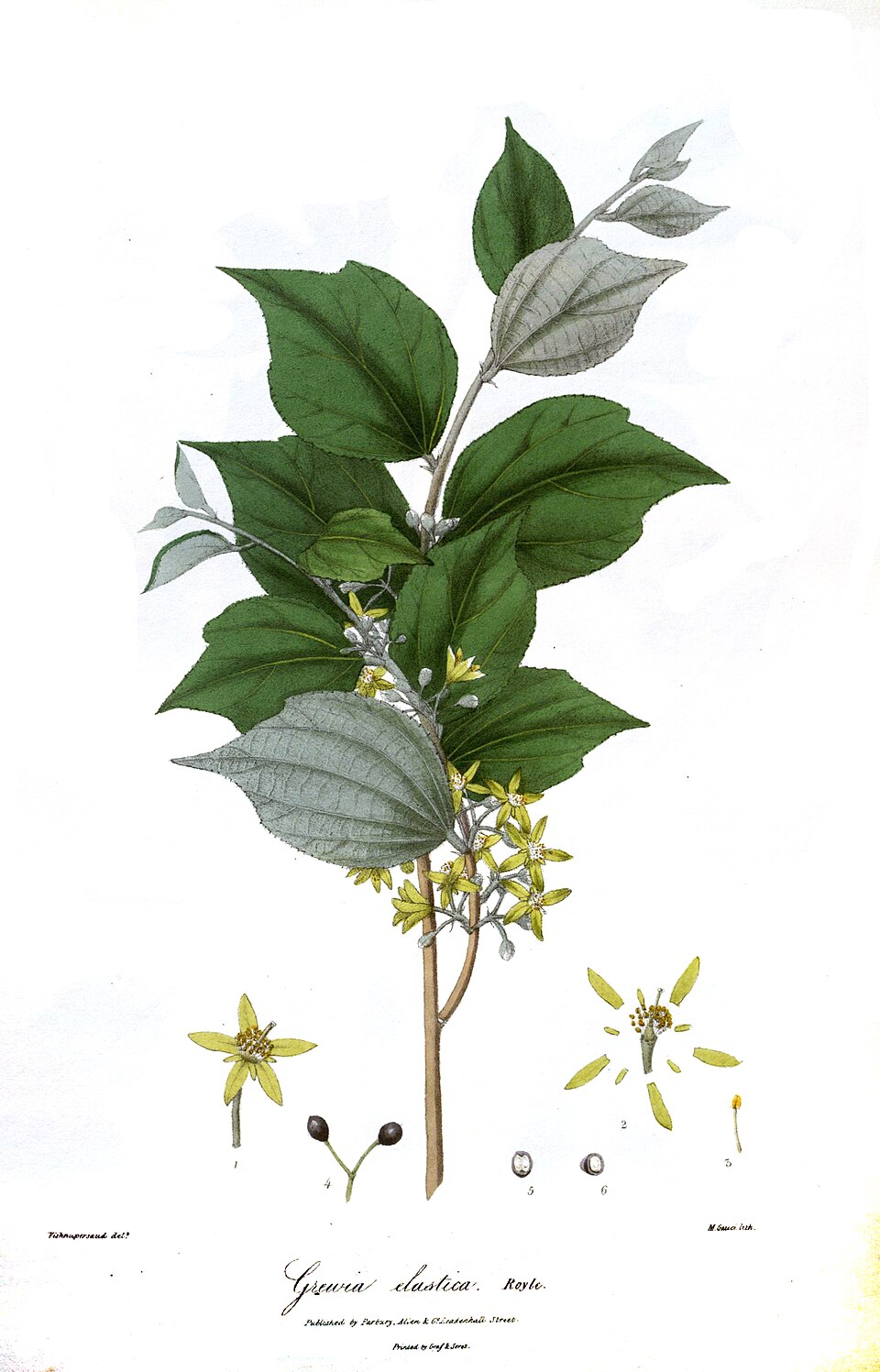
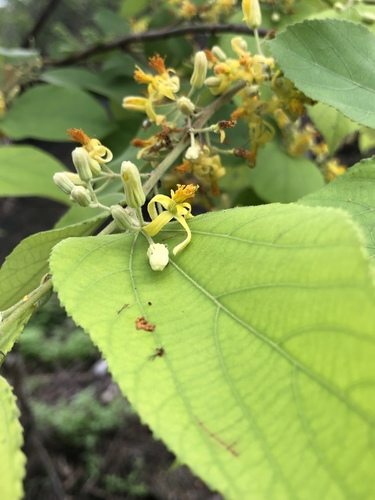
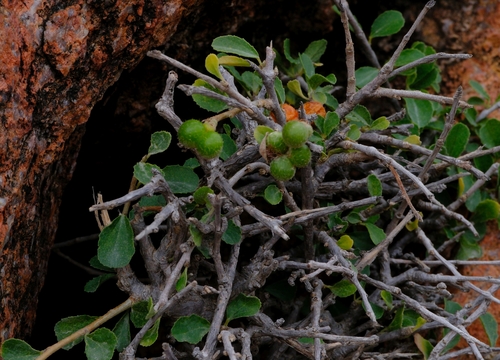
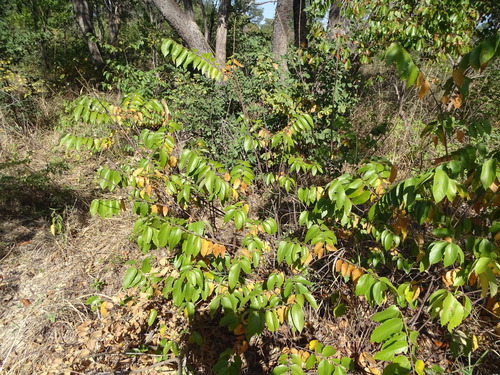
A climber or small tree. It grows 14 m tall. The trunk can be 13 cm across. The leaves are alternate and simple. They have dense stiff hairs. There are teeth along the edge. The flowers are 3 cm across. They are white to yellow to orange and the petals are curled. The flowers are in groups. The fruit are 13 mm across. They are red and fleshy.
Edible Uses
The red fleshy fruit is edible.
Medicinal Uses
Grewia species are valued in many cultures for their medicinal virtues. The main medicinal action appears to come from the mucilage that is found in the leaves, stems and roots, which has been shown to have soothing and healing properties. Taken internally it is often used as a remedy for diarrhoea and dysentery, for example, whilst externally it is applied to wounds, cuts, ulcers, irritations etc. The plant can be taken as a simple infusion or decoction, or it can be applied topically as a poultice of the plant, or the mucilage can be extracted from the plant, if required, by maceration and then decoction. . A decocton of the leaves is given to women after delivery in order to reduce pain and to clean parturiton wastes. The leaves are used to treat cuts and abrasions.
Distribution
It is a tropical plant. It grows in disturbed regrowth forest. It grows up to 1,700 m above sea level. It can be on limestone.
Where It Grows
Asia, India, Indochina, Indonesia, Malaysia, Myanmar, New Guinea, SE Asia, Thailand,
Cultivation
Plants can flower and produce fruit all year round.
Propagation
Seed - we have no specific information for this species but seed of this genus is generally best sown as soon as it is ripe. Stored seed has a hard seedcoat and may benefit from scarification before sowing in order to speed up and improve germination. This can usually be done by pouring a small amount of nearly boiling water on the seeds (being careful not to cook them!), allowing the mix to cool somewhat and then leaving it in a warm place to soak for 12 - 24 hours. Sow the seeds in situ or in a nursery seedbed or trays - do not allow the compost to become dry. Germination and early growth are usually quite quick. Cuttings - best taken with a heel.
Other Uses
A good quality fibre is obtained from the bark. It is used for making ropes. The wood is rather heavy, fibrous, but close grained, soft, white, turning yellowish, then brownish..
Synonyms
Also Known As
Akar gerigu, Akar lapit, Karai, Karuachu, Kyet-tayaw, Lapion, Sumpit babi, Tanchot, Tayaw-nyo, Yaw
References (3)
- Arinathan, V., et al, 2007, Wild edibles used by Palliyars of the western Ghats, Tamil Nadu. Indian Journal of Traditional Knowledge. 6(1) pp 163-168
- Hanum, F. I., 1999, Plant Diversity and Conservation Value of Ayer Hitam Forest, Selangor, Peninsula Malaysia. Pertanika J. Trop. Agric. Sci. 22(2):73-83
- Suwardi, A. B., et al, 2020, Wild edible fruits generate substantial income for local people of the Gunung Leuser National Park, Aceh Tamiang Region. Ethnobotany Research & Applications 20:11