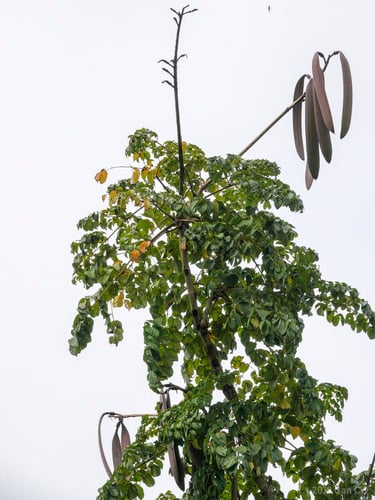
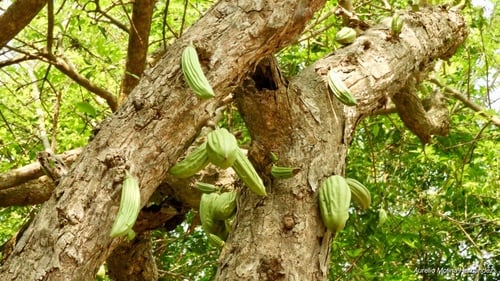
Tabebuia heterophylla
(DC.) Britton
Pink trumpet tree
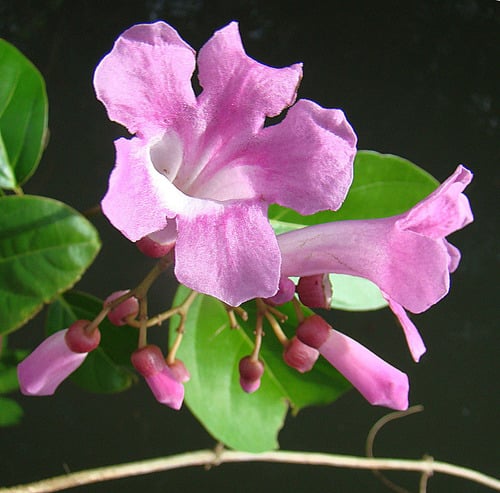
iNaturalist· cc-by-nc
(c) Samuel Brinker, some rights reserved (CC BY-NC), uploaded by Samuel Brinker
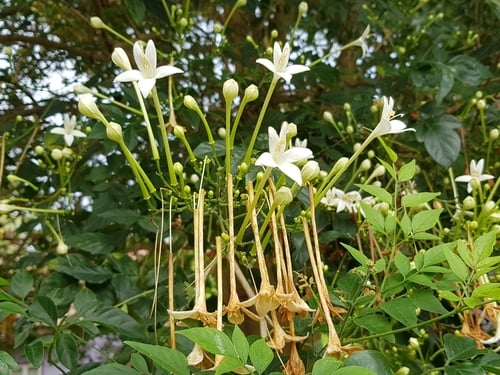
iNaturalist· cc-by-nc
(c) Lori Lynn, some rights reserved (CC BY-NC)
Summary
Source: WikipediaTabebuia heterophylla is a species of tree native to the Caribbean, and is also cultivated elsewhere. It is also known as roble blanco, pink manjack, pink trumpet tree, white cedar, and whitewood.
Description
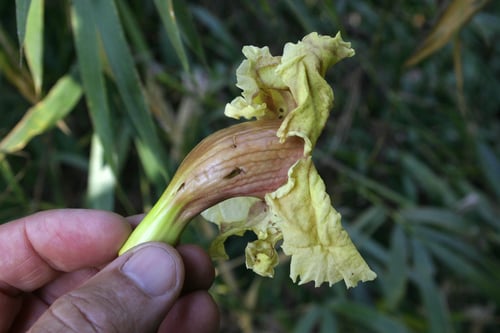
A tree. It loses many leaves during the year. It grows 15 m tall. The leaves are compound with unequal leaflets arranged like fingers on a hand. The flowers are trumpet shaped and 8 cm long. They are in clusters at the ends of the branches. The fruit are pods 30 cm long.
Edible Uses
The leaves are used to make tea.
Traditional Uses
The leaves are used for tea.
This uses section is brief — help expand it
Medicinal Uses
The bark is used as a plaster to cure corns remove callous layers of the skin. A decoction of the bark and the leaves is used in the treatmeny of colds, and helps against fainting A poultice of the leaves is used to cure sores.
Distribution
It is a tropical plant. It is best in full sun. It needs well drained soil. It suits hardiness zones 10-11. It is damaged by frost.
Where It Grows
Africa, Antigua and Barbuda, Antilles, Asia, Bahamas, Barbados, Brazil, British Indian Ocean Terr., BIOT, Caribbean, Central America, Cuba, Dominica, Dominican Republic, Haiti, Hawaii, Honduras, India, Indonesia, Jamaica, Marquesas, Myanmar, Nicaragua, North America, Pacific, Puerto Rico, SE Asia, St. Kitts and Nevis, Trinidad-Tobago, USA, West Indies,
Cultivation
Plants can be grown from seeds. It can also be grown from softwood cuttings and well as air-layering and grafting.
Propagation
Seed - it has a short viability and needs to be sown as soon as possible once it is ripe. Seeds sown directly in seedbeds after collection in the field showed germination rates of 90% within 2 weeks. A 3 week delay in sowing seeds reduced viability to about 55%; and after 5 weeks no seeds germinated. Seeds stored at 25% seed moisture content, at a temperature of 4°c, gave a germination rate of 55% after 25 months storage. The more common means of propagating this plant is to dig up seedlings from the wild and transplant them straight into their permanent positions.
Other Uses
The heartwood is light brown with a greyish or golden hue and fine, brown lines; it is not clearly demarcated from the sapwood. The grain is straight to interlocked; the texture is medium to coarse; the lustre is low to medium; no distinct odour or taste is apparent. The wood is relatively heavy, moderately hard, tough, strong and durable in contact with the soil, though susceptible to attack by termites. Some reports say that it is also susceptible to marine borers, though it is also said to last especially well in salt water. It saws and machines easily with very satisfactory results in all operations except planing; it has fair resistance to screw splitting; takes nails fairly well; glues easily. The wood accepts mahogany and oak stains satisfactorily or can be finished naturally with excellent results; it takes a high polish. The wood is used widely in construction and is also used in boat building, flooring panels, making bowls etc. In general, the tree is tolerant of degraded sites and abandoned farm lands, where it tends to invade quite quickly and form nearly pure stands. This makes it a potential pioneer species. In Puerto Rico, the tree is planted on poor sites in order to provide cover and to improve the soil. It is recommended for planting on uniform and convex slopes and ridges, where trials have shown it to be a promising species for reforestation. It has also done well on humid, waterlogged sites.
Notes
There are about 100 Tabebuia species in the American tropics.
Synonyms
Also Known As
Corteza, Ipe, Ipe-rosa, Pau-d'arco, Peuva, Piuva, Piuva-do-campo, Piuva-do-pantanal, Piuva-roxa, Pohon tabebuya merah jambu, Pohon trompet merah jambu, Robel
References (7)
- Bortolotto, I. M., et al, 2018, Lista preliminar das plantas alimenticias nativas de Mato Grosso do Sul, Brasil. Iheringia, Serie Botanica, Porto Alegre, 73 (supl.):101-116
- Grandtner, M. M., 2008, World Dictionary of Trees. Wood and Forest Science Department. Laval University, Quebec, Qc Canada. (Internet database http://www.wdt.qc.ca)
- Kermath, B. M., et al, 2014, Food Plants in the Americas: A survey of the domesticated, cultivated and wild plants used for Human food in North, Central and South America and the Caribbean. On line draft. p 848
- Kew Plants of the World Online
- Plants of Haiti Smithsonian Institute http://botany.si.edu
Show all 7 references Hide references
- Sukarya, D. G., (Ed.) 2013, 3,500 Plant Species of the Botanic Gardens of Indonesia. LIPI p 537
- Topp, J. M. W., 1988, An Annotated Check List of the Flora of Diego Garcia, British Ocean Territory. Atoll Research Bulletin No. 313