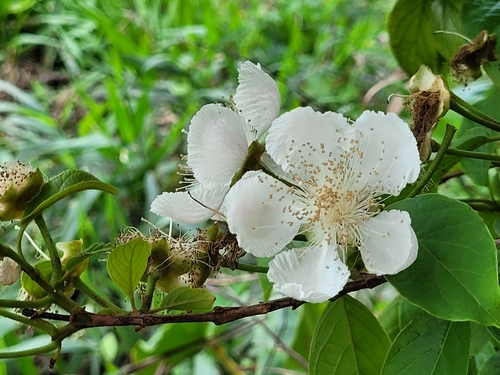
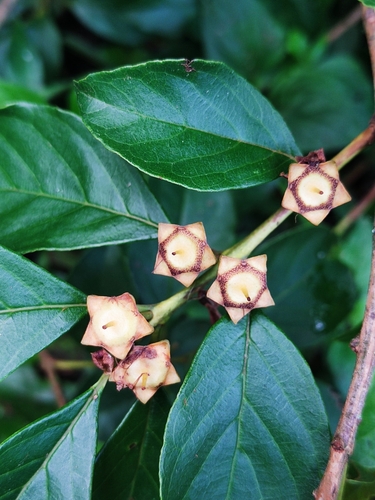
Eugenia capuli
(Schltdl. & Cham.) O. Berg.
Capuli
iNaturalist· cc-by
(c) Neptalí Ramírez Marcial, some rights reserved (CC BY), uploaded by Neptalí Ramírez Marcial
iNaturalist· cc-by-nc
(c) Hermann Bojórquez, some rights reserved (CC BY-NC)
iNaturalist· cc-by-nc
(c) Hermann Bojórquez, some rights reserved (CC BY-NC)
Description
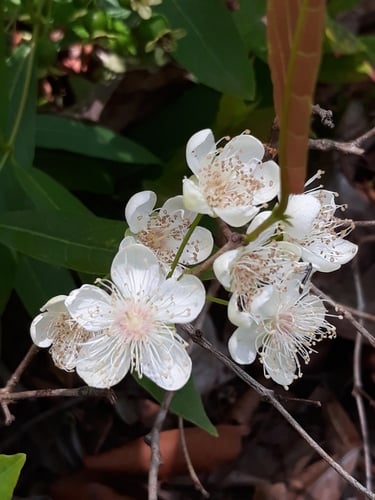
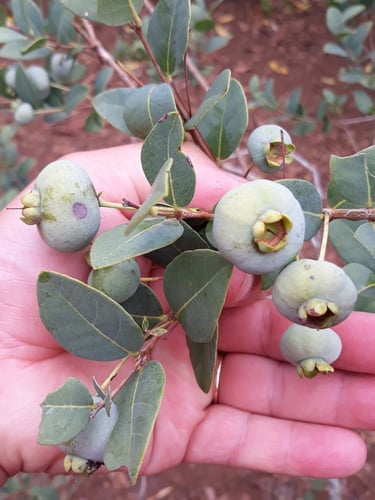
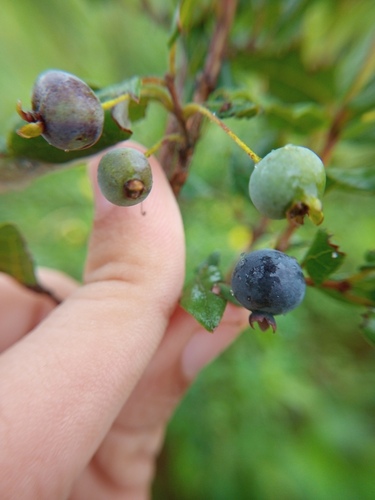
A shrub or small tree. It grows 3-4.5 m tall. The leaves are narrowly oval and 4-6 cm long by 1-2 cm wide. They narrow to a rounded tip. They are wedge shaped at the base. There are about 15 flowers in a group. The petals are white. The fruit are red and turn black when ripe. They are 3-4 mm across. They are edible but with little pulp.
Edible Uses
The ripe fruits are edible, though they have little pulp.
Distribution
It is a tropical plant.
Where It Grows
Belize, Central America, El Salvador, Guatemala, Honduras, Mexico, North America,
Other Uses
The wood is useful only for fuel.
Other Information
It is cultivated in some places.
Synonyms
Also Known As
Capulin, Temazate
References (5)
- Grandtner, M. M., 2008, World Dictionary of Trees. Wood and Forest Science Department. Laval University, Quebec, Qc Canada. (Internet database http://www.wdt.qc.ca)
- Ibarra-Manriquez, G., et al, 1997, Useful Plants of the Los Tuxtlas Rain Forest (Veracruz, Mexico): Considerations of their Market Potential. Economic Botany, Vol. 51, No. 4, pp. 362-376
- Kermath, B. M., et al, 2014, Food Plants in the Americas: A survey of the domesticated, cultivated and wild plants used for Human food in North, Central and South America and the Caribbean. On line draft. p 351
- Piedra-Malagón, E. M., et al, 2022, Edible native plants of the Gulf of Mexico Province. Biodiversity Data Journal 10: e80565 p 26
- Segura, S., et al, 2018, The edible fruit species in Mexico. Genet Resour Crop Evol (2018) 65:1767–1793