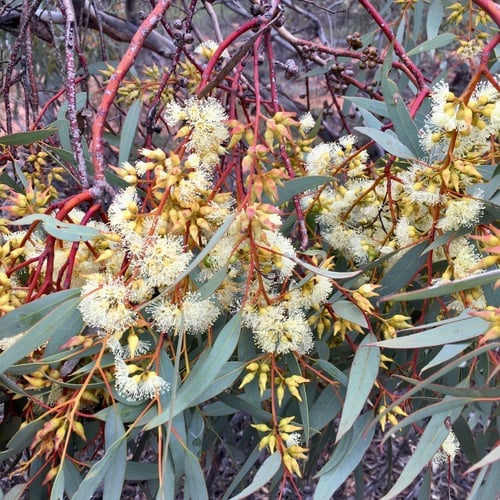
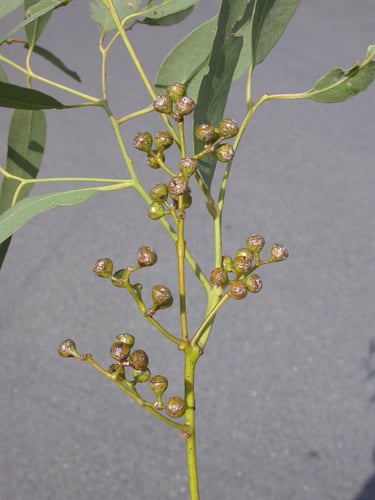
Curitiba prismatica
(D. Legrand) Salywon & Landrum
Curitiba
iNaturalist· cc-by-nc
(c) Adriano Silvério, some rights reserved (CC BY-NC), uploaded by Adriano Silvério
iNaturalist· cc-by-nc
(c) babiii, some rights reserved (CC BY-NC)
wikimedia· cc-by
Eliane Kobayakawa (via Wikimedia Commons)
Summary
Source: WikipediaCuritiba prismatica is a species of tree in the family Myrtaceae. It is only species in the genus Curitiba, the species was originally described as Eugenia prismatica by D. Legrand in 1969 and moved to its own genus by Andrew M. Salywon and Leslie Roger Landrum in 2007. In Portuguese the species goes by the common names Cambuí, Guamirim, Mureira, and Murta. The species is listed as vulnerable by the ICUN. Curitiba is a monotypic genus of plant in family Myrtaceae, endemic to Brazil. It can be found in the Araucaria rainforest.
Description
A subtropical shrub or small tree of the myrtle family, growing 2-4 m tall with edible fruit.
This description is brief — help expand it
Edible Uses
The fruit are enjoyed.
Distribution
It is a subtropical plant.
Where It Grows
Brazil, South America,
Cultivation
Grows best in a sunny position. Established plants are drought tolerant.
Propagation
Seed - best sown as soon as it is ripe in a partially shaded position in a nursery seedbed. A low germination rate can be expected, with the seed sprouting within a few weeks.
Other Uses
The wood is medium-textured, straight-grained, moderately heavy, hard, with moderate mechanical properties and of good durability. It is used locally in general construction, making tool handles and for external purposes such as fence posts. The wood is used for fuel and to make charcoal. Tolerant of full sun and providing food for the native fauna, the plant can be used as a pioneer plant when restoring native woodland.
Other Information
The fruit are enjoyed.
Synonyms
References (1)
- www.colecionandofrutas.org