Drypetes gilgiana
(Pax) Pax et K. Hoffm.
gbif· cc-by-nc-nd
Patricia Barberá & West & Central Africa program
gbif· cc-by-nc-nd
Patricia Barberá & West & Central Africa program
gbif· cc-by-nc-sa
MBG
Description
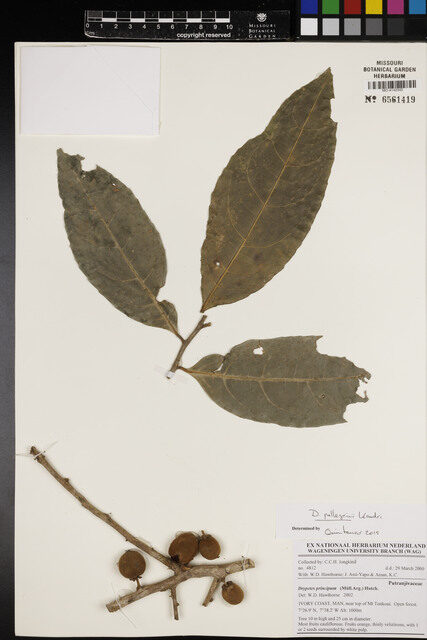
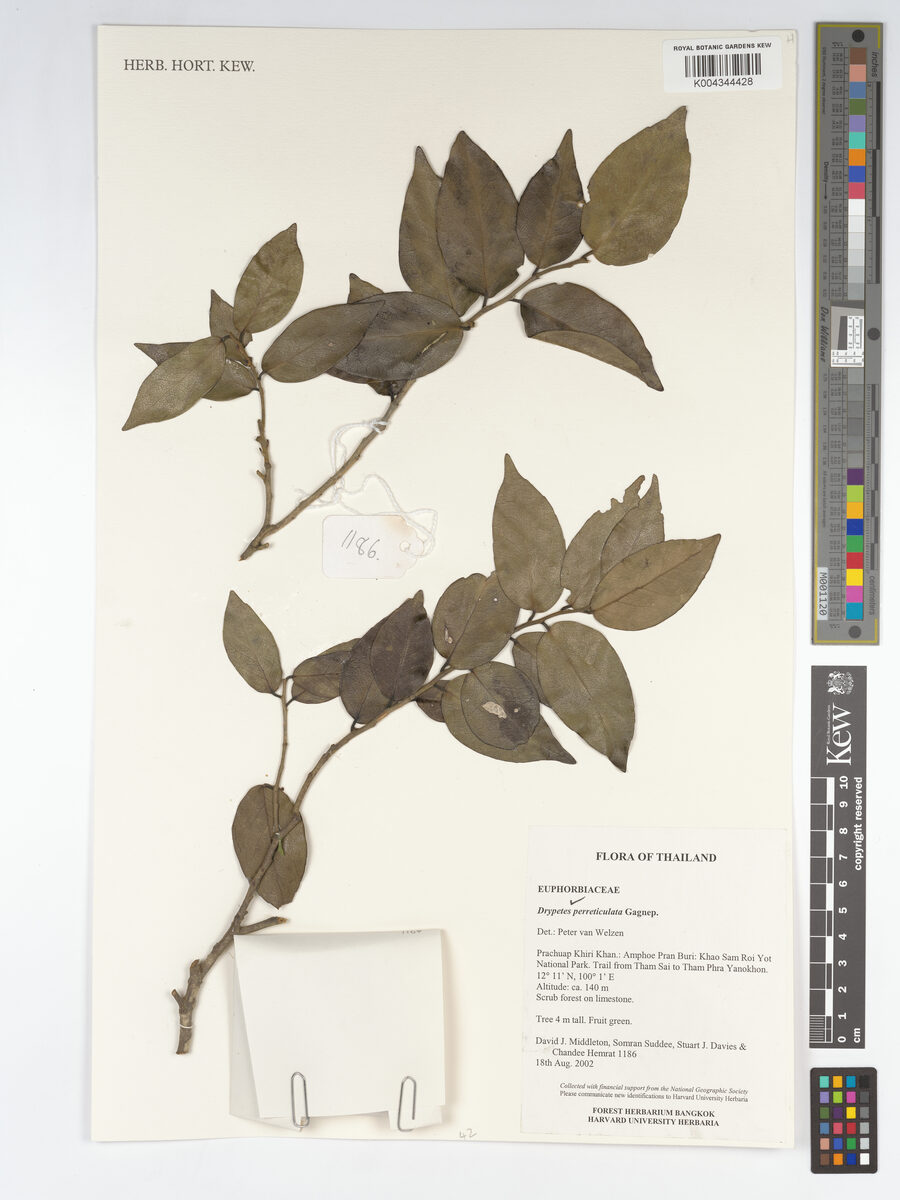
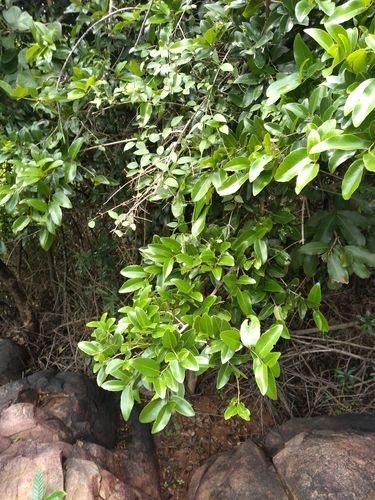
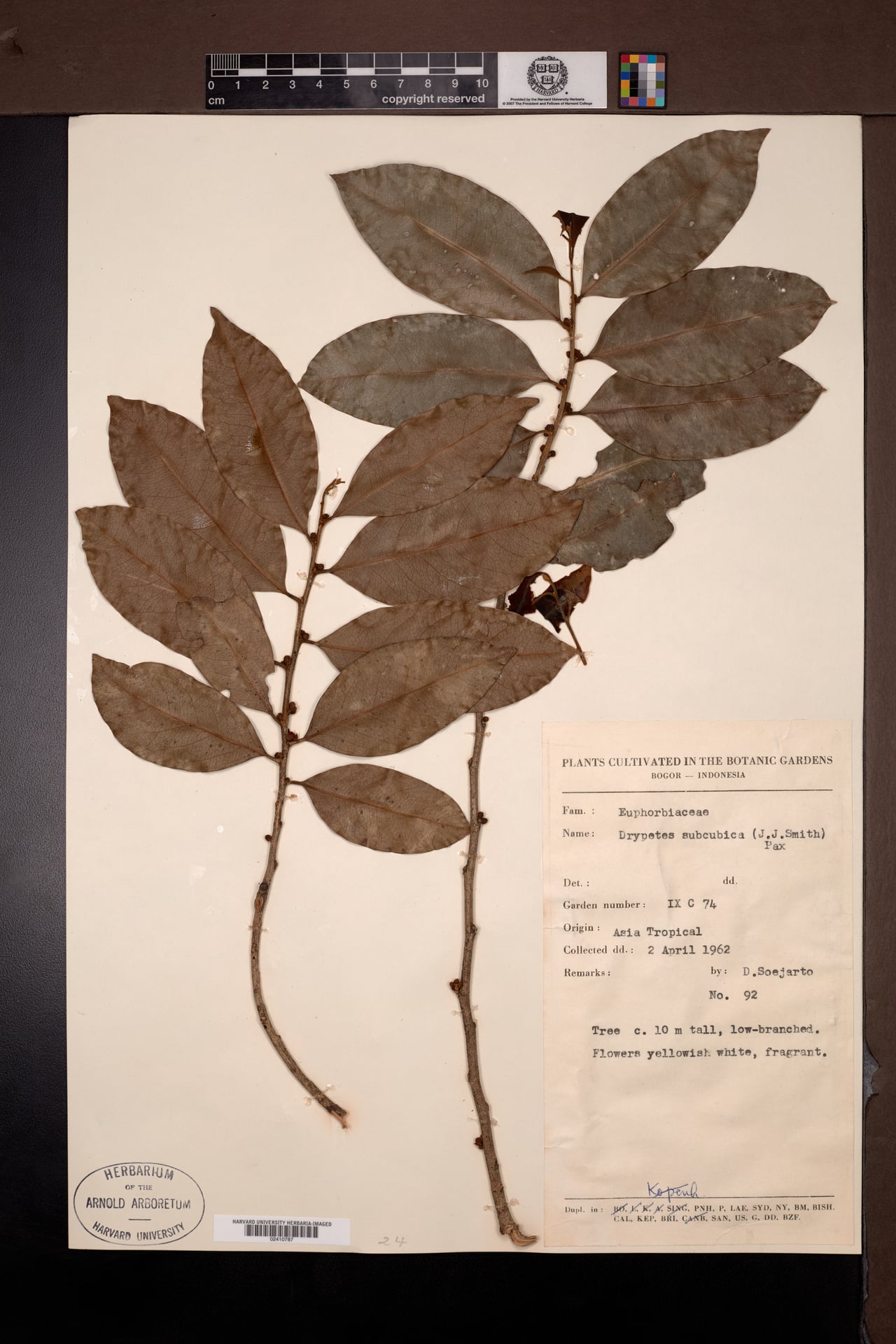
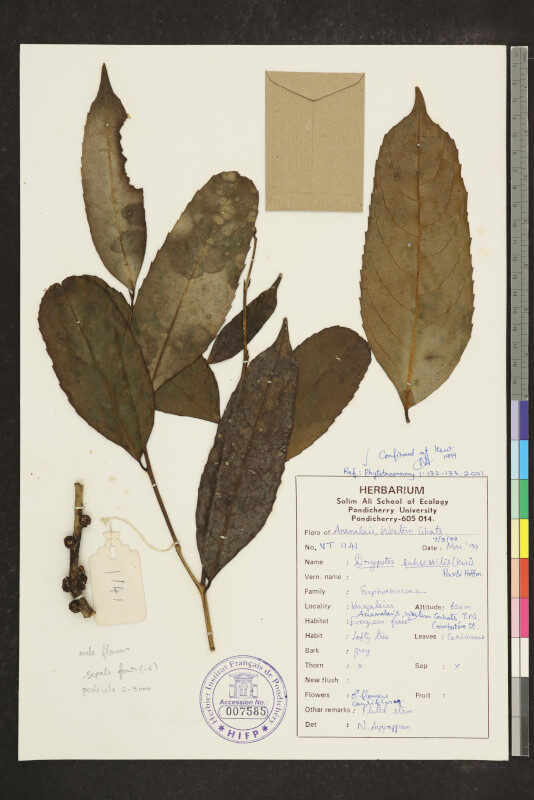
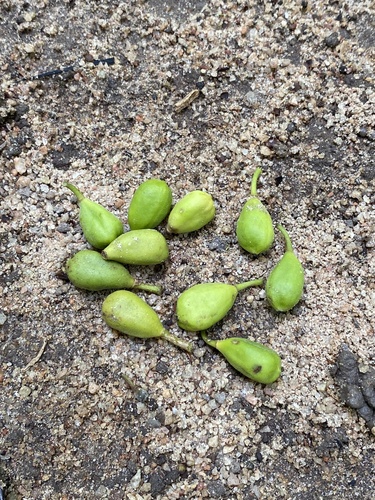
A shrub or small tree. It grows up to 12 m high. The trunk is 60 cm around. The bark is light grey-brown. The leaves are 3.5-7.5 cm long by 1-6 cm wide. They are papery and dark green. The leaves are unequal at the base. The flowers are yellowish. The male flowers occur as 1-3 together and the female flowers are single. The fruit are bright orange or red. They look like little oranges. They are 18 mm across. There are 2 seeds and an edible pulp.
Edible Uses
The sweet pulp surrounding the seeds is eaten.
Traditional Uses
The pulp around the seeds is sweet and is eaten.
This uses section is brief — help expand it
Distribution
It is a tropical plant. It grows as an understorey tree in high forest. It can be in palm groves and along river banks. In Nigeria it has been recorded at 1,440 m above sea level.
Where It Grows
Africa, Benin, Cameroon, Central Africa, Côte d'Ivoire, Ghana, Guinea, Guinée, Guinea-Bissau, Ivory Coast, Liberia, Nigeria, Senegal, Sierra Leone, Togo, West Africa,
Cultivation
A dioecious species, both male and female forms need to be grown if fruit and seed are required.
Other Uses
The light brown wood is very hard.
Notes
There are about 200 Drypetes species.
Synonyms
Also Known As
Eke, Katrikanini, Osunsunro
References (9)
- Abbiw, D.K., 1990, Useful Plants of Ghana. West African uses of wild and cultivated plants. Intermediate Technology Publications and the Royal Botanic Gardens, Kew. p 47
- Burkill, H. M., 1985, The useful plants of west tropical Africa, Vol. 2. Kew.
- Chapman, J. D. & Chapman, H. M., 2001, The Forest Flora of Taraba and Andamawa States, Nigeria. WWF & University of Canterbury. p 175
- Dalziel, J. M., 1937, The Useful plants of west tropical Africa. Crown Agents for the Colonies London.
- Jardin, C., 1970, List of Foods Used In Africa, FAO Nutrition Information Document Series No 2.p 134
Show all 9 references Hide references
- Keay, R.W.J., 1989, Trees of Nigeria. Clarendon Press, Oxford. p 164
- Peters, C. R., O'Brien, E. M., and Drummond, R.B., 1992, Edible Wild plants of Sub-saharan Africa. Kew. p 110
- Vivien, J., & Faure, J.J., 1996, Fruitiers Sauvages d'Afrique. Especes du Cameroun. CTA p 149
- World Checklist of Useful Plant Species 2020. Royal Botanic Gardens, Kew