Artocarpus mariannensis
Trecul
Marianas breadfruit
iNaturalist· cc-by-nc
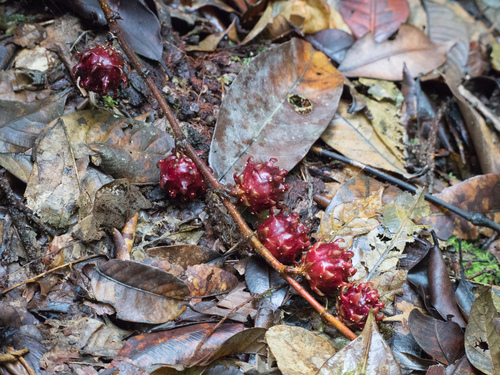
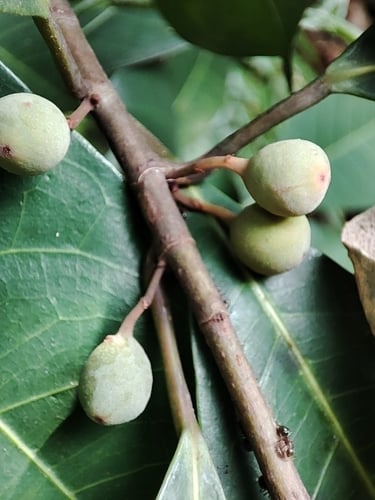
(c) js671, some rights reserved (CC BY-NC)
iNaturalist· cc-by-nc
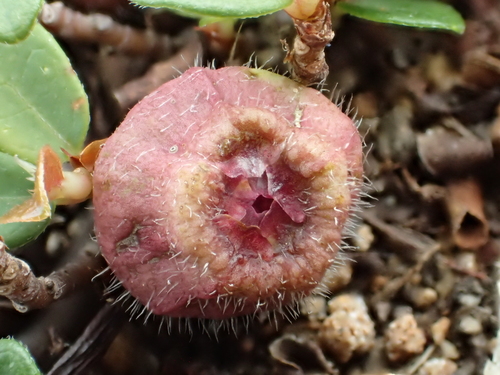
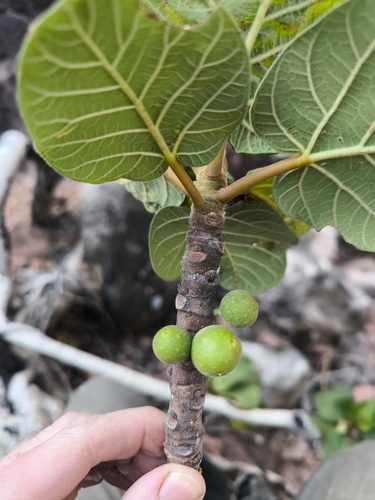
(c) kaeliswift, some rights reserved (CC BY-NC)
iNaturalist· cc-by-nc
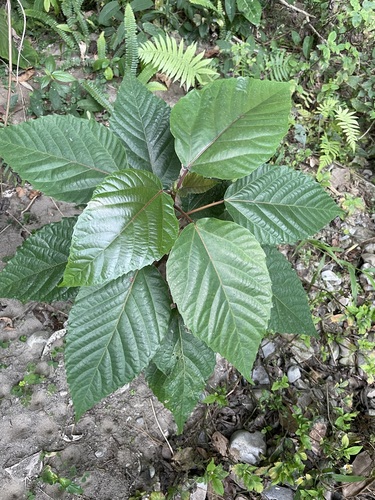
(c) elijahhaluu, some rights reserved (CC BY-NC)
Summary
Source: WikipediaArtocarpus mariannensis (Chamorro: dugdug), also known as the Marianas breadfruit or the seeded breadfruit, is a species of plant in the mulberry / fig family, Moraceae. It is endemic to the Mariana Islands and Guam. It has been utilized extensively by the Micronesian people, being one of the staple food crops that was introduced to other islands in Micronesia.
Description
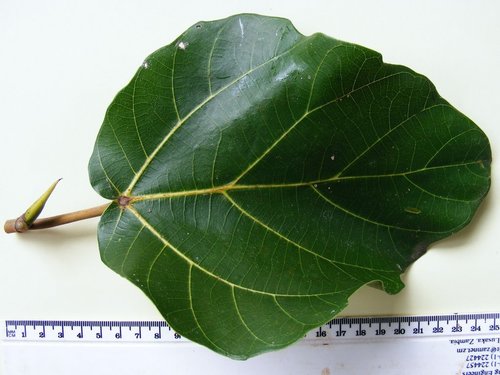
A large tree. It can grow 20 m high. It can hybridise with breadfruit. The trunk can be 2 m across. The trunk can be 5 m tall before branching. The tree has white latex. The bark is smooth and brownish grey. The crown is round, spreading and evergreen. The leaves are broadly oval and 15-30 cm long. They can have 3 lobes. The fruit is fleshy and 15 cm long. The fruit are bent or kidney shaped. The fruit have up to 15 large seeds. They are edible.
Edible Uses
Edible Parts: Fruit Seed Shoots Edible Uses: Gum Edible portion: Fruit, Seeds, Sprouts. Fruit - raw or cooked. The deep yellow pulp has a sweet aroma and taste. The very ripe fruits can be eaten raw, but they, and the immature fruits, are more commonly roasted or baked. Very nutritious. The fruit is a small fleshy syncarp, cylindrical, kidney shaped or asymmetrical, about 15cm long and weighing about 500g. Seed - cooked. The roasted seed has a flavour much like a chestnut. Cooked sprouted seeds are a delicacy on some atolls. The seeds are high in protein, carbohydrates, low in fat, and a good source of minerals and vitamins, especially vitamin A. The large, dark brown, shiny seeds are about 15mm long, with little or no endosperm. There are up to 15 seeds per fruit. The latex obtained from the shoots and trunk can be used to make a chewing gum.
Traditional Uses
The fruit are roasted or baked. The seeds are also eaten cooked. The seeds are sprouted and eaten cooked.
This uses section is brief — help expand it
Medicinal Uses
Antidiarrhoeal Antifungal Astringent Dysentery Purgative Skin Stomachic All parts of the plant are used medicinally, especially the latex, leaf tips, and inner bark. The diluted latex is taken internally to treat diarrhoea, stomach-aches, and dysentery. Applied externally, the latex is commonly used to treat skin ailments and fungus diseases such as thrush. It is massaged into the skin to treat broken bones and sprains and is plastered on the spine to relieve sciatica. The crushed leaves are commonly used as a poultice to treat skin ailments and fungus diseases such as thrush. The sap from the crushed petioles (leaf stalks) is used to treat ear infections or sore eyes. The root is astringent and used as a purgative. When macerated, it is used as a poultice for skin ailments. The bark is used to treat headaches.
Distribution
A tropical plant. It grows from sea level to 150 m altitude. It does best with a rainfall or 1300-3800 mm. It is often on raised coral soils. It is common on atolls. It grows between 10° south and 20° north in the Pacific. It grows from sea level to 150 m altitude. It tolerates salty soils. It needs a pH between 6.1 and 7.4. It cannot tolerate waterlogged soils. It has salt tolerance.
Where It Grows
Chuuk, Cook Is., Fiji, FSM, Guam, Kiribati, Kosrae, Maldives, Mariana Islands, Marshall Islands, Micronesia, Nauru, Pacific, Palau, Pohnpei, Tokelau, Tuvalu, Yap,
Cultivation
It grows best in areas where the mean maximum temperature of hottest month is 29 - 31c and of the coolest month 16 - 18c. It prefers a mean annual rainfall in the range 1,300 - 3,800mm. Older plants grow well in a sunny position, but young plants require some shade, with seedlings requiring 20 - 50% shade. Prefers a light, well drained, and volcanic and shallow calcareous soil, either sandy, sandy loams or loams, with a pH in the range 6.1 - 7.4. The plant tolerates saline and coralline soils and atolls. Established plants can tolerate drought for a few months. Trees can begin fruiting when about 5 years old. It can yield 50kg of fruit per tree per year. A fruit can weigh about 500g. The flowers require cross-pollination for seeds to be produced, but unpollinated flowers will still produce a fruit. The tree is shallow-rooted.
Propagation
Seed - it has a very short viability and should be sown as soon as it is ripe. Plant out the seedlings when 125cm tall.
Other Uses
Adhesive Containers Fibre Fuel Gum Insecticide Mulch Plant support Soil stabilization String Waterproofing Wood Other uses rating: High (4/5). Agroforestry Uses: The plant naturally occurs on steep ridges, cliffs, and shallow calcareous soils where it acts as a soil stabilizer. It can be inter-planted with a wide range of fruit and vegetable crops such as yam, banana, coconut, taro, papaya, sugarcane, arrowroot, beach hibiscus, Indian mulberry, citrus, soursop, medicinal plants, aroids, ginger and noni, amongst others. The leaves provide abundant mulch for the tree and other plants growing beneath the canopy. It is an ideal tree for home gardens on atolls because of its adaptability to calcareous soils and saline conditions and especially for the beneficial shade it produces. The tree can also be used as a trellis for yam. Other Uses A sticky white latex is present in all parts of the tree. It is used as a chewing gum, an adhesive, and to caulk canoes. A fibre is obtained from the inner bark. It is used to make strong cordage used for fishing. The inner bark was formerly used to make bark cloth (tapa). Sections of the bark were hammered flat with a wooden mallet onto a wooden surface. The more the bark was beaten, the finer the cloth that was made. Dried male flowers can be burned to repel mosquitoes and other flying insects. The flexible leaves are used to wrap foods for cooking in earth ovens, and as plates. The wood is light in weight, flexible, easy to work. It is used to make small canoes, carve into statues, bowls, fishing floats, and other objects, although the wood needs to be protected from direct sunlight. Trunks of larger trees are used to make dug-out canoes. The wood is fast burning, but generally older, less productive trees are used for fuel. Special Uses Carbon Farming Food Forest
Production
It is reasonably fast growing. It can yield 50 kg of fruit per tree per year. A fruit can weigh about 500 g.
Other Information
It is an important food on atoll islands.
Notes
There are about 50 Artocarpus species. They are in the tropics and subtropics of Asia and the Pacific.
Synonyms
Also Known As
'ulu Elihe, Dokdok, Dugdug, Chebiei, Ebiei meduuliou, Maiyah, Meduuliei, Mei chocho, Mei kole, Mejwaan, Te mai, Ulu elihe, Ulu elise
References (12)
- Ann. Sci. Nat. Bot. ser. 3, 8:114. 1847
- Arora, R. K., 2014, Diversity in Underutilized Plant Species - An Asia-Pacific Perspective. Bioversity International. p 58
- Brouk, B., 1975, Plants Consumed by Man. Academic Press, London. p 87
- Clarke, W.C. & Thaman, R.R., 1993, Agroforestry in the Pacific Islands: Systems for sustainability. United Nations University Press. New York. p 223
- Elevitch, C.R.(ed.), 2006, Traditional Trees of the Pacific Islands: Their Culture, Environment and Use. Permanent Agriculture Resources, Holualoa, Hawaii. p 127
Show all 12 references Hide references
- Kitalong, A. H., DeMeo, R. A., & Holm, T., 2013, A Field Guide to the Native Trees of Palau. 2nd edition. USDA p35
- Maxwell, A, et al, 2012, Morphological diversity in breadfruit (Artocarpus, Moraceae): insights into domestication, conservation, and cultivar identification. Genetic Resources and Crop Evolution. Published on line 22 May, 2012.
- Ragone, D. & Manner, H. I., 2006, Artocarpus mariannensis, Species Profiles for Pacific Island Agroforestry. www.traditionaltree.org
- Thaman, R. R., 1987, Plants of Kiribati: A listing and analysis of vernacular names. Atoll Research Bulletin No. 296
- Thaman, R. R, 2016, The flora of Tuvalu. Atoll Research Bulletin No. 611. Smithsonian Institute p 100
- Whistler, W. A., 1988, Ethnobotany of Tokelau: The Plants, Their Tokelau Names, and Their Uses. Economic Botany 42(2): 155-176
- www.worldagroforestrycentre.org/treedb/