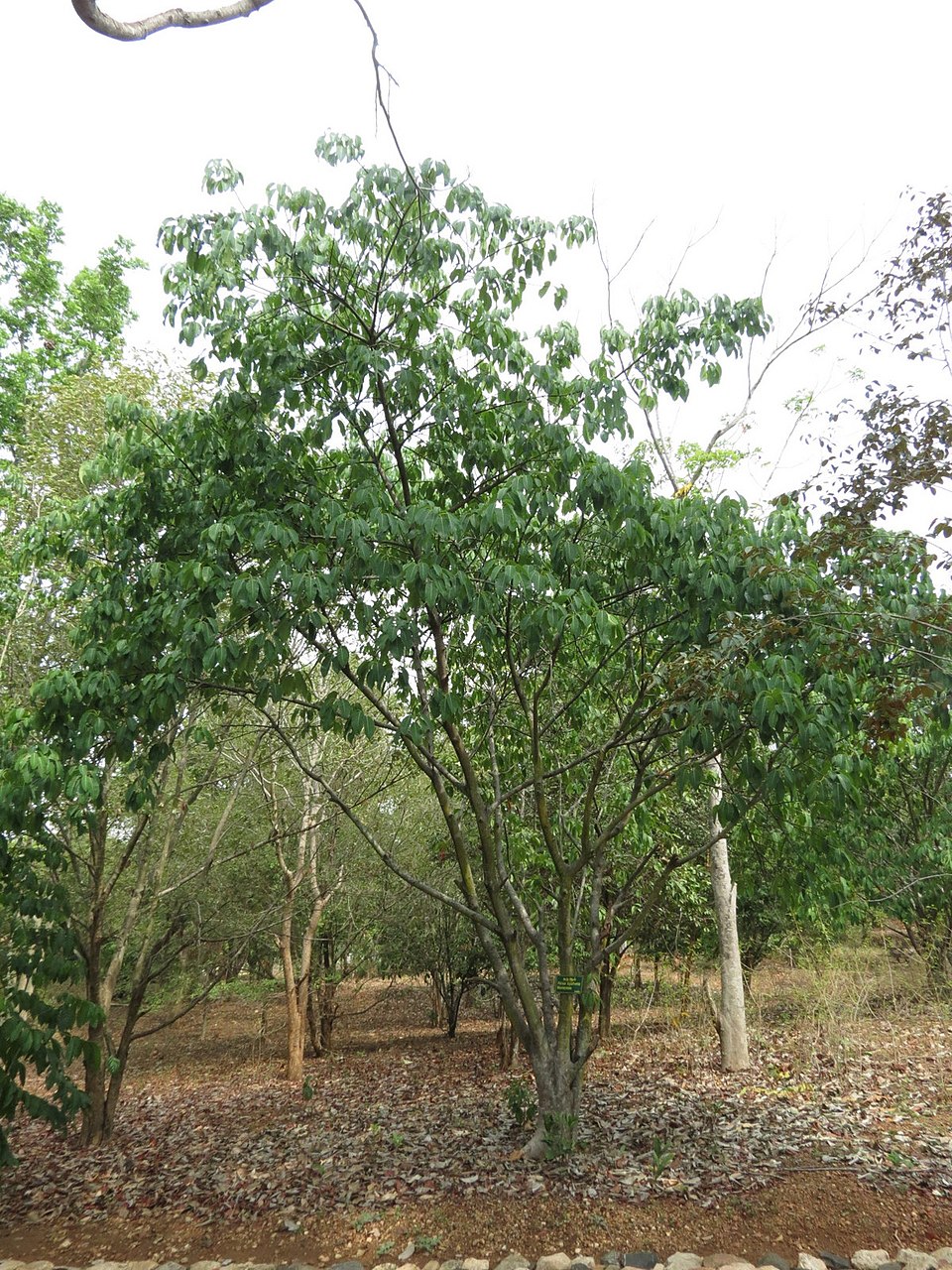
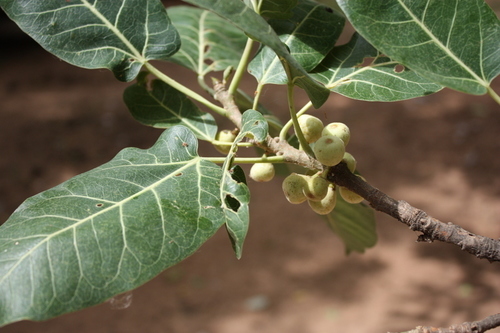
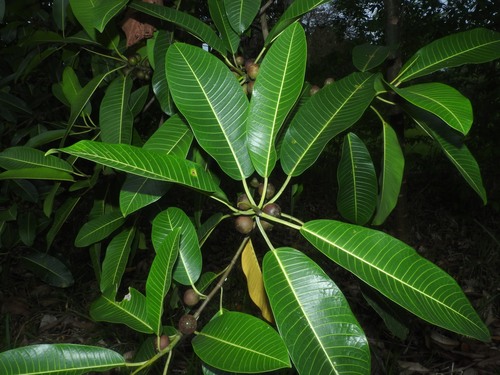
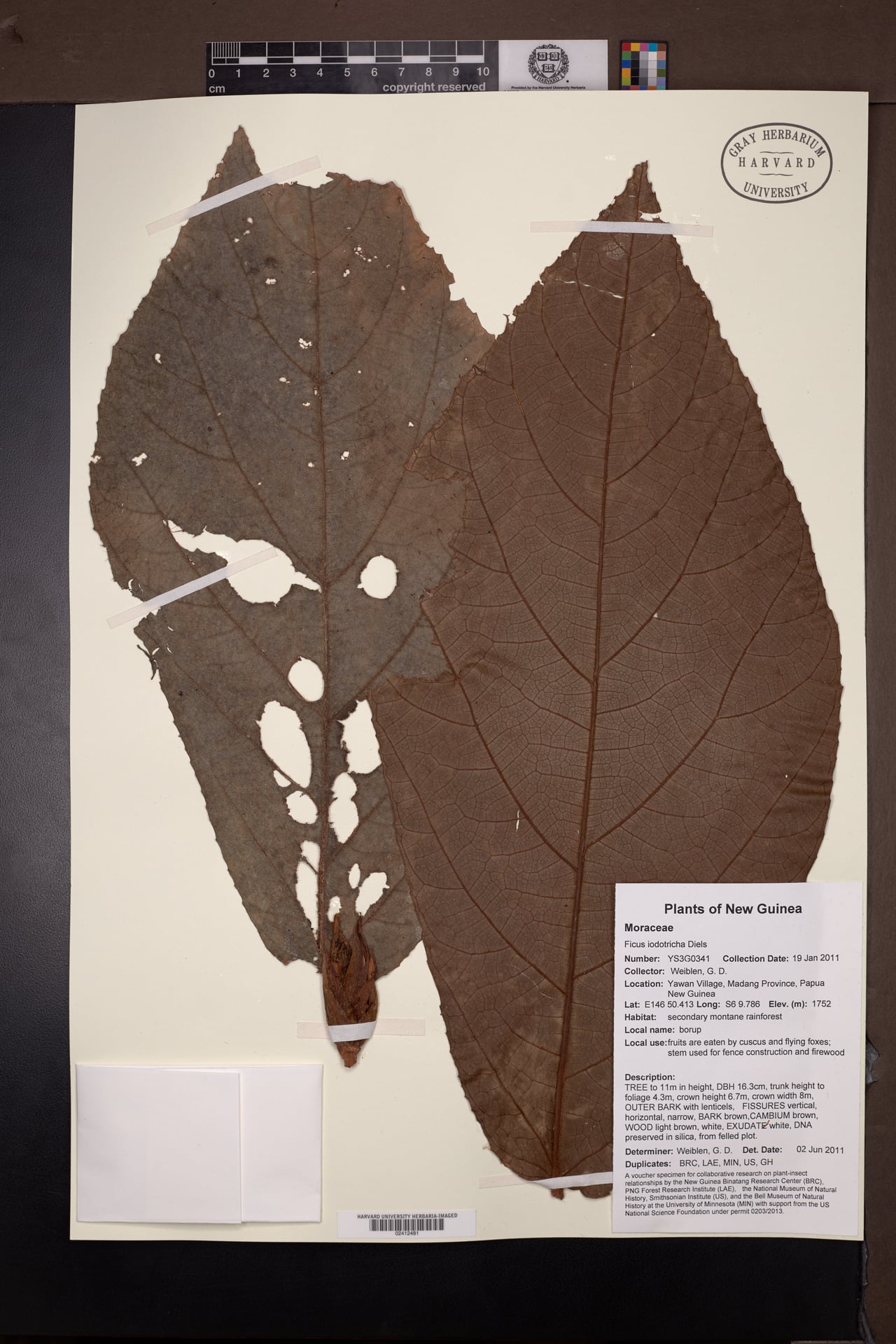
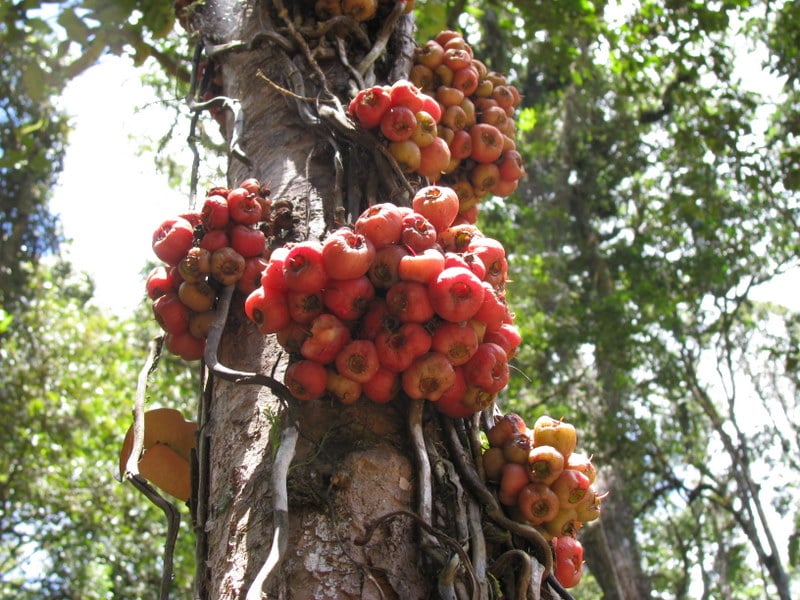
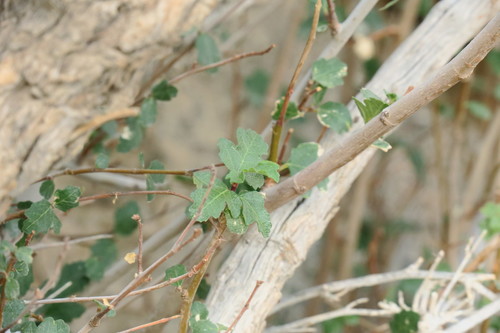
Artocarpus maingayi
Hook. f.
iNaturalist· cc-by-nc
(c) Farhan Adyn, some rights reserved (CC BY-NC)
Description
A tropical tree of the fig family (Moraceae) with edible fruit.
This description is brief — help expand it
Edible Uses
Several species in the genus bear edible fruit and are commonly cultivated: Breadfruit (Artocarpus altilis), Cempedak (Artocarpus integer), Jackfruit (Artocarpus heterophyllus), Kwai Muk (Artocarpus parvus), Lakoocha (Artocarpus lakoocha), Pudau (Artocarpus kemando), Anjily (a.k.a. Jungle Jack) (Artocarpus hirsutus), Chaplaish (Artocarpus chama), and Marang (Artocarpus odoratissimus). Breadfruit and jackfruit are cultivated widely in the tropical Southeast Asia. Other species are cultivated locally for their timber, fruit or edible seeds. Anjily, A. hirsutus, is grown for fruit and timber in the Western Ghats.
Distribution
It is a tropical plant.
Where It Grows
Asia, Malaysia, SE Asia, Singapore,
Other Uses
The wood is a source of keledang timber. We have no further information for this species, but the general description of keledang is as follows:- The heartwood is yellow-brown to orange-red, darkinging to golden brown; it is clearly demarcated from the 5 - 7cm wide band of sapwood. The texture is coarse; the grain straight or interlocked; there is a lustrous, ribbon-like aspect. The wood is fairly heavy, fairly hard, durable, being moderately resistant to fungi and resistant to termites and dry wood borers. It seasons somewhat slowly with a high risk of distortion and a slight risk of checking; once dry it is moderately stable to stable in service. It has a fairly high blunting effect upon tools, stellite-tipped and tungsten carbide are recommended; the surface is fibrous and filling is recommended; it takes screws and nails poorly; glues correctly. The wood is used for furniture, house building, turnery, light carpentry, interior joinery and panelling, boxes and crates, boats etc. It is used for making high class coffins in Malaysia.
Synonyms
References (2)
- Bircher, A. G. & Bircher, W. H., 2000, Encyclopedia of Fruit Trees and Edible Flowering Plants in Egypt and the Subtropics. AUC Press. p 43
- Saw, L.G., LaFrankie, J. V. Kochummen, K. M., Yap S. K., 1991, Fruit Trees in a Malaysian Rain Forest. Economic Botany, Vol. 45, No. 1, pp. 120-136