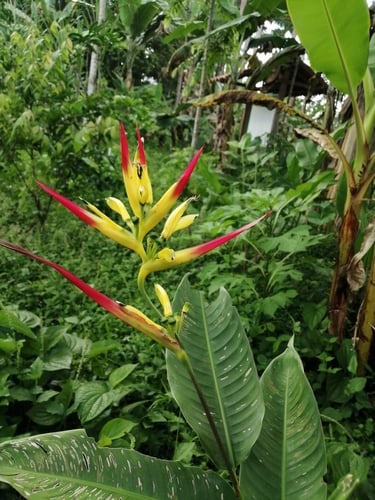
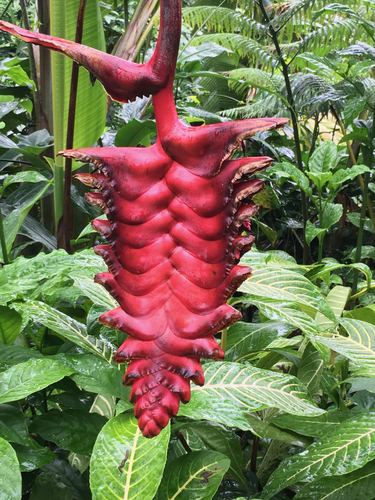
Heliconia latispatha
Benth.
Expanded lobster-claw
iNaturalist· cc-by-nc
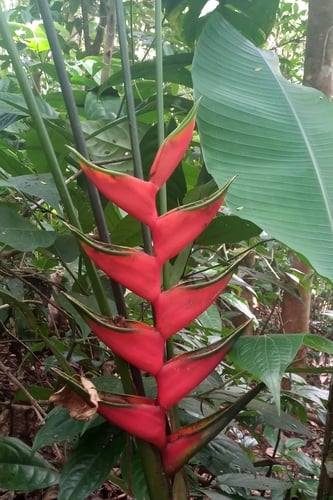
(c) Rich Kostecke, some rights reserved (CC BY-NC), uploaded by Rich Kostecke
iNaturalist· cc-by-nc
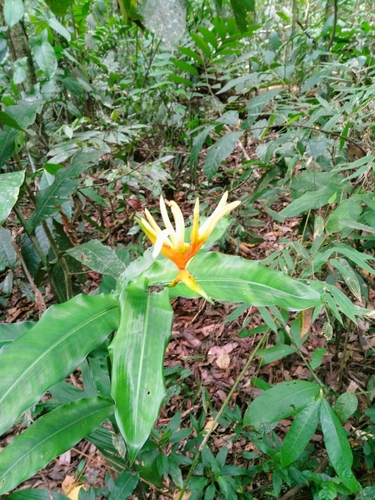
(c) Klaus Bohn, some rights reserved (CC BY-NC), uploaded by Klaus Bohn
iNaturalist· cc-by-nc
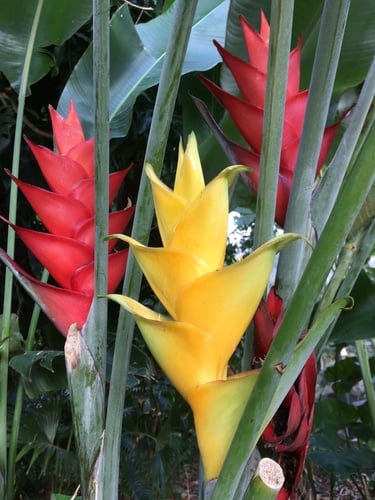
(c) Luís Olímpio Menta Giasson, some rights reserved (CC BY-NC), uploaded by Luís Olímpio Menta Giasson
Summary
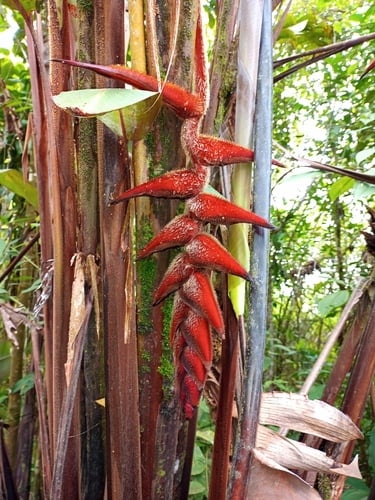
Source: WikipediaHeliconia latispatha (expanded lobsterclaw) is a plant species native to southern Mexico (Tabasco, Oaxaca, Chiapas, Campeche), Central America and northern South America (Colombia, Venezuela, Ecuador and Peru) and naturalized in Florida and Jamaica. It is an herbaceous perennial up to 4 m tall, with leaves resembling those of bananas. The inflorescence is erect, up to 45 cm long, with red or orange bracts subtending green, yellow or orange flowers.
Description
A large herb. It grows 4 m tall. The flowering shoots are erect and 45 cm long. The flowers are green, yellow or orange. They have red or orange bracts around them.
Edible Uses
The shoots, leaves, and fruit are edible.
Distribution
It is a tropical plant. It grows in the moist lowlands. Cairns Botanical Gardens.
Where It Grows
Asia, Australia, Bangladesh, Belize, Central America*, Colombia, Congo DR, Costa Rica, Ecuador, El Salvador, Guatemala, Hawaii, Honduras, Jamaica, Mexico, Myanmar, Nicaragua, North America, Panama, Peru, SE Asia, South America, USA, Venezuela, West Indies,
Synonyms
Also Known As
Bidu, Platanilla, Plantanillo
References (5)
- Castaneda, H., & Stepp, J. R., 2007, Ecosystems as Sources of Useful Plants for the Guaymi People of Costa Rica. Ethnobotany Journal. 5:249-257
- Kermath, B. M., et al, 2014, Food Plants in the Americas: A survey of the domesticated, cultivated and wild plants used for Human food in North, Central and South America and the Caribbean. On line draft. p 410
- Kew Plants of the World Online
- Langlois, H. C., 2004, Ethnobotanical analysis of different successional stages as sources of wild edible plants for the Guaymi people in Costa Rica. M. Sc. thesis University of Florida.
- Piedra-Malagón, E. M., et al, 2022, Edible native plants of the Gulf of Mexico Province. Biodiversity Data Journal 10: e80565 p 20