Heliconia danielsiana
W. J. Kress
Mune
iNaturalist· cc-by-nc
(c) Marco Acuña, some rights reserved (CC BY-NC), uploaded by Marco Acuña
iNaturalist· cc-by-nc
(c) Marco Acuña, some rights reserved (CC BY-NC), uploaded by Marco Acuña
iNaturalist· cc-by-nc
(c) Marco Acuña, some rights reserved (CC BY-NC), uploaded by Marco Acuña
Description
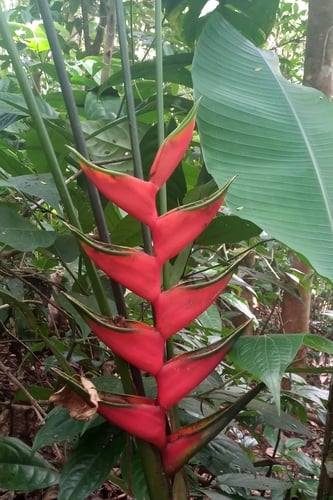
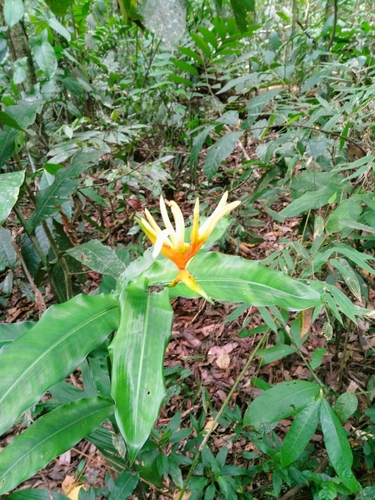
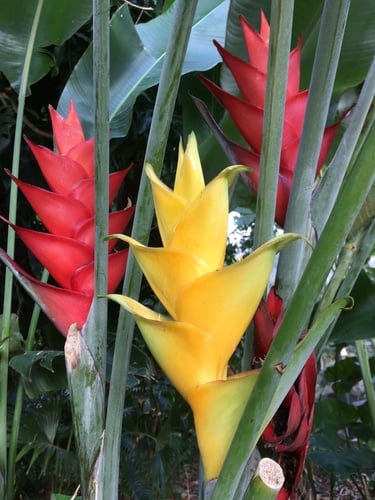
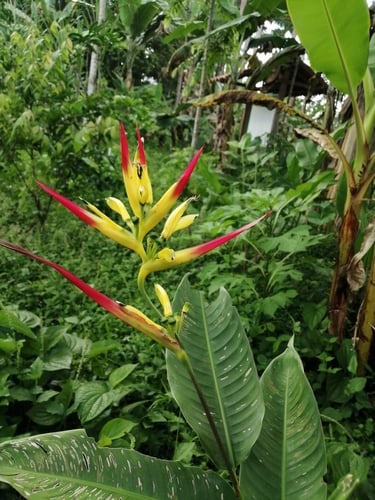
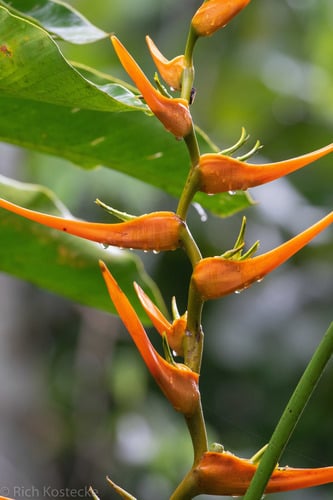
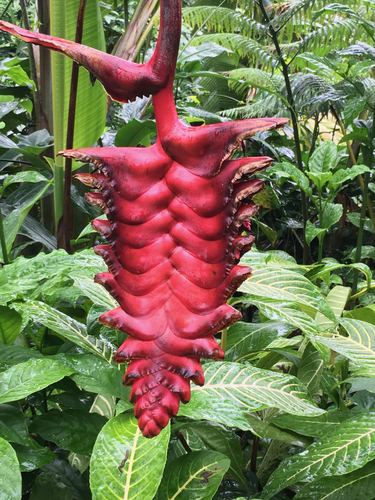
A large herb. It grows 5-8 m tall. The leaves are alternate and there are 2-4 on each stem. They have long stalks and the blade is 2-2.8 m long by 45-57 cm wide. The flowers are yellow with a white base. They are an irregular shape and 5 cm long by 1 cm wide. There are 15-20 tucked away inside each bract. The bracts are red to orange. They have reddish-brown woolly hairs. The fruit are fleshy and blue and have one seed.
Edible Uses
The leaves and shoots are edible.
Distribution
It is a tropical plant. It grows in wet regions.
Where It Grows
Central America, Costa Rica,
Also Known As
Chichica, Platanilla
References (4)
- Castaneda, H., & Stepp, J. R., 2007, Ecosystems as Sources of Useful Plants for the Guaymi People of Costa Rica. Ethnobotany Journal. 5:249-257
- D'Ambrosio, U., & Puri, R. K., 2016, Foodways in transition: food plants, diet and local perceptions of change in a Costa Rican Ngäbe community. Journal of Ethnobiology and Ethnomedicine (2016) 12:3 p 24
- Field Guide to Plants of Costa Rica.
- Langlois, H. C., 2004, Ethnobotanical analysis of different successional stages as sources of wild edible plants for the Guaymi people in Costa Rica. M. Sc. thesis University of Florida.